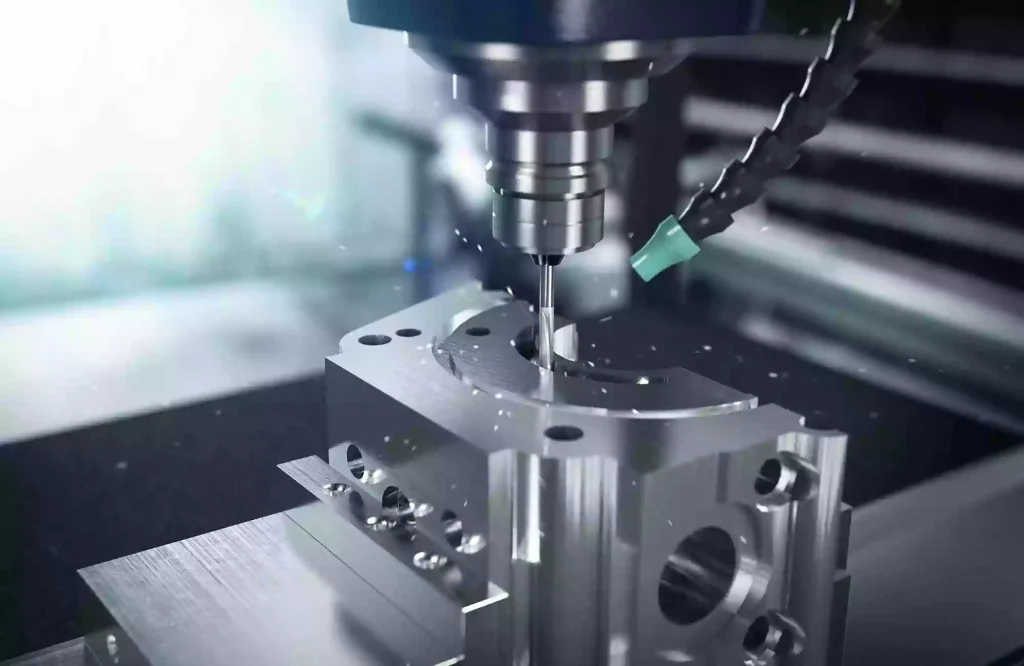
What Is the Easiest Material to Machine with CNC?
When choosing a material for CNC machining, machinability directly affects cutting speed, tool life, surface finish, and production efficiency. Some materials can be cut with relatively low resistance and produce clean chips, while others require specialized tooling and more careful process control.
So, what is the easiest material to machine? C36000 free-machining brass is widely considered one of the easiest metals to machine. Aluminum 6061 is another popular choice because of its good machinability and balance of mechanical properties. Among engineering plastics, POM (Delrin) is one of the easiest to machine due to its stiffness and dimensional stability.
However, the easiest material to machine is not necessarily the best choice for every application. The right material depends on the component’s mechanical requirements, operating environment, dimensional tolerances, surface finish, and manufacturing cost.
What Makes a Material Easy to Machine?
Material machinability describes how easily a material can be cut and shaped through CNC milling, turning, drilling, and other machining operations. Materials with good machinability generally require less cutting force, cause less tool wear, produce manageable chips, and allow consistent surface finishes.
Several factors determine material machinability.
Hardness and cutting resistance influence the force required to remove material. Softer materials are not always easier to machine. Some ductile materials can deform during cutting or stick to the tool, making chip formation and surface finishing more difficult.
Tool wear and cutting temperature also affect machining performance. Materials that generate excessive heat or contain abrasive constituents can shorten tool life. They may require lower cutting speeds, specialized cutting tools, and more frequent tool changes.
Chip formation and evacuation are equally important. Materials that produce short, manageable chips are generally easier to process than those that create long, continuous chips. Poor chip evacuation can damage the surface, interfere with cutting, and reduce production consistency.
Finally, dimensional stability matters when manufacturing precision components. A material may be easy to cut but still difficult to hold within tight tolerances if it expands, contracts, or deforms during machining.
What Are the Easiest Materials to Machine?
The easiest materials to machine include several common metals and engineering plastics. However, machinability varies between grades within the same material family. For example, C36000 brass offers much better cutting characteristics than many other brass grades, while 6061 aluminum is widely used for its predictable machining behavior.
Easiest Metals to Machine
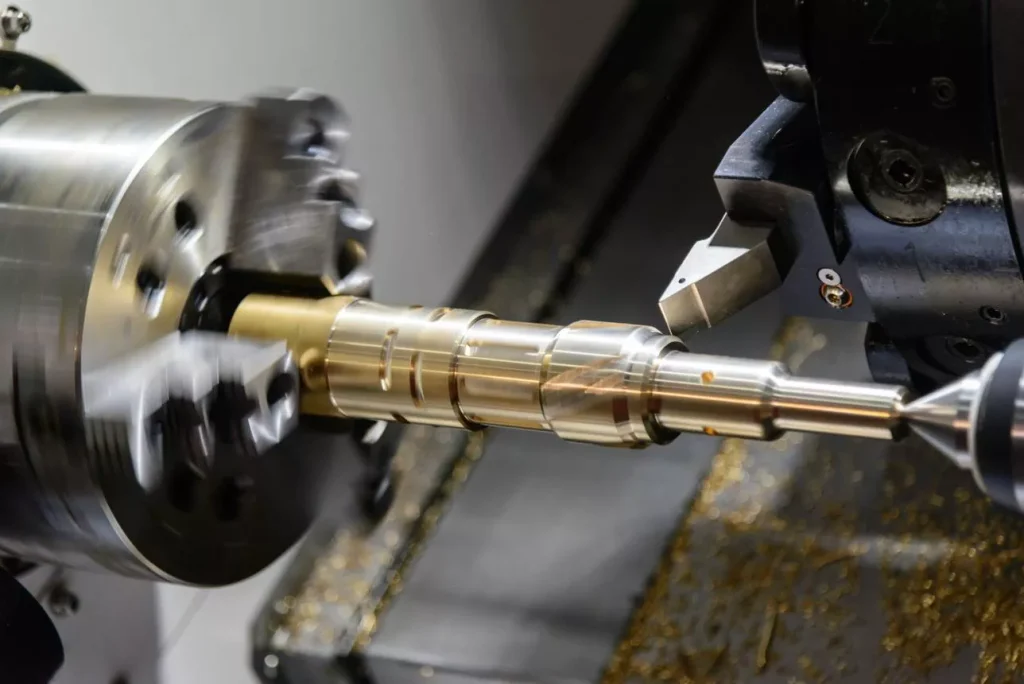
Brass (C36000)
C36000 free-machining brass is widely recognized as one of the easiest metals to machine. Its lead content improves chip breaking and reduces cutting resistance, allowing the material to be turned, milled, drilled, and threaded efficiently.
During CNC machining, C36000 typically produces short chips that are easier to evacuate from the cutting area. It also supports relatively high cutting speeds and can achieve good surface finishes without excessive tool wear. These characteristics make it suitable for small precision components and parts with multiple machined features.
However, not all brass alloys offer the same machinability. C36000’s performance should not be assumed to apply to lead-free brass grades. Its lead content may also restrict its use in drinking-water systems and applications subject to specific material regulations.
Aluminum (6061 and 7075)
Aluminum is one of the most commonly used materials in CNC machining because of its relatively low density, good machinability, and broad range of mechanical properties. Among common aluminum grades, 6061 is especially popular for general-purpose machining projects.
6061 aluminum offers a good balance of strength, corrosion resistance, and machinability. It can be processed through milling, turning, drilling, and tapping, making it suitable for housings, brackets, fixtures, and structural components. Its predictable cutting behavior also makes it practical for manufacturing complex geometries.
7075 aluminum is another frequently machined grade. It provides higher strength than 6061 and is often selected for applications where mechanical performance is a priority. However, 7075 should not automatically be considered easier to machine than 6061. Its higher strength and different material characteristics can influence cutting forces, tool selection, and machining parameters.
When asking whether aluminum is easy to machine, the answer is generally yes, but the specific alloy, temper, part geometry, and tolerance requirements all affect the machining process.
Free-Machining Steel (12L14)
12L14 is a free-machining carbon steel developed to improve cutting performance. Its sulfur and lead additions help promote chip breaking and reduce friction during machining.
Compared with many conventional carbon steels, 12L14 can be machined at relatively high speeds while maintaining good surface quality. It is particularly suitable for turning operations and components with repetitive features, such as threaded sections, grooves, and small diameters.
Its main advantage is machining efficiency rather than high mechanical performance. 12L14 is not the ideal choice for every structural or high-strength application, and its lead content may limit its suitability where specific environmental or regulatory requirements apply.
Stainless Steel (303)
Stainless steel is generally more challenging to machine than brass or aluminum, but 303 stainless steel is one of the more machinable grades in the stainless steel family.
Its sulfur content improves chip breaking and helps reduce the cutting difficulties commonly associated with austenitic stainless steels. This makes 303 easier to turn, drill, and mill than grades such as 304 and 316 in many machining operations.
However, 303 stainless steel involves trade-offs. Its corrosion resistance and weldability are generally lower than those of 304 and 316. It may also be unsuitable for applications requiring particularly high corrosion resistance or demanding welding performance.
For projects requiring stainless steel properties with improved machining efficiency, 303 can be a practical option. The final choice should still be based on the component’s operating environment and performance requirements.
Easiest Plastics to Machine
Compared with metals, engineering plastics generally require lower cutting forces and cause less tool wear. However, their low stiffness, thermal expansion, and sensitivity to heat introduce different machining challenges. Some plastics are easier to cut than others, but the easiest plastic to machine depends on how well it maintains its shape and dimensions during the process.
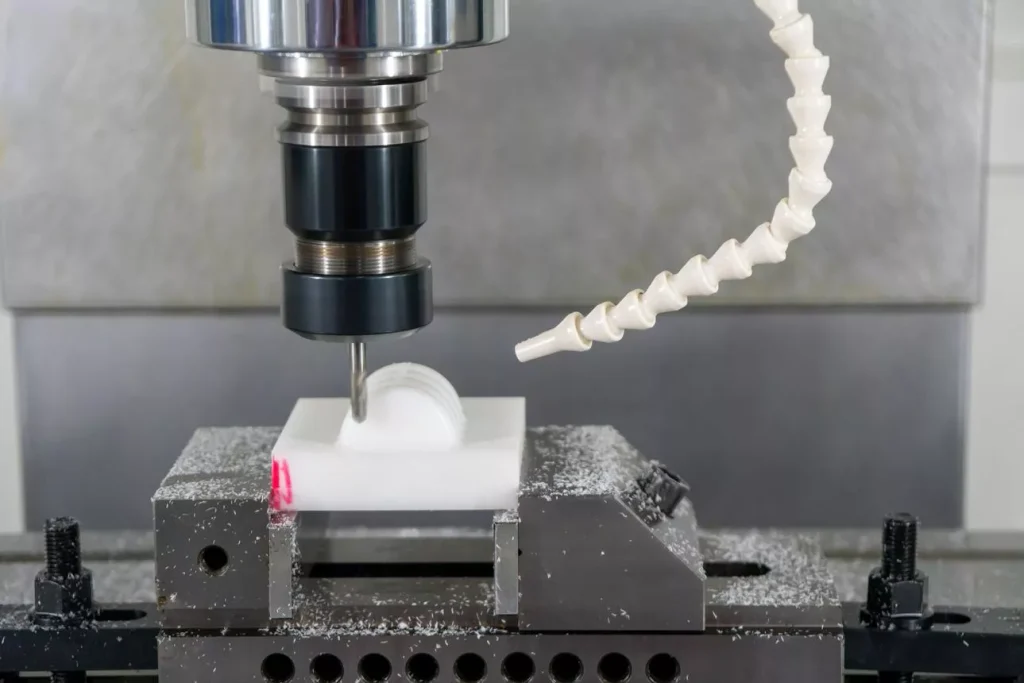
POM (Acetal / Delrin)
POM, commonly known as acetal or Delrin, is one of the easiest engineering plastics to machine. It has good stiffness, low friction, and relatively low moisture absorption compared with materials such as nylon.
These properties allow POM to maintain its shape during CNC milling and turning. It also produces relatively clean cuts and can achieve smooth surface finishes with suitable tooling and cutting parameters.
POM is frequently used for gears, bushings, rollers, bearing components, and precision mechanical parts. Its dimensional stability makes it particularly useful for components that require consistent dimensions and relatively tight tolerances.
Although POM is generally easy to machine, heat buildup and poor chip evacuation can still affect surface quality. Sharp cutting tools and effective chip removal help prevent melting, burr formation, and dimensional issues.
Nylon (PA)
Nylon is a versatile engineering plastic with good wear resistance, toughness, and impact strength. It can be machined using standard CNC milling and turning processes, making it suitable for gears, spacers, rollers, and wear components.
However, nylon behaves differently from POM during machining. Its moisture absorption can cause dimensional changes, while its relatively flexible structure may lead to deformation under clamping pressure or cutting forces.
Heat generated during machining can also affect dimensional accuracy. For precision applications, material conditioning, suitable workholding, and careful control of cutting parameters are important.
Nylon is reasonably easy to machine, but maintaining tight tolerances can require more attention than with dimensionally stable plastics such as POM.
ABS
ABS is a widely used thermoplastic known for its impact resistance, toughness, and relatively low material cost. It can be processed through CNC milling, turning, drilling, and other machining operations.
Its moderate hardness allows cutting tools to remove material without the high cutting forces associated with many metals. ABS is often used for prototypes, equipment housings, covers, and custom enclosures.
One challenge is its sensitivity to heat. Excessive cutting temperatures can soften the material, leading to melted edges, burrs, or poor surface quality. Sharp tools, appropriate cutting speeds, and effective chip removal help maintain a clean finish.
ABS is a practical option for components where strength, appearance, and cost need to be balanced, although it may not provide the dimensional stability or wear resistance required for every precision application.
UHMW-PE (Ultra-High-Molecular-Weight Polyethylene)
UHMW-PE is valued for its excellent wear resistance, low friction, and impact strength. It is commonly used for sliding components, wear strips, guides, liners, and industrial handling equipment.
The material is relatively soft and can be cut with low machining forces. However, this does not mean it is always straightforward to machine accurately. Its flexibility makes it susceptible to deformation during clamping and cutting, while its relatively high thermal expansion can affect dimensional consistency.
Machining UHMW-PE requires careful workholding and control of cutting heat. Sharp tools and suitable cutting parameters help reduce material distortion and improve the final surface.
It is a good choice when wear resistance and low friction are more important than high stiffness or very tight dimensional tolerances.
How Do Different Materials Compare in CNC Machinability?
The following comparison provides a general overview of the machinability of metals and plastics discussed above. Actual results depend on material grade, temper, part geometry, cutting tools, machine conditions, and required tolerances.
| Material | General machinability | Key machining characteristics |
| C36000 Brass | Excellent | Short chips, low cutting resistance, good surface finish |
| 6061 Aluminum | Excellent | Predictable cutting behavior, good balance of properties |
| 7075 Aluminum | Good to excellent | Higher strength, requires appropriate tooling and parameters |
| 12L14 Steel | Excellent | Free-machining characteristics, good chip breaking |
| 303 Stainless Steel | Good | Better chip breaking than many common stainless grades |
| POM | Excellent | Good stiffness and dimensional stability |
| Nylon (PA) | Good | Moisture absorption and flexibility affect accuracy |
| ABS | Good | Easy to cut, but sensitive to heat |
| UHMW-PE | Moderate to good | Low cutting resistance, but prone to deformation |
This comparison shows why the term easiest materials to machine should be considered in context. C36000 brass and 12L14 steel offer excellent metal machinability, while POM is a strong choice among engineering plastics. Aluminum 6061 is also widely used because it combines favorable machinability with practical mechanical properties.
What Makes Some Materials Difficult to Machine?
Not all materials respond well to conventional CNC cutting operations. Some require specialized tooling, lower cutting speeds, more rigid workholding, and closer monitoring of machining conditions.
One common challenge is work hardening. Certain materials, including 304 and 316 stainless steel, can become harder when subjected to cutting deformation. If the cutting tool rubs against the surface instead of removing material effectively, the hardened layer can make subsequent machining more difficult.
Another challenge is high cutting temperature. Nickel-based superalloys such as Inconel 718 retain much of their strength at elevated temperatures. This makes them difficult to cut and can accelerate tool wear. Effective cooling, suitable cutting tools, and controlled machining parameters are important for maintaining process stability.
High cutting forces and tool wear are also common when machining titanium alloys. Titanium has a high strength-to-weight ratio and relatively low thermal conductivity, which can concentrate heat near the cutting edge. This increases the demands on tooling, machine rigidity, and process control.
These examples illustrate that material machinability is not determined by hardness alone. Thermal behavior, work hardening, chip formation, and cutting-tool interaction all influence how difficult a material is to process.
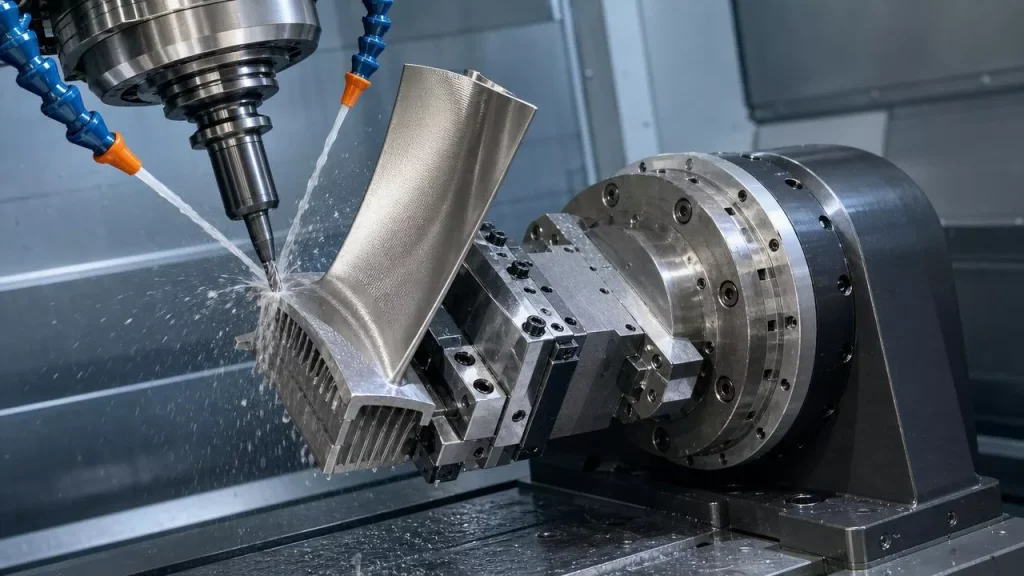
Does Easy Machinability Mean Lower CNC Machining Costs?
Materials with good machinability can reduce machining time, tool wear, and production interruptions. However, the easiest material to machine is not necessarily the least expensive option for a finished component.
Material cost is one consideration. Brass, aluminum, steel, and engineering plastics have different purchase prices, and the cost of raw material can vary significantly by grade, size, and availability.
Machining time is another factor. A material that supports higher cutting speeds and efficient chip removal may reduce cycle time. This can be especially important for projects involving repeated features or larger production quantities.
Tooling and finishing requirements also affect the final cost. Some materials require specialized cutting tools, more frequent tool changes, or additional finishing operations. A material that is easy to cut but difficult to hold within the required tolerance may still involve additional inspection and process adjustments.
For this reason, CNC machining cost should be evaluated based on the complete manufacturing process rather than machinability alone. The most economical choice is the material that meets the component’s functional requirements while allowing efficient and reliable production.
How to Choose the Right Material for Your CNC Machining Project?
Selecting a material involves more than finding the easiest material to machine. The material must also perform reliably under the conditions in which the finished component will operate.
Start with the component’s mechanical requirements. If the application requires high strength and low weight, aluminum 7075 may be more appropriate than 6061, even if the latter is a more common general-purpose machining choice. If wear resistance and low friction are priorities, POM or UHMW-PE may be worth considering.
The operating environment is equally important. Components exposed to moisture, chemicals, elevated temperatures, or outdoor conditions need materials with suitable corrosion resistance, chemical compatibility, or thermal performance. For example, 303 stainless steel may be easier to machine than 316, but 316 may be a better choice when greater corrosion resistance is required.
Dimensional requirements should also influence the decision. A material that is easy to cut may still present challenges when producing thin walls, deep cavities, or features with tight tolerances. Nylon and UHMW-PE, for example, require particular attention to deformation and thermal expansion.
Finally, consider the complete manufacturing cost, including raw material, machining time, tooling, finishing, and inspection. A slightly more difficult material may offer better overall value if it reduces assembly problems, improves service life, or eliminates additional processing.
The best CNC material selection balances machinability with the actual performance requirements of the finished component.
CNC Machining Material Selection at Xtmade
Xtmade provides custom CNC machining services for components manufactured to customer-supplied drawings, CAD files, samples, and specifications. Our 120,000 sq. ft. manufacturing facility in Shenzhen, China, supports custom production using 3-axis, 4-axis, and 5-axis CNC machining equipment.
Material selection and manufacturing requirements are reviewed together during the quotation and process-planning stages. Our engineering team evaluates material specifications, part geometry, critical dimensions, and machining requirements to identify potential manufacturing challenges before production.
Whether your project involves aluminum, brass, stainless steel, engineering plastics, or more difficult-to-machine alloys, we review the requirements around your existing design and develop an appropriate manufacturing approach.
Submit your drawings or CAD files to Xtmade to discuss your CNC machining requirements and request a quote.