303 vs. 304 vs. 316 Stainless Steel: Which Is Best for CNC Machining?
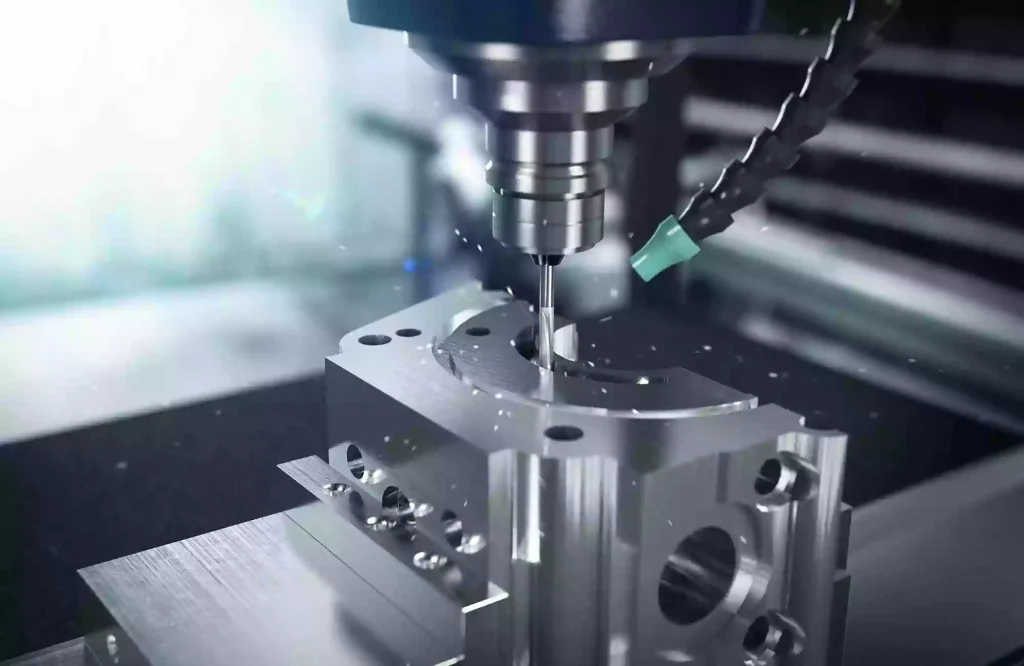
Stainless steel is widely used in CNC-machined components, but not every grade behaves the same way during production. Among the most commonly considered options, 303, 304, and 316 stainless steel each offer a different balance of machinability, corrosion resistance, and mechanical properties.
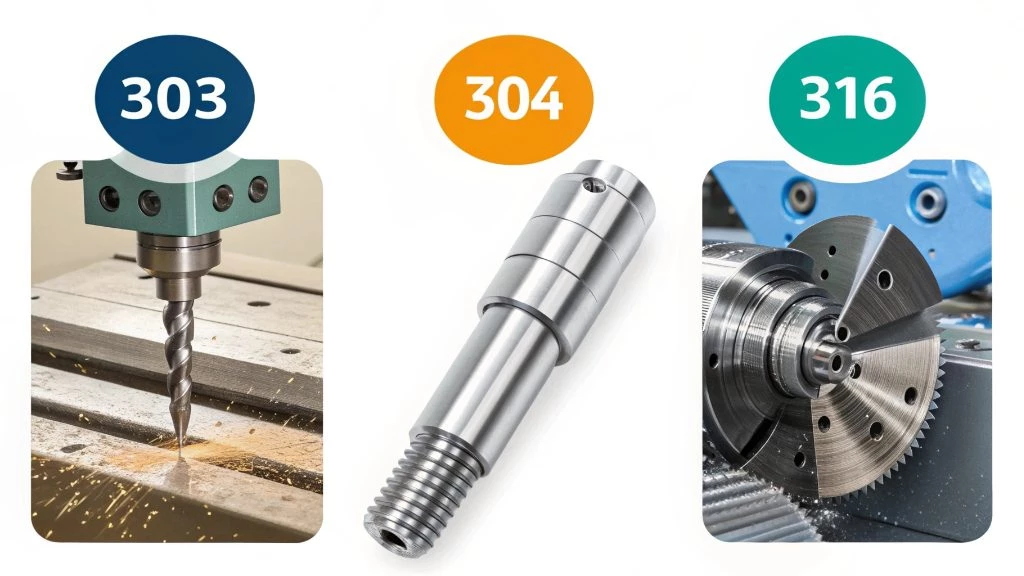
303 is generally easier to machine, making it suitable for parts with extensive turning, drilling, or threading operations. 304 offers a practical balance of corrosion resistance and mechanical performance, while 316 provides better resistance to chloride-related corrosion. Choosing between them involves more than comparing material properties on a datasheet. The machining process, part geometry, operating environment, and inspection requirements all matter.
This guide compares 303 vs. 304 vs. 316 stainless steel, explains how their differences affect CNC machining, and outlines what to consider when selecting a grade for a custom component.
What Is the Difference Between 303, 304, and 316 Stainless Steel?
All three grades belong to the austenitic stainless steel family, but their chemical compositions give them different characteristics. The most important distinctions are machinability and corrosion resistance.
303 Stainless Steel
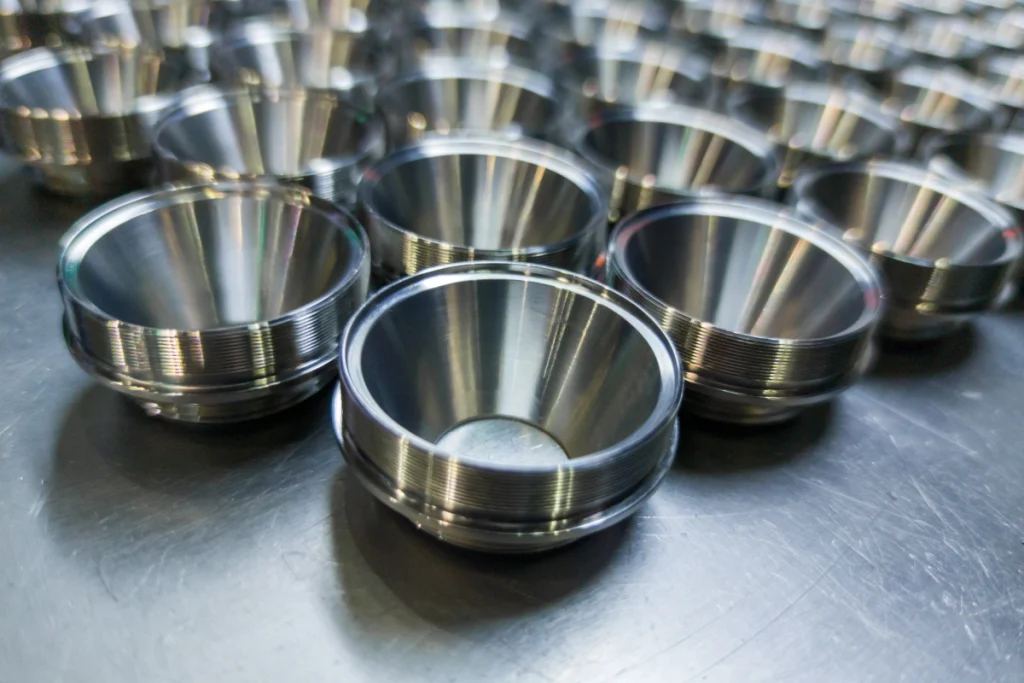
303 stainless steel is a free-machining grade developed to improve cutting performance. Its sulfur content helps chips break more easily, making it particularly suitable for operations such as turning, drilling, and threading.
Compared with 304 and 316, 303 generally allows smoother chip control and less demanding machining conditions. This can be useful when a component requires multiple machining operations or has features that would otherwise make chip evacuation difficult.
The trade-off is reduced corrosion resistance, particularly in comparison with 304 and 316. Its sulfur content can also make it less suitable for certain welding and forming applications. For this reason, 303 is often selected for machined components where manufacturing efficiency is a priority and the service environment is not highly corrosive.
304 Stainless Steel
304 stainless steel is one of the most widely used stainless steel grades. It offers a combination of corrosion resistance, strength, formability, and availability that makes it suitable for a broad range of applications.
Unlike 303, 304 does not contain the same sulfur additions for free machining. It is therefore more prone to forming long chips during cutting. It also work-hardens during machining, which means cutting conditions and tool engagement need to be controlled carefully.
Despite these machining challenges, 304 remains a common choice when components need general corrosion resistance and a balance of mechanical properties. It is often preferred over 303 when the finished part will be exposed to moisture, cleaning processes, or a wider range of operating conditions.
316 Stainless Steel
316 stainless steel contains molybdenum, which improves its resistance to pitting and crevice corrosion, particularly in chloride-containing environments. This makes it a common choice for components exposed to seawater, saline conditions, and certain chemical environments.
Its machining behavior is similar to that of 304 in several respects. It can work-harden during cutting and produce difficult chips, so tool selection, cutting parameters, and chip evacuation need attention.
316 is usually more expensive than 304, and its additional corrosion resistance is not necessary for every application. It makes sense when the service environment justifies the material upgrade, rather than simply choosing it because it is considered a higher-grade stainless steel.
303 vs. 304 vs. 316 Stainless Steel: Properties Compared
The following table highlights the main differences relevant to material selection and CNC machining.
| Property | 303 Stainless Steel | 304 Stainless Steel | 316 Stainless Steel |
| Material family | Austenitic | Austenitic | Austenitic |
| Main alloying distinction | Higher sulfur for machinability | General-purpose chromium-nickel composition | Molybdenum addition |
| Machinability | Good | Moderate | Moderate to difficult |
| Corrosion resistance | Good in mild environments | Good general corrosion resistance | Better resistance to pitting and crevice corrosion |
| Chloride resistance | Limited | Limited | Better than 304 |
| Work hardening | Less challenging in typical machining | Pronounced | Pronounced |
| Relative material cost | Generally lower than 316 | Generally moderate | Generally higher |
| Common selection reason | Easier machining | Balanced properties | Improved corrosion resistance |
These are general comparisons, not guarantees of finished-part performance. Actual results depend on the material condition, component geometry, machining method, and operating environment. For a specific project, the material specification and required properties should be confirmed before production.
How Do 303, 304, and 316 Compare in CNC Machining?
The differences between these grades become more apparent once cutting begins. A material that performs well in a corrosion test may not be the easiest material to machine, and a grade with better machinability may not provide the corrosion resistance a component needs.
Chip Formation and Evacuation
303 is generally the easiest of the three grades to machine because its sulfur content promotes chip breaking. Shorter chips are easier to clear from the cutting area, particularly during turning and drilling. This can reduce interruptions caused by tangled chips and make machining more predictable.
304 and 316 are more likely to produce long, stringy chips. If chips are not evacuated effectively, they can interfere with the cutting tool, damage the machined surface, or become trapped in holes and internal features.
For parts with deep holes, narrow passages, or repeated drilling operations, chip control deserves attention during process planning. The machining strategy should account for the geometry rather than relying on the material grade alone.
Work Hardening and Tool Wear
Work hardening is an important consideration when machining 304 and 316 stainless steel. When the cutting tool rubs against the material instead of maintaining a proper cut, the surface can become harder. A subsequent tool pass then encounters a more difficult cutting condition.
This is one reason why stable tool engagement matters. Cutting parameters, tool condition, toolpath, and workholding all influence the result. Excessive rubbing, dwell, or repeated light cuts can make the problem worse.
303 is generally less troublesome in this respect, although tool selection and cutting conditions still need to suit the part and operation.
Cutting Heat and Surface Finish
Stainless steel tends to retain more heat in the cutting zone than many free-machining materials. In 304 and 316, this can increase tool wear and make surface finish more difficult to control, particularly when machining small features or maintaining tight dimensional requirements.
The solution is not simply to reduce cutting speed. Tool geometry, feed rate, cutting fluid, tool engagement, and machine stability all influence heat generation and finish quality.
For components with visible surfaces or close-fitting features, surface finish should be treated as a machining requirement from the beginning. It is not always practical to correct a poor machined surface through additional finishing operations.
Drilling, Threading, and Internal Features
Drilling and threading can be particularly demanding in 304 and 316. Long chips may collect inside holes, while work hardening can make subsequent operations more difficult if the material is not cut cleanly.
303 is often a more convenient choice for components containing multiple holes, tapped features, and turned details. However, if corrosion resistance is a critical requirement, choosing 303 only to simplify machining may create problems during service.
For complex components, the number and location of holes, thread specifications, depth-to-diameter ratios, and access for cutting tools should all be reviewed before production.
Which Stainless Steel Is Best for CNC Machining?
There is no single best stainless steel for every CNC machining project. The right choice depends on which properties matter most to the finished component.
When to Choose 303 Stainless Steel
Choose 303 when machining efficiency is a major consideration and the component does not require the higher corrosion resistance of 304 or 316.
It is a practical option for turned parts and components with numerous drilled or threaded features. Its improved chip-breaking behavior can make repeated machining operations easier to manage.
However, 303 should not be treated as a direct substitute for 304 or 316 where corrosion resistance, welding, or other material requirements are important.
When to Choose 304 Stainless Steel
Choose 304 when the component needs general corrosion resistance and a balance of mechanical properties. It is suitable for many indoor and outdoor applications where exposure conditions do not demand the additional chloride resistance of 316.
Although 304 is more challenging to machine than 303, it is often the more appropriate choice when the finished part’s operating environment takes priority over machining convenience.
When to Choose 316 Stainless Steel
Choose 316 when exposure to chlorides, saltwater, or certain corrosive chemicals makes improved corrosion resistance necessary.
It is commonly considered for marine, chemical processing, and other applications where pitting or crevice corrosion is a concern. Its higher material cost and machining demands should be weighed against the consequences of material failure or premature replacement.
For applications involving specific chemicals or unusual operating conditions, confirm compatibility with the relevant corrosion data rather than relying on the grade designation alone.
How Does Stainless Steel Grade Affect CNC Machining Cost?
Material cost is only one part of the total machining cost. The grade also affects cutting time, tool consumption, process stability, and the amount of work required to achieve the specified dimensions and surface finish.
303 can be more economical to machine when a part involves extensive turning, drilling, or threading. Its chip-breaking characteristics can help reduce machining interruptions and simplify chip management.
304 and 316 may require more careful control of cutting conditions because of their work-hardening behavior and chip formation. Depending on the component, this can affect cycle time, tooling requirements, and inspection results. 316 also generally carries a higher material cost than 304.
However, choosing the least expensive grade does not necessarily produce the lowest overall project cost. If a component operates in a corrosive environment, selecting a grade with insufficient corrosion resistance can lead to maintenance, replacement, or performance problems later.
A better approach is to evaluate material cost alongside machining complexity, tolerances, surface finish, production quantity, and service conditions.
What Should You Include in a Stainless Steel CNC Machining RFQ?
A useful RFQ gives the manufacturer enough information to assess both the material requirements and the machining work involved.
Start with the part drawing or CAD file. Include the stainless steel grade and applicable material specification, along with critical dimensions, tolerances, GD&T requirements, and surface finish specifications. If the part has threaded holes, deep bores, thin sections, or other features that affect machining access, make sure these are clearly defined.
The intended operating environment is also relevant. For example, a component exposed to saltwater may require a different material selection from one used in a general indoor assembly. If corrosion resistance is a deciding factor, explain the exposure conditions rather than specifying a grade without context.
Finally, state the required quantity, delivery expectations, inspection requirements, and any documentation needed, such as material test reports or first article inspection results.
Providing this information early helps the manufacturer evaluate the drawing, identify potential production issues, and clarify the quotation before machining begins.
Stainless Steel CNC Machining Services at Xtmade
At Xtmade, we manufacture custom CNC-machined components based on customer-provided drawings, CAD files, and technical specifications. Stainless steel projects are evaluated according to the selected grade, part geometry, dimensional requirements, and intended application.
Our 120,000-square-foot manufacturing facility in Shenzhen is equipped with 3-axis, 4-axis, and 5-axis CNC machining centers. Our engineering, production, and quality teams support projects from drawing evaluation and manufacturing planning through production and inspection.
When comparing 303, 304, and 316 for a custom component, the material decision needs to account for both machining requirements and the conditions the finished part will face. We can review the supplied specifications and clarify manufacturing considerations before production.
Learn more about our stainless steel CNC machining services and submit your drawings for a project review.