How Is Hardened Steel Machined Successfully?
The success of CNC machining hardened steel depends on selecting the right cutting tools, effectively controlling cutting forces and heat, and employing appropriate machining methods tailored to the material’s hardness and geometry. Although hardened steel is more difficult to cut than untreated steel, proper process planning makes it entirely possible to achieve the desired dimensional accuracy, surface quality, and tool life. The key lies in developing a machining strategy based on the specific steel grade, hardness level, and the unique requirements of the part.
What Is Hardened Steel?
Hardened steel refers to steel that has undergone heat treatment or other hardening processes designed to increase its hardness, strength, and resistance to wear or deformation. Depending on the steel grade and the specific treatment process, the hardening effect may extend throughout the entire cross-section or be confined to the surface layer. Hardened steel is widely used in industrial machinery, transmission systems, production tooling, and factory automation equipment. Components such as shafts, gears, rollers, locating pins, wear plates, and forming dies often require a hardened surface to withstand repeated contact, friction, or mechanical loading. The machinability of hardened steel depends on its chemical composition, microstructure, hardness level, and heat-treatment state; for instance, steel with a hardness of 30 HRC may exhibit significantly different machining characteristics compared to steel with a hardness of 60 HRC. Furthermore, the challenges encountered during the machining of surface-hardened (case-hardened) steel differ from those associated with through-hardened steel.
| Steel type | Typical characteristics | Common applications |
| Quenched and tempered alloy steel | Balanced strength, toughness, and wear resistance | Transmission shafts, heavy-duty machine components |
| Through-hardened steel | High hardness throughout the cross-section | Wear-resistant tooling, precision pins, rollers |
| Case-hardened steel | Hard outer layer with a tougher core | Gears, shafts, sliding and contact components |
| Hardened tool steel | High hardness and wear resistance, depending on grade | Dies, fixtures, cutting and forming tools |
| Hardened bearing steel | High contact-fatigue and wear resistance | Bearing components, rollers, precision mechanical assemblies |
Hardened steel is not a single material grade. The appropriate machining process must be selected according to the actual steel specification, hardness, geometry, and finished component requirements.
Why Is Hardened Steel Difficult to Machine?
The primary challenge lies in removing material while simultaneously ensuring tool life, dimensional accuracy, and surface integrity. Higher hardness increases cutting resistance and can accelerate tool wear. This difficulty becomes even more pronounced when the workpiece features deep cavities, narrow slots, thin walls, or precision mating surfaces.
High Cutting Forces and Tool Wear
Hardened steel places extremely high demands on cutting edges. Conventional high-speed steel (HSS) tools are generally unsuitable for the rigorous machining of high-hardness steel; the selection of cemented carbide tools, meanwhile, must be determined based on the specific condition of the material and the machining parameters. Excessive cutting forces can lead to edge chipping, tool deflection, vibration, and dimensional deviations. Interrupted cutting conditions are particularly demanding, as the cutting edge repeatedly enters and exits the workpiece material.
Heat Generation and Surface Integrity
When machining hardened steel, heat is generated in the cutting zone. If process conditions are not properly controlled, this can accelerate tool wear and damage the machined surface. Depending on the material and the specific process, excessive heat may lead to localized tempering, secondary hardening, or the development of residual stresses. These effects are particularly critical for components subjected to cyclic loading, rolling contact, or repetitive friction. Even if a part meets dimensional requirements, further verification may still be necessary if the engineering drawings specify particular hardness or surface integrity standards.
Dimensional Distortion
Heat treatment alters the geometry of a part through thermal gradients, phase transformations, and the redistribution of residual stresses. For instance, long shafts may develop radial runout, plates may warp, and precision mounting surfaces may lose their flatness. Consequently, when planning machining processes, one should base the approach on the final required geometry rather than relying solely on the dimensions of the raw, untreated workpiece.
Which CNC Machining Processes Work Best for Hardened Steel?
The most suitable process depends on the required geometry, material hardness, tolerances, surface finish, and production volume. Within a single manufacturing workflow, CNC milling, hard turning, grinding, and electrical discharge machining (EDM) can each play their own distinct roles.
CNC Milling
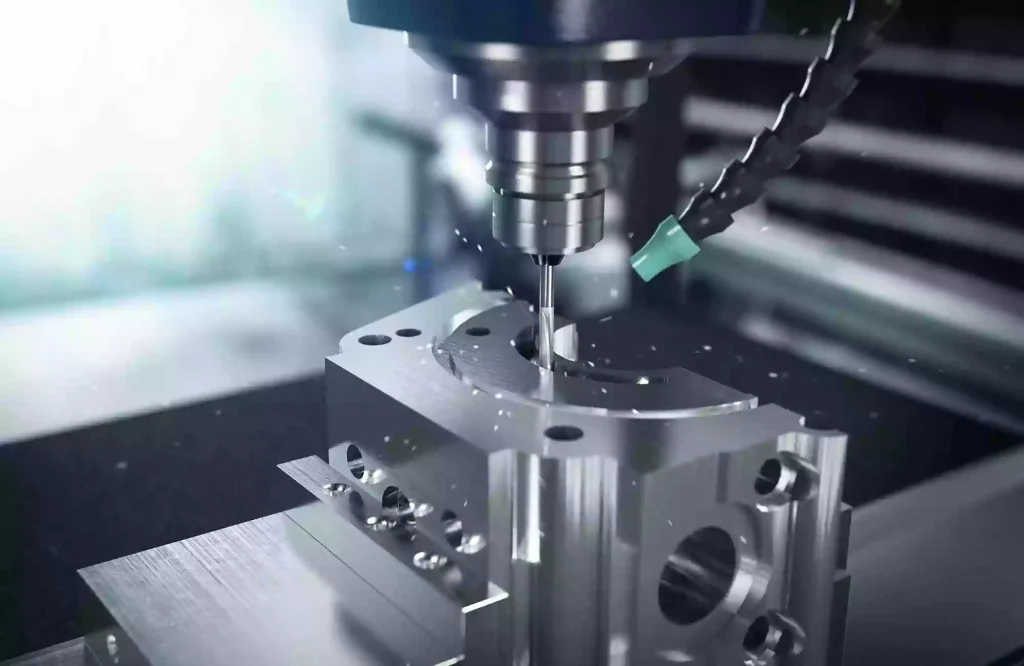
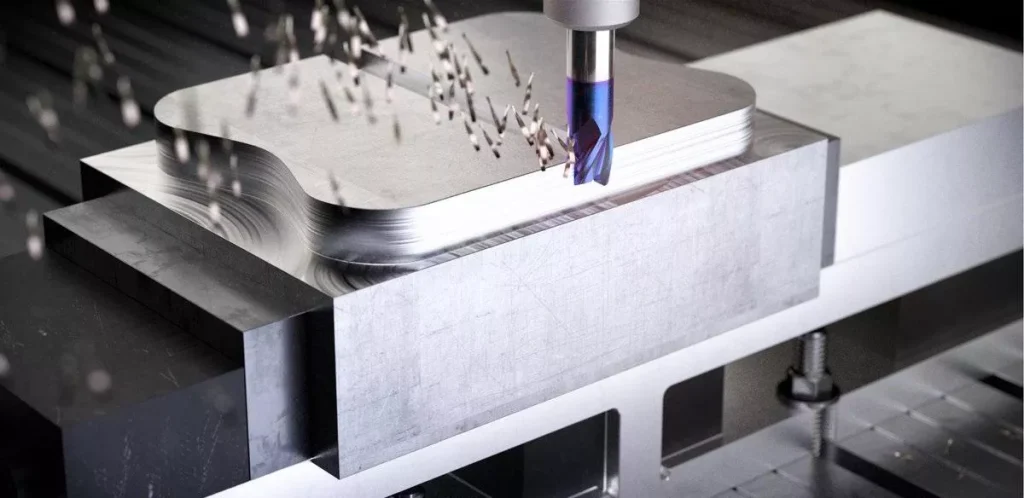
CNC milling is suitable for hardened steel blocks, mounting interfaces, slots, pockets, fixtures, and complex contours. Carbide tools with appropriate grades, coatings, and edge preparation are commonly used for hard milling.Stable tool engagement is essential. Toolpaths that avoid sudden changes in cutting load help reduce edge chipping and vibration. Machine rigidity, tool overhang, and workholding must also be controlled, especially when machining narrow features or deep cavities.
Hard Turning
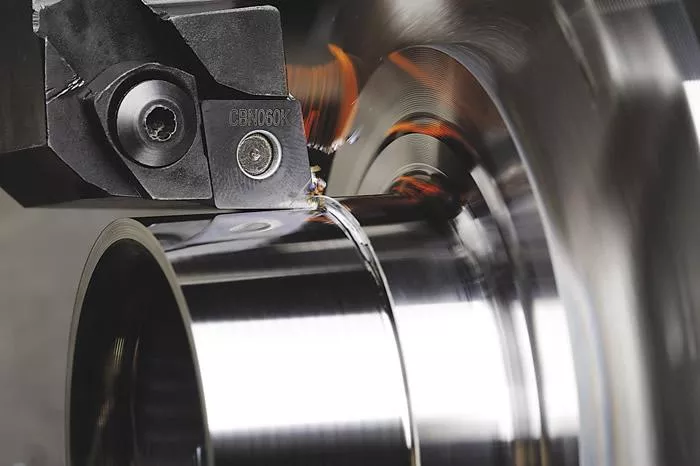
Hard turning is used for suitable hardened steel shafts, pins, rollers, and other rotational components. CBN tooling is often considered for finishing applications involving high hardness, although the appropriate insert depends on the steel grade, hardness, and cutting conditions.The process can produce accurate diameters and good surface finishes, but it is not always a substitute for grinding. Tight roundness requirements, demanding bearing interfaces, or particularly fine surface finishes may still require a grinding operation.
Grinding
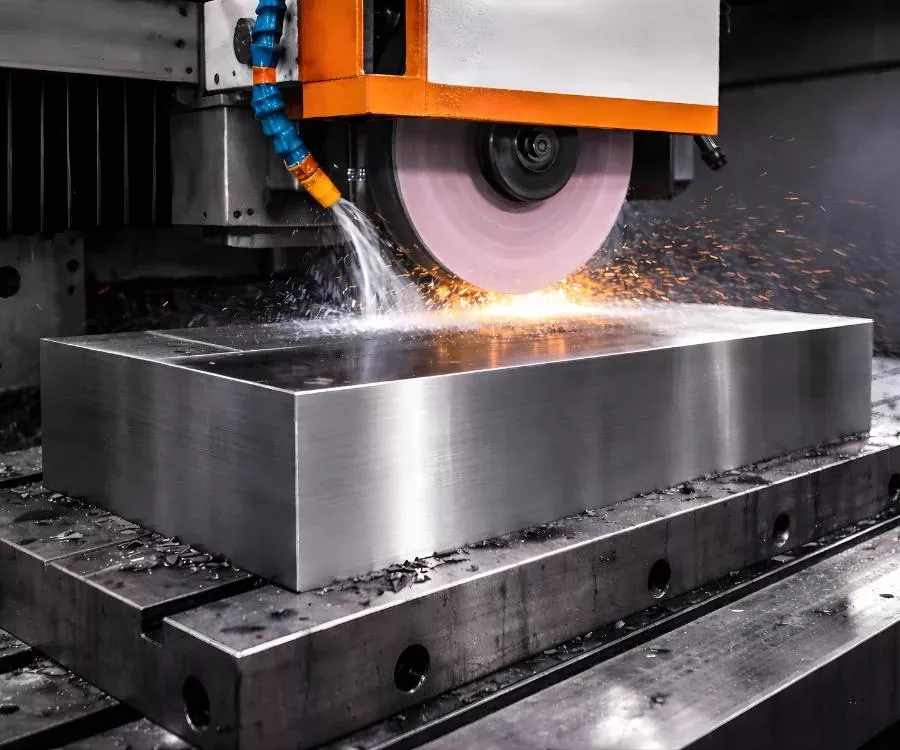
Grinding is commonly used to finish hardened steel after heat treatment when critical dimensions or geometric requirements cannot be achieved reliably through conventional cutting.
Cylindrical grinding suits precision journals and bearing seats. Surface grinding is used for flat reference faces and mating surfaces where flatness and parallelism are important.
Grinding allowances should be established during the initial process plan. Leaving insufficient stock can make it difficult to correct heat-treatment distortion, while excessive allowance increases finishing time and cost.
Electrical Discharge Machining (EDM)
EDM is useful for electrically conductive hardened steel when the geometry is difficult to produce with conventional cutting tools. It can create narrow slots, intricate cavities, and features with restricted tool access.
However, EDM may produce a recast layer or a heat-affected surface. Where fatigue resistance, contact performance, or surface integrity is critical, the need for subsequent finishing should be assessed.
Key Factors for Successful Hardened Steel CNC Machining
Material Grade and Hardness
The steel grade and final hardness should be confirmed before selecting tooling or setting cutting parameters. AISI 4140 alloy steel, AISI 52100 bearing steel, D2 tool steel, and H13 tool steel differ in composition, carbide content, toughness, and heat-treatment behavior.
The specified hardness should include the applicable scale, such as HRC, and clarify whether it applies throughout the component or only to a case-hardened surface.
Cutting Tool Selection
Tool material, coating, geometry, and edge preparation must match the machining operation. Coated carbide tools are widely used for hard milling, while CBN inserts may be appropriate for hard turning. Ceramics can suit certain continuous, stable cutting operations but may be vulnerable to impact or interrupted cutting.
Tool life must also be managed during production. As the cutting edge wears, dimensions and surface finish can drift. Defined tool-change criteria and inspection intervals help maintain consistency across a batch.
Cutting Parameters and Heat Control
Cutting speed, feed, depth of cut, and tool engagement must be considered together. Increasing cutting speed without accounting for thermal load and tool wear can shorten tool life and destabilize the process.
Coolant strategy depends on the tooling and operation. Some hard-milling systems are designed for controlled dry cutting, while others require coolant. Following the tool manufacturer’s recommendations is preferable to applying one cooling method to every hardened steel application.
Machine Rigidity and Workholding
A rigid machine setup helps control chatter and tool deflection. Secure workholding is particularly important for long shafts, thin-walled housings, and components with deep or offset features.
Clamping pressure must be appropriate for the workpiece. Excessive clamping can distort thin sections, while insufficient support can allow vibration or movement during cutting.
How to Maintain Precision When Machining Hardened Steel
Plan the Machining Sequence Around Heat Treatment
For many components, rough machining before hardening is more efficient because material removal is easier in the softer condition. After heat treatment, selected features can be finish-machined or ground to meet the final drawing requirements.
A typical sequence may involve rough machining, stress relief where appropriate, heat treatment, finish machining, and grinding of critical interfaces. Not every component requires all these stages.
Control Critical Dimensions and Geometric Tolerances
A dimensional tolerance alone may not guarantee correct assembly. Shafts may need controlled runout, fixtures may require accurate hole positions, and mounting blocks may need specified flatness or parallelism.
Tolerances of ±0.01 mm can be achievable on suitable CNC-machined features, but feasibility depends on the material condition, feature geometry, process capability, and measurement method. Such a tolerance should not be assumed achievable for every dimension on a complex hardened component.
Verify Surface Finish and Hardness
Surface roughness requirements should reflect the component’s function. A structural mounting face may accept a conventional machined finish, while a bearing seat or sliding interface may require grinding and a finer surface texture.
Hardness verification may also be necessary after heat treatment or final machining. Where the component has a hardened case, the specification should distinguish surface hardness from core properties.
Use Appropriate Inspection Equipment
CMMs are useful for verifying complex geometries, feature positions, and datum relationships. Micrometers, bore gauges, surface roughness testers, and specialized roundness equipment may be more appropriate for particular dimensions.
Inspection should focus on features that affect fit, alignment, wear, and functional performance. Material certificates, hardness reports, and dimensional inspection reports can be included when required by the customer’s specifications.
Common Applications of Hardened Steel CNC Machining
Hardened steel components are used where ordinary steel may not provide sufficient wear resistance, surface strength, or resistance to repeated contact.
Shafts and Transmission Components
Shafts, pins, and transmission components may require hardened surfaces at bearing seats, contact areas, or other wear-critical features. Their machining requirements often include diameter control, runout, shoulder position, and surface finish.
Gears, Rollers, and Wear Plates
Gears and rollers operate under repeated contact and cyclic loads. Their final geometry depends on the relationship between machining and heat treatment, with specialized finishing often required for critical tooth profiles or bearing surfaces.
Wear plates and replaceable inserts may use hardened tool steel to resist abrasion and repeated contact.
Industrial Fixtures and Automation Components
Locating pins, clamping mechanisms, guide blocks, and custom fixtures can benefit from localized or through-hardening where repeated contact causes wear. The critical requirement is maintaining the relationship between locating features and the fixture’s mounting datums.
Hydraulic and Heavy-Duty Machine Components
Selected hydraulic components, load-bearing blocks, and high-wear interfaces may use hardened steel where strength and resistance to mechanical damage are required. Bore geometry, sealing faces, mounting interfaces, and surface condition must follow the specific drawing requirements.
How to Choose the Right Machining Strategy for Hardened Steel
The machining strategy should be based on four questions: what steel is specified, how hard it is, which features control function, and what dimensional and surface requirements must be achieved.
For a hardened shaft, hard turning may produce most of the geometry, with grinding reserved for critical bearing seats. For a complex hardened fixture, CNC milling may establish the mounting features, while selected wear surfaces receive additional finishing. For a hardened tool-steel component with inaccessible slots, EDM may be more suitable than conventional cutting.
The most economical route is not necessarily the one with the fewest operations. It is the route that meets the drawing requirements consistently without unnecessary machining, finishing, or inspection work.
Before production, confirm the steel grade, hardness specification, heat-treatment sequence, critical dimensions, surface finish, and inspection requirements. These details provide the basis for a realistic manufacturing plan and quotation.
Custom Hardened Steel CNC Machining Services
For industrial OEMs and equipment manufacturers with existing drawings, Xtmade provides custom CNC machining based on customer-supplied CAD files, engineering drawings, or specifications. Our 120,000-square-foot manufacturing facility in Shenzhen, China, supports a range of custom metal machining requirements.
To request a quotation for hardened steel CNC machining, submit your drawings along with the material grade, hardness requirements, critical tolerances, surface finish, and expected quantity. This allows the manufacturing team to review feasibility, clarify specifications, and determine an appropriate process before production.