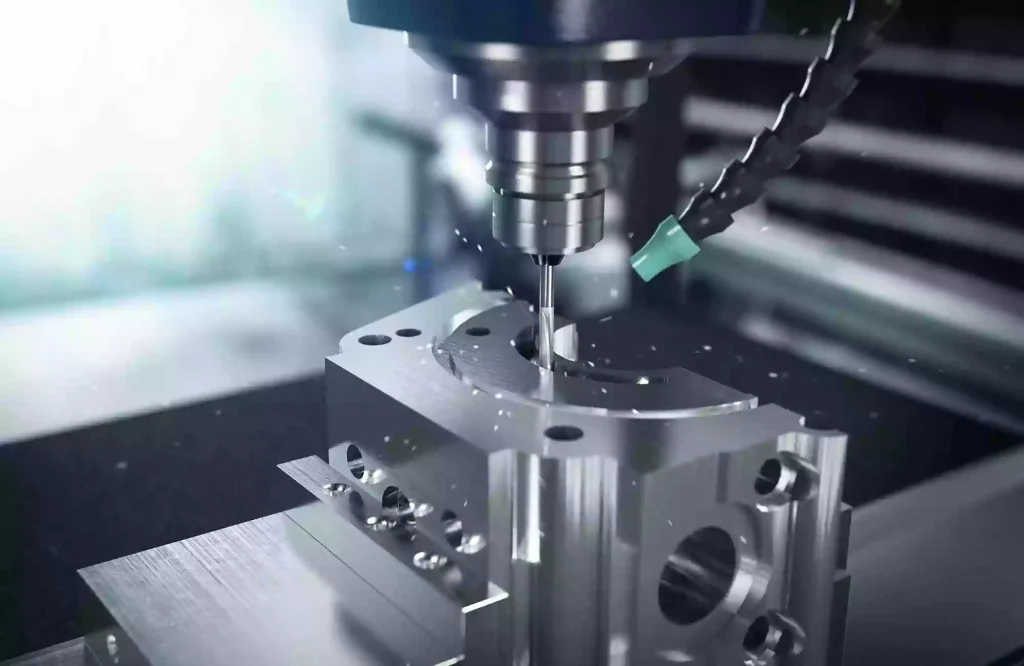
Types of Surface Treatments for CNC Machining Materials and How to Choose Them
Surface treatment plays an important role in CNC machining because it affects a component’s corrosion resistance, wear resistance, appearance, and final dimensions. The right treatment depends on the base material, operating environment, functional requirements, and dimensional tolerances.
For design engineers and procurement teams, choosing a surface treatment means balancing performance, material compatibility, manufacturing cost, and the requirements of the final assembly.
What Are CNC Machining Surface Finishes?
CNC machining surface finishes are processes applied to machined components to modify their surface texture, appearance, or functional properties. Some processes remove burrs and machining marks, while others create a protective layer or modify the material’s surface chemically.
Mechanical finishing includes deburring, bead blasting, brushing, and polishing. These processes can improve appearance, remove sharp edges, or produce a more uniform texture.
Chemical and electrochemical treatments include anodizing, passivation, electropolishing, and chemical conversion coating. Depending on the material and process, they can improve corrosion resistance, surface cleanliness, or other functional properties.
Plating and coating processes, such as electroless nickel plating, zinc plating, powder coating, and wet painting, add a layer or protective finish to the component. They may be selected for corrosion protection, wear performance, appearance, or electrical requirements.
These processes serve different purposes. A finish suitable for a decorative aluminum enclosure may not be appropriate for a stainless steel fluid-contact component or a precision steel shaft.
Common Types of Surface Treatments for CNC Machined Parts
As-Machined Finish
An as-machined finish is the surface condition produced directly by CNC machining without an additional finishing process. Its appearance and roughness depend on the cutting tool, feed rate, cutting conditions, material properties, and machining strategy.
This finish is suitable for prototypes, internal mechanical components, fixtures, and other parts where the natural machining texture is acceptable. It can also be appropriate for precision features where an additional coating is unnecessary or undesirable.
The primary advantage is cost efficiency because no separate finishing operation is required. However, tool marks may remain visible, and the untreated surface may not provide sufficient corrosion or wear protection for demanding applications.
Bead Blasting
Bead blasting uses small blasting media propelled against a component’s surface to create a uniform matte texture. It can reduce the visual contrast of machining marks and improve appearance consistency across components.
This treatment is commonly used for aluminum housings, electronic enclosures, consumer product components, and other parts where a consistent appearance is important. It may also be used before anodizing to prepare the surface.
Bead blasting does not automatically provide corrosion protection. It can affect the texture of precision features, so threads, sealing faces, and mating surfaces may need protection during processing.
Deburring and Tumbling
Deburring removes sharp edges and unwanted material left by machining. Tumbling uses abrasive media and controlled movement to process multiple components, making it suitable for certain small parts produced in batches.
These processes are useful for brackets, connectors, housings, fasteners, and components that require safe handling or reliable assembly. Burrs can interfere with mating parts, damage seals, or introduce debris into mechanical systems.
The process must match the component’s geometry. Excessive deburring or tumbling may round edges or alter small features, so critical dimensions and edge requirements should be defined before processing.
Brushing and Polishing
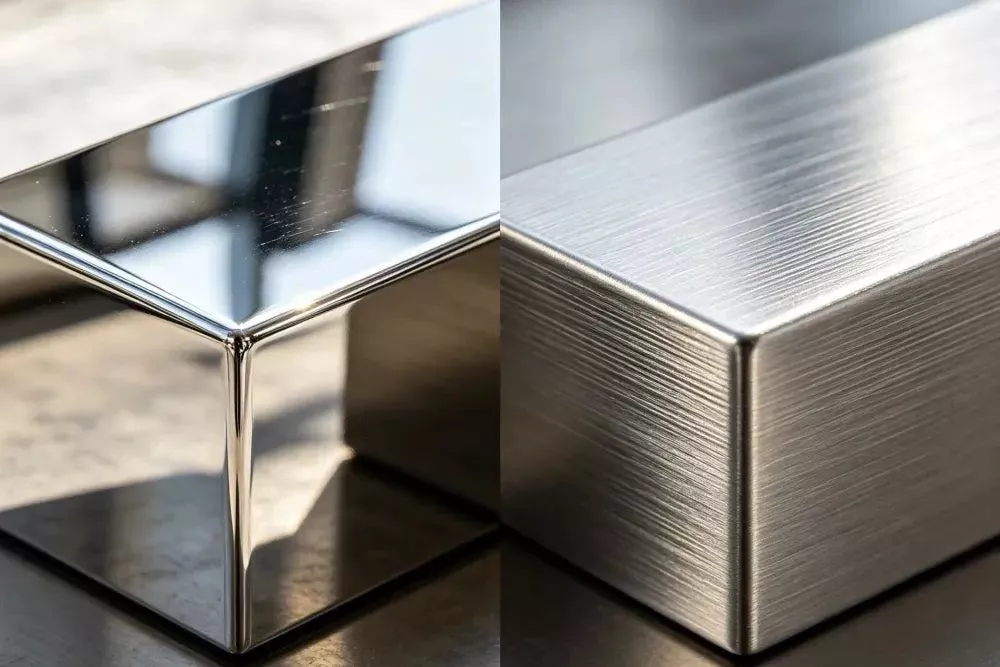
Brushing creates a directional surface texture, while polishing reduces surface irregularities and can produce a smoother, brighter appearance. The result depends on the material, initial surface condition, abrasive method, and required finish.
These treatments are often used for stainless steel panels, aluminum housings, visible mechanical components, and decorative surfaces. Polishing may also improve cleanability when the application requires reduced surface roughness.
A visually polished surface does not automatically meet a specified roughness or cleanliness requirement. Medical, laboratory, and high-purity applications may require defined surface parameters and inspection criteria.
Anodizing
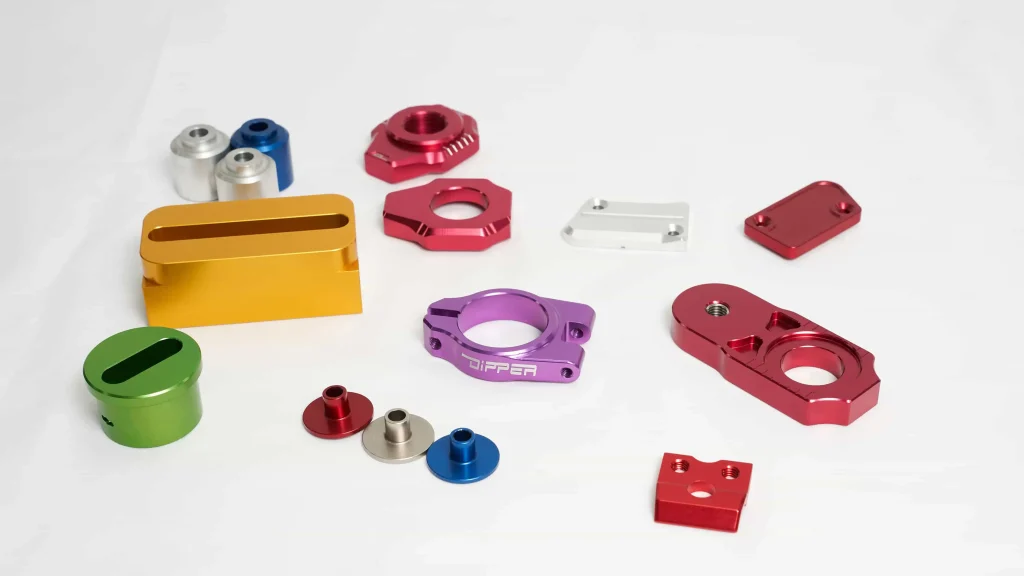
Anodizing is an electrochemical process commonly used for aluminum and certain aluminum alloys. It forms an oxide layer that can improve corrosion resistance and provide a base for coloring. Depending on the process, it can also improve wear performance.
Type II anodizing is commonly selected for general corrosion protection and decorative finishes. Type III, often called hardcoat anodizing, produces a thicker, harder oxide layer for applications requiring greater wear resistance.
Anodizing is widely used for electronic enclosures, precision brackets, mechanical housings, and other aluminum components.
Dimensional change is an important consideration. The oxide layer grows partly into the substrate and partly outward from the original surface. The effect depends on the alloy and process specification, so critical holes, threads, bearing seats, and mating surfaces must be considered before machining and finishing are finalized.
Electroless Nickel Plating
Electroless nickel plating deposits a nickel-based coating through a chemical process rather than an externally applied electric current. When the component is properly prepared and the process is controlled, it can provide relatively uniform coverage across complex geometries.
Depending on the coating specification, electroless nickel can improve corrosion resistance, surface hardness, and wear performance. It is used for precision mechanical components and industrial equipment parts exposed to demanding service conditions.
Coating thickness, phosphorus content, substrate material, and any required heat treatment affect the final properties. Since plating adds material to the surface, dimensional allowances must be considered for precision fits.
Electroplating
Electroplating uses electric current to deposit a metal coating onto a conductive substrate. Common options include zinc, nickel, chromium, and copper plating, each serving different functional or appearance requirements.
Zinc plating is often used on suitable steel components for corrosion protection. Nickel plating can provide functional and decorative benefits, while copper plating may be selected for electrical, thermal, or specialized manufacturing applications.
The appropriate coating depends on the base metal, service environment, coating thickness, and performance specification. For high-strength steels, certain plating processes can introduce a risk of hydrogen embrittlement, making suitable process controls important.
Chemical Conversion Coating
Chemical conversion coating modifies a metal surface through a chemical reaction. Chromate conversion coating is one example used on aluminum and other suitable metals, depending on the process specification.
These coatings can provide corrosion protection and may serve as a preparation layer for painting. Certain conversion coatings can also be useful where electrical contact performance needs to be preserved, although conductivity depends on the specific coating and application.
Material compatibility and environmental requirements must be considered when specifying a conversion coating. Different formulations have different properties and restrictions, so the required specification should identify the acceptable process.
Passivation
Passivation is commonly applied to stainless steel to remove free iron and certain surface contaminants. This supports the formation and performance of the naturally occurring passive oxide layer that helps stainless steel resist corrosion.
Passivation is relevant to stainless steel components used in medical equipment, food-processing machinery, laboratory instruments, and industrial systems where corrosion control is important.
Unlike plating, passivation does not normally create a thick deposited coating. It also does not remove all machining marks. If a component requires both corrosion control and a smoother surface, electropolishing or another finishing operation may need to be considered separately.
Electropolishing
Electropolishing removes a controlled amount of material from a conductive metal surface through an electrochemical process. It can reduce surface irregularities, improve smoothness, and remove certain surface contaminants.
This process is commonly considered for stainless steel components that require improved cleanability, reduced surface roughness, or a controlled surface condition. It may be used in laboratory equipment, fluid-handling systems, and other applications with demanding surface requirements.
Because electropolishing removes material, it can affect dimensions, edges, and small features. Critical tolerances should be reviewed before the process is selected, particularly for thin sections and precision mating surfaces.
Powder Coating and Wet Painting
Powder coating applies a dry coating material that is cured to form a continuous finish. Wet painting applies a liquid coating that dries or cures on the component. Both methods can provide color options and protect suitable substrates from environmental exposure.
These finishes are commonly used for equipment housings, covers, brackets, and external structural components. The coating system should be selected according to the substrate, exposure conditions, required appearance, and expected service life.
Coating thickness can affect assembly clearances, threads, electrical grounding, and thermal contact. Critical interfaces may need masking, and proper surface preparation is important for adhesion and long-term performance.
Black Oxide
Black oxide is a conversion treatment commonly applied to suitable ferrous materials. It produces a dark surface with relatively little dimensional buildup compared with many deposited coatings.
It is used for tools, fasteners, fixtures, and certain mechanical components where a black appearance is desirable. Depending on the process, oil or sealant may be added to improve corrosion protection.
Black oxide alone is generally not the best choice for components exposed to severe outdoor, marine, or chemical environments. The treatment should be evaluated against actual operating conditions rather than selected solely for its appearance.
How to Choose the Right Surface Treatment for CNC Machining Materials
Selecting a surface treatment starts with the component’s functional requirements. A decorative aluminum enclosure, a stainless steel fluid-contact component, and a precision steel shaft may require completely different processes.
Define the Primary Functional Requirement
First, identify what the treatment must achieve. Common requirements include corrosion resistance, wear resistance, hardness, appearance, electrical conductivity, cleanability, and reduced surface roughness.
For corrosion resistance, consider the base material, moisture exposure, chemicals, and expected service life. For wear resistance, examine the contact conditions, friction, load, and movement between surfaces. For appearance, consider color, gloss, texture, and consistency across production batches.
Electrical requirements need particular attention. Some coatings change surface conductivity or electrical contact resistance. Components requiring grounding or conductive contact may need designated untreated areas or a specifically selected finish.
Match the Treatment to the Base Material
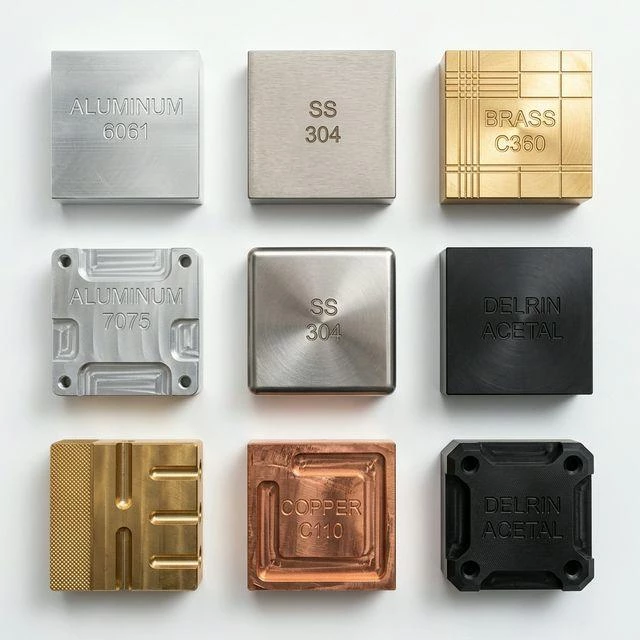
Material compatibility is essential because the same treatment does not produce the same result on every metal or plastic.
Aluminum: Anodizing is commonly used when corrosion resistance, surface durability, or appearance is required. Bead blasting may be used to create a uniform texture before anodizing. Chemical conversion coating may suit applications with different electrical or coating requirements.
Stainless steel: Passivation is often used to support corrosion resistance. Electropolishing may be suitable when a smoother surface or improved cleanability is needed. The grade and operating environment influence the choice.
Carbon steel and alloy steel: Zinc plating, electroless nickel plating, black oxide, painting, and other compatible treatments may be considered depending on corrosion exposure, wear, dimensional requirements, and service conditions.
Copper and copper alloys: Polishing, plating, and other treatments may be selected based on electrical conductivity, oxidation resistance, appearance, and contact requirements.
Engineering plastics: Most conventional metal treatments, including anodizing, are not suitable for plastics. Depending on the polymer and application, deburring, polishing, texturing, painting, or specialized coating processes may be more appropriate.
The exact alloy or polymer grade should be confirmed before the finishing process is finalized.
Evaluate the Operating Environment
The service environment strongly affects treatment performance. An indoor component with limited moisture exposure may need less protection than an outdoor component exposed to rain, temperature cycling, ultraviolet radiation, or industrial contaminants.
Marine and coastal applications require particular attention to chloride exposure. Components exposed to cleaning agents, oils, solvents, or other chemicals need a treatment compatible with those substances. High-temperature applications also require coatings and finishes that can withstand expected thermal conditions.
Where corrosion performance is critical, specify the relevant test method and acceptance criteria rather than relying on broad descriptions such as “corrosion resistant.”
Account for Dimensional Tolerances
Surface treatments can change the final dimensions of a CNC machined component. Plating and painting add material, while polishing and electropolishing may remove material. Anodizing also changes surface dimensions through oxide-layer growth.
Before selecting a finish, identify critical features such as bearing seats, threaded holes, sealing faces, shaft diameters, locating surfaces, and press-fit interfaces. Some areas may need masking, while others may require machining allowances to compensate for the treatment.
Drawings should clarify whether dimensions apply before or after finishing. For precision parts, the final acceptance condition should be clearly stated so the finished component meets assembly requirements.
Balance Performance, Appearance, and Cost
A more complex treatment is not necessarily better for every component. Additional processes can increase cost, lead time, and inspection requirements without delivering meaningful functional benefits.
When comparing treatments, consider the finishing cost, preparation requirements, masking, batch quantity, dimensional impact, inspection needs, and expected service life. A low-cost finish may be appropriate for a prototype or an internal component, while a more durable treatment may be justified for parts operating in corrosive or abrasive environments.
The goal is to select a finish that meets the actual requirements without adding unnecessary processing.
Surface Roughness vs. Surface Treatment
Surface roughness and surface treatment are related but distinct specifications.
Surface roughness describes the texture of a surface and is commonly measured using parameters such as Ra or Rz. It can be influenced by tool geometry, feed rate, machining strategy, grinding, and polishing.
Surface treatment describes a process applied to the surface, such as anodizing, passivation, plating, conversion coating, or painting.
A component can meet a specified roughness value without receiving an additional coating. Conversely, a coated component may have the desired color but fail to meet a required roughness value or dimensional tolerance.
When both properties matter, specify them separately. For example, a drawing may define a surface roughness requirement for a functional face while specifying anodizing for the component’s exposed surfaces. This reduces ambiguity during manufacturing and inspection.
Common Mistakes When Specifying CNC Surface Finishes
One common mistake is choosing a treatment based only on appearance. A black, silver, or polished surface does not automatically provide the required corrosion resistance, wear performance, or electrical properties.
Another is ignoring dimensional changes. Even a relatively thin coating can affect small holes, threads, close-fitting assemblies, and precision locating features.
Material compatibility is also important. A process that performs well on one alloy may produce different results on another, so the exact material grade should be included in the specification.
Finally, vague drawing notes can lead to inconsistent results. Terms such as “smooth,” “high quality,” or “corrosion resistant” may be interpreted differently by different suppliers. Where possible, specify the treatment type, applicable standard, coating thickness or roughness requirement, masked areas, and inspection criteria.
What Information Should You Provide When Requesting a CNC Machining Quote?
To evaluate surface treatment requirements accurately, include the following information with your CNC machining drawing:
- Material: Exact alloy or polymer grade and applicable material standard.
- Surface treatment: Required process or acceptable alternatives, if known.
- Functional requirements: Corrosion resistance, wear resistance, appearance, conductivity, or cleanability.
- Dimensional requirements: Critical tolerances and dimensions that must be achieved after finishing.
- Surface specifications: Required Ra or Rz values, coating thickness, color, or texture.
- Masking requirements: Threads, electrical contacts, sealing faces, bearing seats, or other areas that must remain untreated.
- Inspection requirements: Applicable standards, test methods, certificates, or inspection reports.
- Production quantity: Prototype, low-volume batch, or repeat production requirements.
If the appropriate treatment has not yet been determined, provide the intended application and operating environment along with the drawing. These details help clarify which processes are compatible with the existing design.
CNC Machining and Surface Finishing at Xtmade
Xtmade manufactures custom CNC machined components based on customer-provided drawings, CAD files, samples, and specifications. Surface treatment requirements can be reviewed alongside material selection, dimensional tolerances, and intended application to clarify manufacturing requirements before production.
Submit your drawing or CAD file with the material grade, required surface finish, critical dimensions, and expected quantity to request a quote. If the finish has not yet been finalized, include the component’s operating conditions and functional requirements so suitable options can be evaluated around your existing design.