Everything You Need to Know About 4-Axis CNC Machining
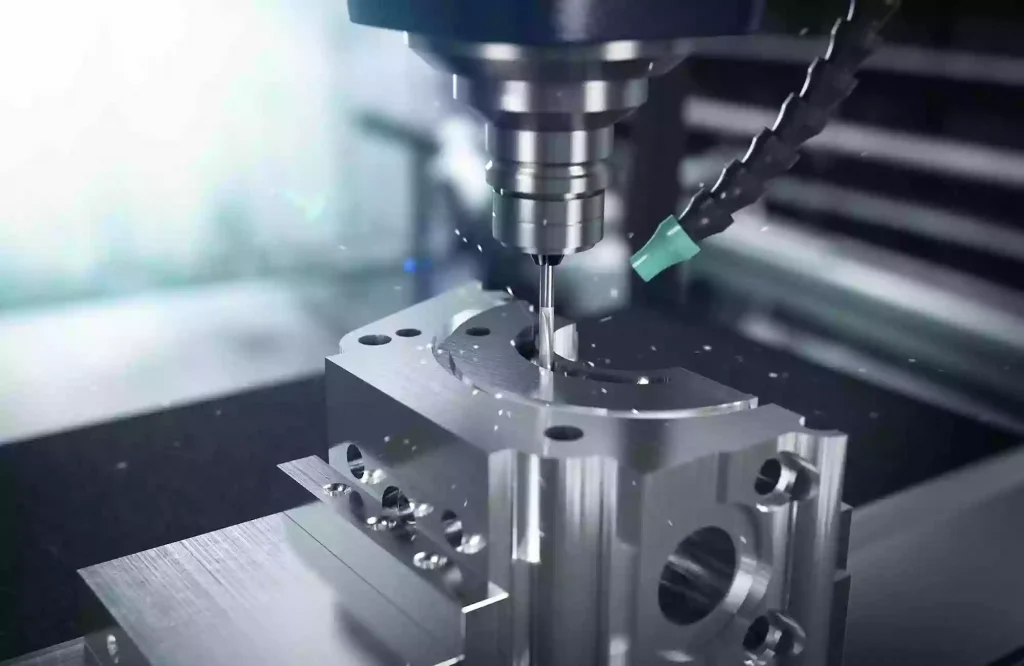
4-Axis CNC machining is a method that uses four controlled axes to manufacture precision parts with greater flexibility than traditional 3-axis machining. By adding a rotary axis to standard linear movements, 4-axis machining enables manufacturers to access multiple surfaces of a workpiece, reduce setups, and improve machining efficiency.Unlike conventional 3-axis machining, 4-axis CNC machining allows controlled rotary movement during the manufacturing process, making it suitable for parts requiring multi-side features, cylindrical surfaces, angled machining, and complex geometries.
This guide covers everything about 4-axis CNC machining, including how it works, machine configurations, machining processes, design considerations, suitable parts, industrial applications, cost factors, and comparisons with other CNC machining methods.
What Is 4-Axis CNC Machining?
4-Axis CNC machining is a CNC machining method that uses four independently controlled axes to manufacture precision components. Compared with traditional 3-axis machining, which relies on X, Y, and Z linear movements, 4-axis CNC machining adds an additional rotary axis to provide more flexible access to the workpiece.
The additional axis allows the workpiece or cutting tool to rotate during machining, enabling manufacturers to process multiple sides of a part in a single setup. This reduces the need for repeated repositioning and helps improve machining efficiency, accuracy, and consistency.
The four controlled axes typically include:
- X-axis: Controls movement along the left-to-right direction.
- Y-axis: Controls movement along the front-to-back direction.
- Z-axis: Controls vertical movement of the cutting tool.
- A-axis: Provides rotary movement around the X-axis.
How Does 4-Axis CNC Machining Work?
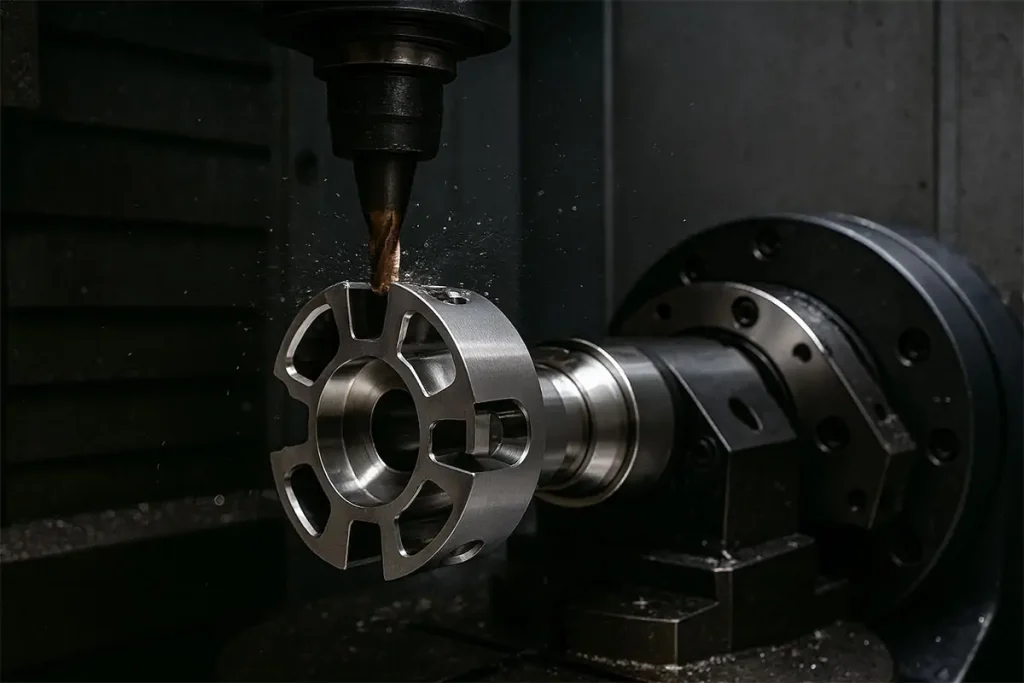
During the machining process, the CNC controller coordinates linear and rotary movements to position the cutting tool and workpiece according to programmed toolpaths.
The fourth axis enables the workpiece to rotate to different positions, allowing machining operations on multiple surfaces without removing and repositioning the part. Depending on the application, 4-axis machining is commonly performed in two ways:
Indexed 4-Axis Machining (3+1 Axis)
In indexed machining, the rotary axis moves the workpiece to a specific angle and locks into position before cutting begins. The machine then performs standard three-axis machining operations at the selected orientation.
This method is commonly used for:
- Drilling holes on multiple faces
- Milling slots and pockets
- Machining angled features
Continuous 4-Axis Machining
In continuous machining, the rotary axis moves simultaneously with the other three axes during cutting. This coordinated movement allows the machine to create continuous profiles and complex features.
Typical applications include:
- Spiral grooves
- Helical features
- Cylindrical contours
- Complex curved surfaces
Common 4-Axis CNC Machining Configurations
The fourth axis can be integrated into CNC equipment in different ways depending on the part requirements and production needs.
Rotary Table Setup
A rotary table is added to a CNC machine to provide rotational movement of the workpiece. This configuration is widely used for small and medium-sized components requiring multi-side machining.
Rotary Indexer Setup
A rotary indexer provides precise angular positioning and is commonly used for repeated machining operations that require consistent indexing.
Integrated 4-Axis CNC Machines
Some machining centers include a built-in rotary axis, providing improved rigidity, accuracy, and production efficiency compared with external rotary attachments.
4-Axis CNC Machining Equipment
4-axis CNC machining requires CNC equipment that can coordinate three linear movements with an additional rotary axis. Compared with standard CNC machines, these systems integrate rotary components that allow the workpiece to rotate during machining, providing access to multiple surfaces without completely changing the setup.
The equipment configuration used for 4-axis machining depends on factors such as part geometry, production volume, material requirements, and required machining accuracy.
Types of 4-Axis CNC Machines
Vertical Machining Centers (VMC)
Vertical machining centers are one of the most common machine platforms for 4-axis CNC machining. In this configuration, the spindle moves along the X, Y, and Z axes, while a rotary table or indexer provides additional rotational movement.
The vertical structure offers good visibility and flexible access for setup and operation, making VMC-based 4-axis machining suitable for a wide range of precision components. It is often selected when parts require machining on multiple sides, accurate feature positioning, or frequent changes between different part geometries.
Horizontal Machining Centers (HMC)
Horizontal machining centers use a spindle positioned horizontally relative to the workpiece. When combined with a rotary axis, they can machine multiple faces of a component with fewer repositioning operations.
The horizontal configuration helps improve chip removal during cutting and provides strong support for stable machining conditions. These machines are commonly used when production efficiency, repeatability, and consistent machining performance are important.
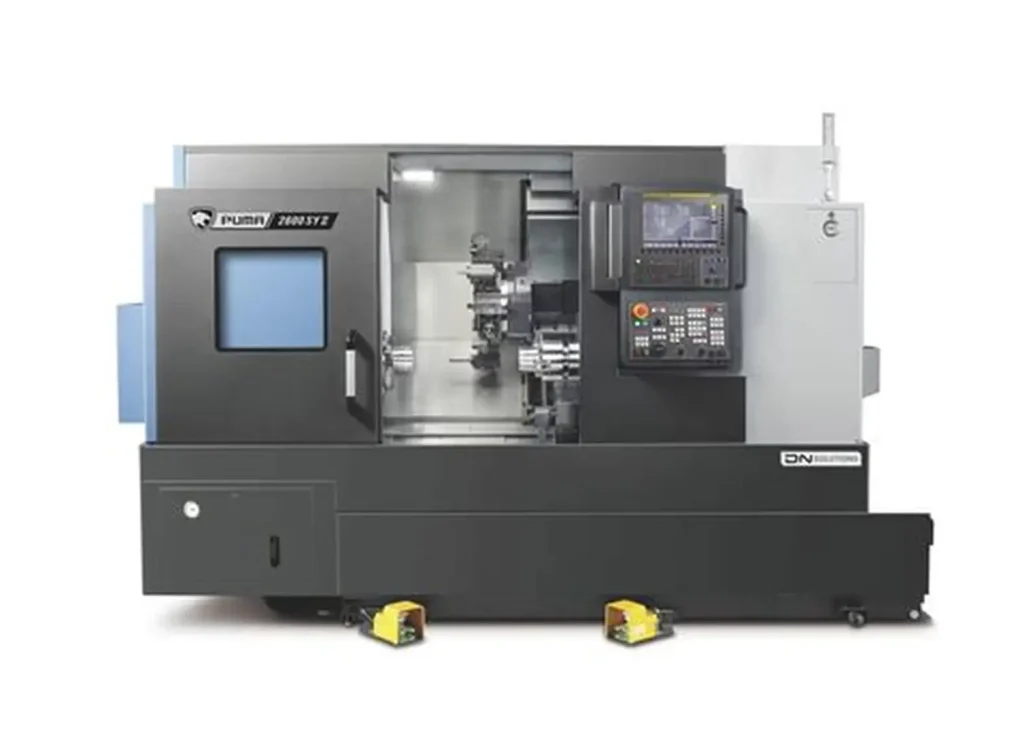
4 Axis Mill-Turn Machines
CNC mill-turn machines combine turning and milling operations within one machine platform. With rotary control, these machines can handle both rotational features and additional milling operations without transferring the part between separate machines.
This configuration is suitable for components that combine cylindrical geometry with milled features, such as shafts, housings, and other complex mechanical parts.
Rotary Axis Systems for 4-Axis CNC Machining
The rotary axis is the defining component that enables four-axis machining. Different rotary systems are selected based on part size, machining requirements, and production conditions.
Rotary Tables
A rotary table is a common solution for adding fourth-axis capability to a CNC machining center. It rotates the workpiece around a controlled axis, allowing machining at different angles and positions.
Rotary tables are widely used for parts that require multiple-sided machining or repeated angular positioning.
Rotary Indexers
Rotary indexers provide precise angular positioning by rotating the workpiece to programmed locations before machining begins. Unlike continuous rotation systems, indexers are mainly used when machining operations are performed at fixed positions.
They are effective for components with evenly spaced features, such as multiple holes, slots, or repeated patterns around a part.
Trunnion Rotary Systems
Trunnion rotary systems support the workpiece using a more rigid rotary structure, improving stability during machining. They are often used when larger cutting forces or higher positioning accuracy are required.
Important Equipment Factors for 4-Axis CNC Machining
The performance of 4-axis CNC machining depends not only on the number of controlled axes but also on the overall machine capability.
Important factors include:
Rotary Axis Accuracy
The accuracy and repeatability of the rotary system directly affect feature location, alignment, and part consistency.
Work Envelope and Load Capacity
The machine must accommodate the part dimensions and weight while maintaining stable cutting conditions.
Spindle Capability
Spindle speed, power, and rigidity influence material compatibility, cutting efficiency, and achievable surface quality.
Machine Rigidity
A rigid machine structure helps minimize vibration and maintain dimensional accuracy, especially during complex machining operations.
4-Axis CNC Machining Process
The 4-axis CNC machining process involves multiple stages, from part design and programming to machining, inspection, and finishing. Each stage affects the final part quality, production efficiency, and overall manufacturing cost.
Compared with standard CNC machining, 4-axis machining requires additional planning for rotary movement, fixture design, and tool accessibility to ensure smooth operation and accurate results.
Part Design and DFM Preparation
The process begins with reviewing the part design and evaluating whether the geometry is suitable for 4-axis machining.
During the DFM (Design for Manufacturing) stage, engineers analyze factors such as part orientation, tool accessibility, fixture requirements, and critical tolerances. Proper planning helps determine how the rotary axis will be used and reduces potential issues during machining.
Important design considerations include:
- Ensuring sufficient tool clearance
- Reducing unnecessary setups
- Positioning critical features within accessible machining angles
- Considering workholding requirements
CAD/CAM Programming
After design review, the CAD model is converted into machining instructions through CAM programming.
For 4-axis CNC machining, programming must account for both linear and rotary movements. Engineers create toolpaths that coordinate the X, Y, Z axes with the rotary axis while checking for possible collisions between the tool, fixture, and workpiece.
CAM programming typically includes:
- Tool selection
- Cutting parameter setup
- Rotary movement planning
- Toolpath simulation and verification
Workholding and Machine Setup
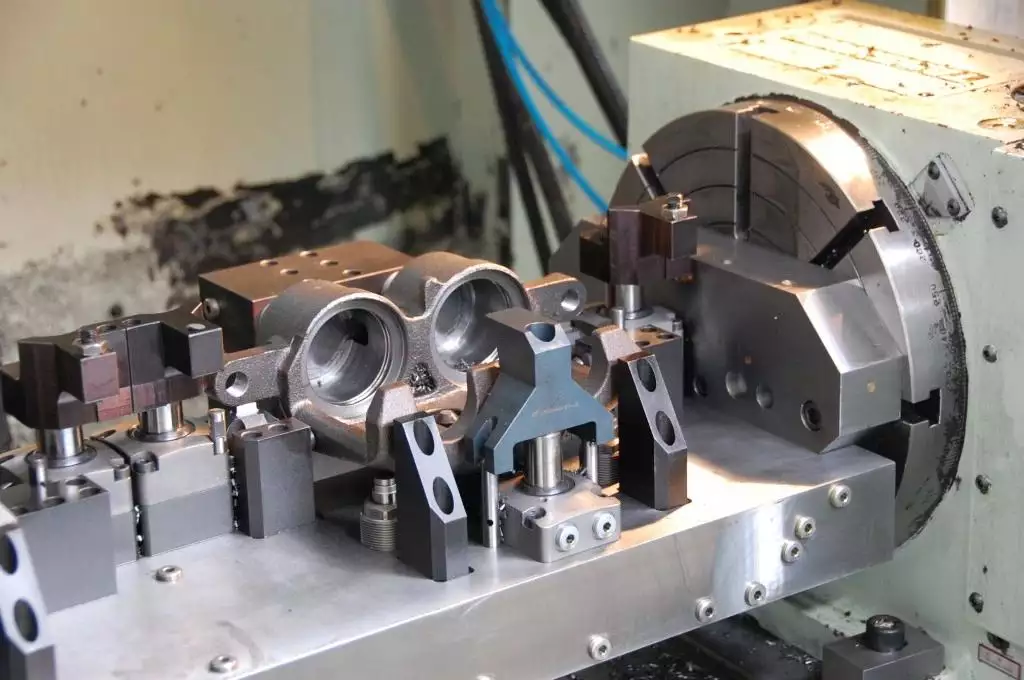
Proper workholding is essential for maintaining accuracy during 4-axis machining. Since the workpiece rotates during machining, the fixture must provide stable support while allowing access to the required machining areas.
Common workholding solutions include:
- Chucks
- Collets
- Custom fixtures
- Rotary-axis mounting systems
During setup, operators also verify workpiece positioning, machine alignment, and tool offsets before machining begins.
Machining Operations
Once programming and setup are completed, the CNC machine performs the required cutting operations according to the programmed toolpaths.
Depending on the part design, 4-axis CNC machining may include operations such as milling, drilling, tapping, slotting, and contour machining.
The rotary axis allows these operations to be performed at different orientations, making it possible to machine features that would require multiple setups on a conventional 3-axis machine.
Inspection and Quality Control
Inspection is performed throughout the machining process to ensure that finished parts meet dimensional and quality requirements.
Depending on the project requirements, inspection methods may include:
- Dimensional measurement
- CMM inspection
- Feature verification
- Surface finish measurement
For precision components, inspection helps confirm the accuracy of machined features and the consistency of production results.
Secondary Operations and Surface Finishing
After machining and inspection, additional processes may be performed to achieve the required appearance, performance, or surface properties.
Common secondary operations include:
- Deburring
- Polishing
- Anodizing
- Passivation
- Plating
- Coating
These finishing processes are selected based on the material, application requirements, and final part specifications.
Parts Suitable for 4-Axis CNC Machining
4-axis CNC machining is ideal for parts that require multi-side machining, rotary features, or angled features that are difficult to complete with standard 3-axis machining.
Common 4-axis CNC machined parts include:
- Cylindrical components: Shafts, rollers, cam components, and rotors.
- Multi-sided parts: Housings, valve bodies, manifolds, and enclosures.
- Parts with rotary features: Components with spiral grooves, radial holes, threads, or slots.
- Complex contour parts: Impellers, blades, and custom mechanical components.
Applications of 4-Axis CNC Machining
4-axis CNC machining is widely used in industries that require precision components with multi-sided features, complex geometries, and efficient production.
Common applications include:
- Aerospace: Brackets, housings, and structural components.
- Automotive: Engine parts, transmission components, and fixtures.
- Medical: Surgical instruments and precision device components.
- Industrial Equipment: Machine parts, valve components, and housings.
- Robotics: Robotic components and automation parts.
Cost Considerations of 4-Axis CNC Machining
The cost of 4-axis CNC machining depends on several factors, including part complexity, material selection, machining time, programming requirements, and production volume. Compared with standard 3-axis machining, 4-axis machining requires additional rotary-axis capabilities, which can increase equipment and setup costs. However, it can also reduce manufacturing expenses for parts that require multiple setups or complex machining operations.
How Much Does 4-Axis CNC Machining Cost?
4-axis CNC machining costs are typically calculated based on machine hourly rates or quoted according to the complete part requirements.
For hourly pricing, the cost depends on the machine type, machining capability, and operating expenses. A typical 4-axis CNC machining rate is around $40 to $50 per hour, although actual rates vary depending on the supplier, location, equipment investment, and project requirements.
For individual parts, costs can range from tens of dollars for simple components to hundreds of dollars for complex precision parts. Parts with tight tolerances, difficult materials, complex geometries, or low production quantities usually require more machining time and engineering effort, resulting in higher costs.
These price ranges are only general references. The final quotation depends on the specific design, material, quantity, and manufacturing requirements.
Main Cost Factors of 4-Axis CNC Machining
Part Complexity
Part complexity is one of the biggest factors affecting 4-axis CNC machining costs. Components with complex geometries, multiple machining angles, deep pockets, or tight tolerances require more advanced programming, longer cycle times, and additional process planning.
A simple part with a few indexed features may require less machining time, while a component involving continuous rotary movements and complex toolpaths will increase programming and production costs.
Material Selection
The selected material directly affects machining cost. Materials such as aluminum are generally easier to machine and allow higher cutting speeds, while stainless steel, titanium, and other difficult-to-machine alloys require specialized tooling, slower machining parameters, and increased tool wear.
Material cost itself also contributes to the overall project budget, especially for parts manufactured from high-value metals.
Machine Setup and Programming
4-axis CNC machining requires additional planning compared with standard 3-axis machining because the rotary axis must be properly programmed and coordinated with the other machining movements.
CAM programming, fixture preparation, workholding design, and machine setup time all contribute to the initial manufacturing cost. Parts requiring multiple orientations or complex rotary toolpaths typically involve longer preparation time.
Production Volume
Production quantity has a significant impact on the unit cost of 4-axis CNC machined parts.
Prototype and low-volume projects usually have higher per-part costs because programming, setup, and tooling expenses are spread across fewer units. For larger production runs, these fixed costs can be distributed across more parts, reducing the average cost.
Machine Operating Costs
The type and capability of the 4-axis CNC equipment also influence machining rates. Machines with higher accuracy, larger work envelopes, advanced automation, and greater cutting capability generally have higher operating costs.
These costs include equipment depreciation, maintenance, tooling consumption, energy usage, and skilled labor required for programming and operation.
How to Reduce 4-Axis CNC Machining Costs
Reducing 4-axis CNC machining costs starts with optimizing the part design and manufacturing strategy.
Several approaches can help lower overall expenses:
- Simplify unnecessary complex features
- Avoid excessively tight tolerances where they are not required
- Select materials with better machinability
- Design parts for efficient workholding and fewer setups
- Increase production quantities when possible
Working with an experienced CNC machining supplier during the design stage can also help identify opportunities to improve manufacturability and control costs.
4-Axis CNC Machining vs 3-Axis and 5-Axis CNC Machining
Choosing the right CNC machining method depends on part geometry, required accuracy, production requirements, and manufacturing budget. While 3-axis, 4-axis, and 5-axis machining can all produce precision components, each method has different capabilities and cost considerations.
| Feature | 3-Axis CNC Machining | 4-Axis CNC Machining | 5-Axis CNC Machining |
| Movement | X, Y, Z linear axes | X, Y, Z axes with one rotary axis | X, Y, Z axes with two rotary axes |
| Part Access | Limited to fixed orientations | Multiple sides with rotary positioning | Complex angles and free-form surfaces |
| Setup Requirements | More setups for multi-side parts | Reduced setups for many complex parts | Minimal setups for highly complex parts |
| Part Complexity | Simple to medium complexity | Medium to complex components | Highly complex geometries |
| Cost | Lower equipment and programming cost | Balanced cost and capability | Highest equipment and programming cost |
When to Choose 4-Axis CNC Machining
4-axis CNC machining is often the right choice when a part requires more flexibility than 3-axis machining but does not require the full capabilities of 5-axis machining.
It is particularly suitable for components with:
- Multiple machined surfaces
- Rotary or cylindrical features
- Angled holes and slots
- Complex positioning requirements
For these applications, 4-axis machining provides a balance between machining capability, accuracy, and production cost.
4-Axis CNC Machining: A Balance Between Capability and Cost
Compared with 3-axis machining, 4-axis machining reduces setup requirements and improves access to multiple part surfaces. Compared with 5-axis machining, it offers a more economical solution for components that do not require simultaneous multi-angle cutting.
For many medium-complexity parts, 4-axis CNC machining provides an effective balance between manufacturing efficiency and cost control.
Choose a Reliable 4-Axis CNC Machining Partner
Working with an experienced CNC machining supplier can have a significant impact on your project quality, cost efficiency, and delivery performance. Xtproto provides complete 4-axis CNC machining support, including:
- Reviewing part designs and providing DFM recommendations
- Helping select suitable materials and machining strategies
- Optimizing production processes to improve efficiency
- Performing dimensional inspection and quality verification
- Supporting prototype development and production manufacturing
With advanced CNC equipment, experienced engineers, and strict quality control processes, Xtproto helps customers manufacture precision parts while maintaining accuracy, consistency, and cost efficiency throughout the project.
Conclusion
4-axis CNC machining provides an effective solution for manufacturing parts that require more flexibility than traditional 3-axis machining but do not require the full complexity of 5-axis machining.
By combining linear and rotary movements, 4-axis machining can reduce setups, improve feature alignment, and efficiently produce components with multi-sided features, cylindrical geometries, and complex machining requirements.
When selecting a CNC machining method, factors such as part design, material, production volume, accuracy requirements, and budget should all be considered. For projects that require a balance between capability and cost, 4-axis CNC machining is often a practical and efficient choice.
With advanced CNC equipment, experienced engineering support, and comprehensive manufacturing capabilities, Xtproto provides reliable 4-axis CNC machining solutions for prototype and production projects.