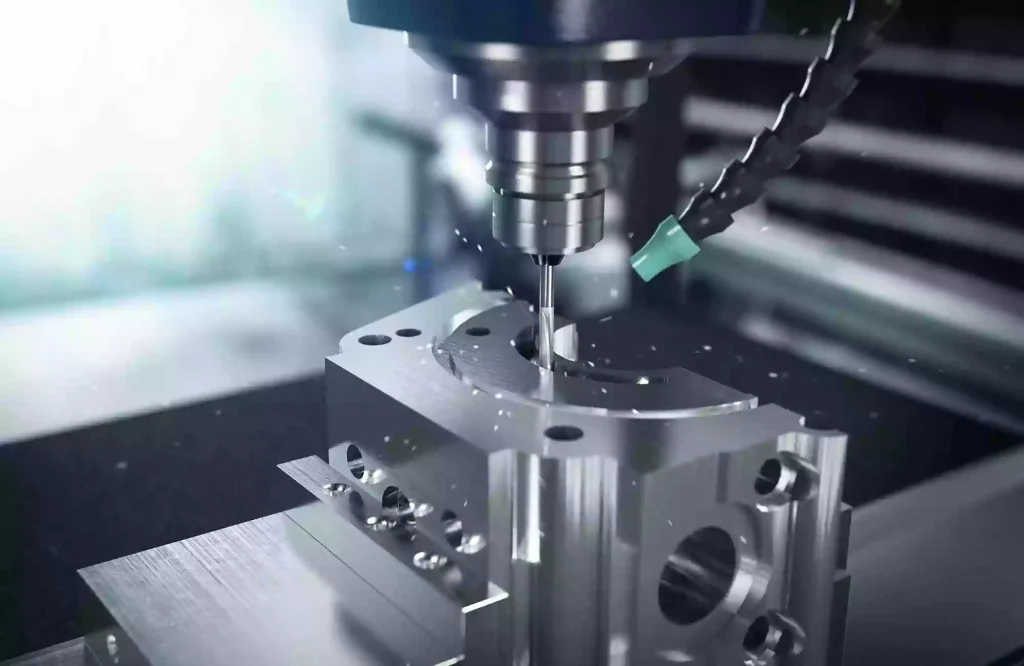
Aluminum vs Steel CNC Machining: Key Differences in Machinability, Cost, and Performance
Selecting between aluminum and steel for custom CNC machining often presents a balance between raw material costs, structural performance, and machining cycle times. While both metal families are workhorses in precision manufacturing, their physical properties fundamentally dictate how they behave under a cutting tool.
Engineers and procurement teams frequently evaluate aluminum alloys like 6061-T6 against structural steels like 1018 carbon steel or 4140 alloy steel. A common misstep is assuming that a lower raw material price per kilogram automatically translates to a lower finished component cost. In practice, higher machining feeds and speeds enabled by aluminum can significantly reduce spindle time, offsetting raw material price differences. Understanding these fundamental mechanical and thermal variations is crucial for optimizing parts for both structural integrity and manufacturing cost.
Comprehensive Comparison: Aluminum vs Steel in CNC Machining
The following matrix highlights the operational and material differences between standard machining-grade aluminum (e.g., 6061-T6) and carbon steel (e.g., 1018 / 4140).
| Feature / Metric | Aluminum (e.g., 6061-T6) | Carbon/Alloy Steel (e.g., 1018 / 4140) |
| Brinell Hardness (HB) | 95 | 126 – 300+ (Heat treated) |
| Tensile Strength (Yield) | ~276 MPa | 370 – 850+ MPa |
| Density (g/cm³) | ~2.70 | ~7.85 |
| Cutting Speed Range (SFM) | 800 – 3,000+ | 100 – 350 |
| Relative Tool Wear | Low to Moderate | Moderate to High |
| Thermal Conductivity | ~167 W/m·K | ~42 – 50 W/m·K |
| Standard Achievable Tolerance | ISO 2768-m (up to ±0.012 mm) | ISO 2768-m (up to ±0.008 mm) |
| Typical Surface Finish (As-Machined) | Ra 0.8 – 1.6 µm | Ra 0.8 – 3.2 µm |
| Raw Material Cost Index | Higher per kg / Lower per unit volume | Lower per kg / Higher per unit volume |
Key Differences in CNC Machining Operations
Machinability & Cutting Speeds
Aluminum’s lower shear strength allows for exceptionally high Surface Feet per Minute (SFM) and aggressive Chip Load parameters. On 3-axis and 5-axis CNC mills, high-speed machining (HSM) strategies can run aluminum at spindle speeds exceeding 12,000 RPM with high volumetric material removal rates (MRR).
Steel requires significantly lower cutting speeds to avoid thermal degradation at the tool edge. Chips formed during steel cutting require higher cutting forces to shear away from the workpiece. Consequently, cycle times for a complex steel component can be 3 to 5 times longer than an identical geometry machined from aluminum.
Tooling & Wear
Machining aluminum typically calls for two- or three-flute carbide end mills with polished flutes to prevent built-up edge (BUE). Aluminum chips can stick to the rake face of the tool if lubrication is insufficient, leading to tool clogging and breakage.
Steel machining requires four or more flutes to distribute cutting forces and maintain tool rigidity. Coated carbide tooling—such as Titanium Aluminum Nitride (TiAlN) or AlTiN—is essential to withstand the elevated temperatures generated in the shear zone. Abrasive wear on the flank face and crater wear on the rake face are primary tool failure modes when cutting steel, requiring more frequent tool changes and diameter offsets.
Thermal Management & Distortion
Aluminum exhibits high thermal conductivity (~167 W/m·K), allowing heat generated during cutting to dissipate rapidly into the chip rather than remaining in the workpiece. However, aluminum’s coefficient of thermal expansion (CTE) is nearly double that of steel. Thin-walled aluminum components or asymmetric pocketing can easily distort during or after machining if clamping forces are excessive or residual stress is released unevenly.
Steel retains heat localized at the cutting zone due to its lower thermal conductivity. This localized heat buildup accelerates tool wear and can cause thermal expansion of the tool or part mid-process, complicating tight-tolerance hold across long production runs. Flood coolant or high-pressure coolant (HPC) through the spindle is necessary when cutting steel to flush chips and maintain thermal stability.
Tolerances & Surface Finish
Both material groups achieve precision tolerances down to ±0.010 mm under controlled machining conditions. Steel is less susceptible to elastic deflection under cutting forces, making it structurally easier to hold tight tolerances on thin walls or long, slender features without chatter.
In terms of surface finish, aluminum easily yields smooth surface profiles (Ra 0.8 µm to Ra 1.6 µm) straight off the machine when sharp tooling and high surface speeds are used. Steel parts can achieve fine finishes, but tool wear and micro-chatter can degrade edge quality if feeds and speeds degrade during a batch run. Post-processing operations like grinding or honing are often required when steel components demand sub-micron surface finishes or tight cylindrical tolerances.
Cost Comparison: Raw Material vs. Machining Time
A primary driver in part procurement costs is the trade-off between raw material expenses and total machine shop hours.
- Raw Material Costs: Steel is typically cheaper per unit weight than aluminum. However, because steel is roughly three times denser than aluminum, a solid billet of steel can cost nearly the same as a billet of aluminum of the same physical dimensions.
- Machining Time & Hourly Rates: CNC machine time is billed based on setup, programming, and run-time hours. Aluminum parts spend significantly less time in the machine envelope due to high MRR. The reduced cycle time usually outweighs aluminum’s slightly higher raw material cost.
- Secondary Operations: Steel components used in humid or external environments typically require secondary corrosion-protection coatings such as black oxide, nickel plating, or zinc plating. Aluminum naturally forms an oxide layer, but anodizing (Type II or Type III Hardcoat) is often added for wear resistance or aesthetic coloring, adding a predictable secondary step to total unit pricing.
Application Scenarios: Choosing the Right Metal
Choose Aluminum If:
- Weight reduction is critical: Ideal for aerospace housings, automotive brackets, drone frames, and handheld device enclosures.
- Cycle-time reduction drives overall project economics: High-volume parts where machining time represents the largest cost factor.
- High thermal dissipation is required: Suitable for heat sinks, electronics enclosures, and motor housings.
- Corrosion resistance without heavy plating is preferred: Excellent for standard industrial enclosures or anodized consumer products.
Choose Steel If:
- High yield strength and surface hardness are mandatory: Critical for structural shafts, heavy-duty gears, fasteners, and high-wear mechanical interfaces.
- High operating temperatures are present: Steel retains mechanical integrity at temperatures where aluminum softens (above 150°C to 200°C).
- Extreme rigidity and resistance to deflection under load are required: Necessary for machine tool bases, high-load jigs, and structural frames.
- Cost-effective surface hardening is required: Steel components can be localized-hardened via induction, carburizing, or nitriding to achieve high surface wear resistance while retaining core toughness.
Optimizing Your Part Design for CNC Machining
Selecting between aluminum and steel is only the first step in achieving a cost-effective, high-performance precision component. Tool access, pocket depths, corner radii, and wall thickness limits change depending on the material’s structural rigidity and machinability.
Before finalizing your engineering drawings, running a Design for Manufacturability (DFM) review helps identify unnecessary cost drivers—such as over-specified tolerances or sharp internal corners—that increase machining time regardless of material selection.
At Xtmade, our engineering team evaluates CAD models to optimize toolpaths, suggest material equivalents, and provide clear cost breakdowns across prototyping and production runs. Submit your STEP or IGES files to Xtmade today for a comprehensive DFM assessment and an accurate RFQ quote.