What is CNC Drilling?
In the vast landscape of modern manufacturing, one of the most fundamental operations is also the most critical: making a hole. From the microscopic vias riddled across a smartphone’s printed circuit board to the tens of thousands of rivet holes securing a commercial airliner’s wing, modern precision assembly would be completely impossible without accurate hole making. Pushing this essential process to its absolute limit is CNC (Computer Numerical Control) Drilling.
For decades, traditional manual drilling relied heavily on the operator’s manual dexterity and visual judgment. This approach not only bottlenecked production speeds but also suffered from human error and inconsistency during mass production. The advent of automation changed everything. CNC drilling hands complete control of tool paths, spindle speeds, and feed rates over to digitized G-code programs. Whether facing hardened aerospace-grade titanium or complex multi-faceted geometries, modern CNC machines can replicate hundreds or thousands of identical holes with micron-level tolerances entirely on autopilot.
As the “unsung hero” of the manufacturing floor, CNC drilling is far more than just forcing a spinning bit into a block of raw material. It is a highly engineered discipline fusing tool geometry, materials science, advanced robotics, and commercial cost-efficiency.
This comprehensive guide breaks down everything you need to know about CNC drilling. We will deconstruct the underlying process step-by-step, explore the mechanical anatomy of specialized drilling centers, decode the subtle geometry of high-performance drill bits, and analyze the commercial factors driving production costs. Whether you are a product engineer optimizing a design for manufacturability (DFM) or a procurement manager seeking to rein in production budgets, this guide offers the actionable technical and commercial insights you need.
What is CNC Drilling? Definition & Core Concepts
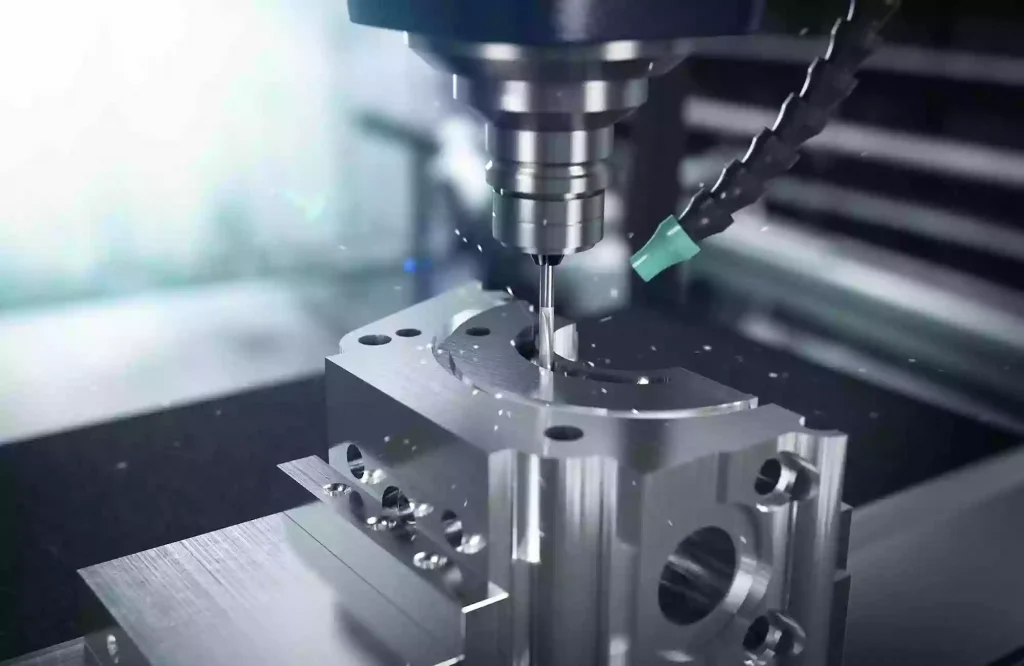
At its core, CNC drilling is a computer-controlled subtractive manufacturing process used to create precise round holes in a stationary workpiece. Whether the material is metal, plastic, wood, or a composite, the process relies on automation to remove material rather than adding it.
How It Works
During operation, the machine forces a rotating twist drill bit with multiple cutting edges into the workpiece. As the bit spins and plunges, it creates a plain round hole that perfectly matches the drill bit’s diameter.
These holes primarily serve functional roles in manufacturing, such as:
- Assembly: Accommodating bolts, screws, rivets, or pins to fasten components together.
- Passageways: Creating paths for wiring, fluid lines, or cooling channels.
The Shift from Manual to Automation
To understand why CNC drilling matters, look at how it evolved:
- Traditional Drilling: Workers manually operated a motorized drill bit on a conventional drill press. They had to physically adjust the movement of the cutting tool and guess the depth of the cut. This relied heavily on manual dexterity, making it slow and prone to inconsistency.
- CNC Drilling: This process completely automates the operation. By running on programmed digital code, the machine dictates the exact speed, depth, and positioning. It eliminates human error, cuts down cycle times, and ensures identical accuracy across thousands of parts.
How CNC Drilling Works: Step-by-Step Process
CNC drilling transforms a digital design into a physical hole through a highly synchronized, automated workflow. Here is exactly how the process unfolds from start to finish:
Step 1: Designing the CAD Model
The process begins with creating a 3D digital blueprint of the part using Computer-Aided Design (CAD) software. The engineer defines the exact coordinates, diameters, and depths of all required holes.
Step 2: Programming and G-code Generation
Once the design is finalized, it is imported into Computer-Aided Manufacturing (CAM) software. The CAM software converts the visual model into G-code and M-code—the digital language understood by CNC machines. This code tells the machine exactly where to move on the X, Y, and Z axes, how fast to spin the spindle, and how deep to plunge.
Step 3: Machine Setup and Workholding
Before running the program, the operator prepares the physical environment. The raw material is secured to the machine bed using workholding devices like vises or specialized fixtures to keep it perfectly stationary. The correct drill bits are then loaded into the machine’s spindle or tool carousel.
Step 4: Automated Execution and Cooling
With everything set, the operator hits start, and the CNC machining takes over completely:
1.The machine positions the tool over the precise coordinate.
2.The spindle engages, spinning the drill bit at the programmed RPM.
3.The machine forces the rotating tool down into the workpiece at a controlled feed rate.
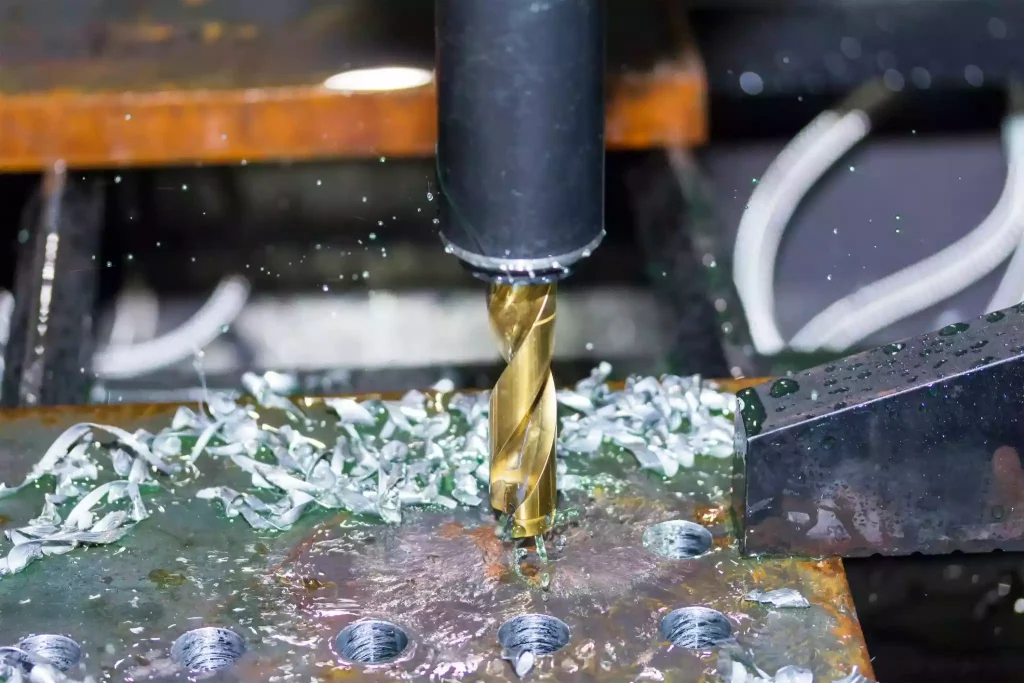
4.Concurrently, a high-pressure coolant system floods the cutting zone to reduce friction, prevent overheating, and flush out material chips from the hole.
5.Once the programmed depth is met, the tool retracts smoothly, leaving behind a clean, precise hole.
Anatomy of a CNC Drilling Machine & Machine Types
Achieving high-speed, high-precision drilling requires a combination of rigid machine construction, intelligent automation, and specialized drilling configurations. Modern CNC drilling systems integrate advanced motion control, automated tooling, and optimized chip evacuation to ensure stable, repeatable hole-making performance across a wide range of materials and part geometries.
Core Components of a CNC Drilling Machine
CNC Controller
The central control system that interprets G-code instructions and coordinates machine movement, spindle speed, feed rates, and drilling cycles with high precision.
Spindle System
A high-speed rotating assembly that holds the drill tool and delivers the torque and axial force required for accurate hole creation.
Machine Bed & Worktable
A rigid structural platform designed to securely clamp the workpiece while enabling precise X-, Y-, and Z-axis positioning during drilling operations.
Automatic Tool Changer (ATC)
An automated tooling system that rapidly switches between drills, reamers, countersinks, or tapping tools without manual intervention, improving production efficiency.
Coolant & Chip Evacuation System
High-pressure coolant lubricates the cutting zone, reduces heat buildup, and efficiently removes chips to maintain hole quality and prevent tool damage.
Main Types of CNC Drilling Machines
Vertical Machining Centers (VMC)
The most common drilling configuration, featuring a vertically oriented spindle ideal for flat workpieces and standard top-down drilling applications.
Horizontal Machining Centers (HMC)
Utilize a horizontal spindle layout that allows chips to fall away naturally from the cutting zone, making them ideal for heavy-duty and high-volume machining.
Multi-Spindle & 5-Axis Machines
Multi-spindle systems increase productivity by drilling multiple holes simultaneously, while 5-axis machines enable angled and multi-directional hole machining in a single setup.
Deep Hole / Gun Drilling Machines
Engineered for extreme depth-to-diameter ratios, these machines use specialized long drills and through-spindle coolant systems to maintain stability and efficient chip removal in deep cavities.
Drill Geometries & Critical Cutting Parameters
To achieve perfect holes and maximize tool life, engineers must look closely at the cutting tool itself. A drill bit is not just a piece of twisted metal; its micro-geometry determines how it interacts with the material.
1. Understanding Drill Geometries
The shape of a drill bit directly affects cutting force, heat generation, and chip evacuation.
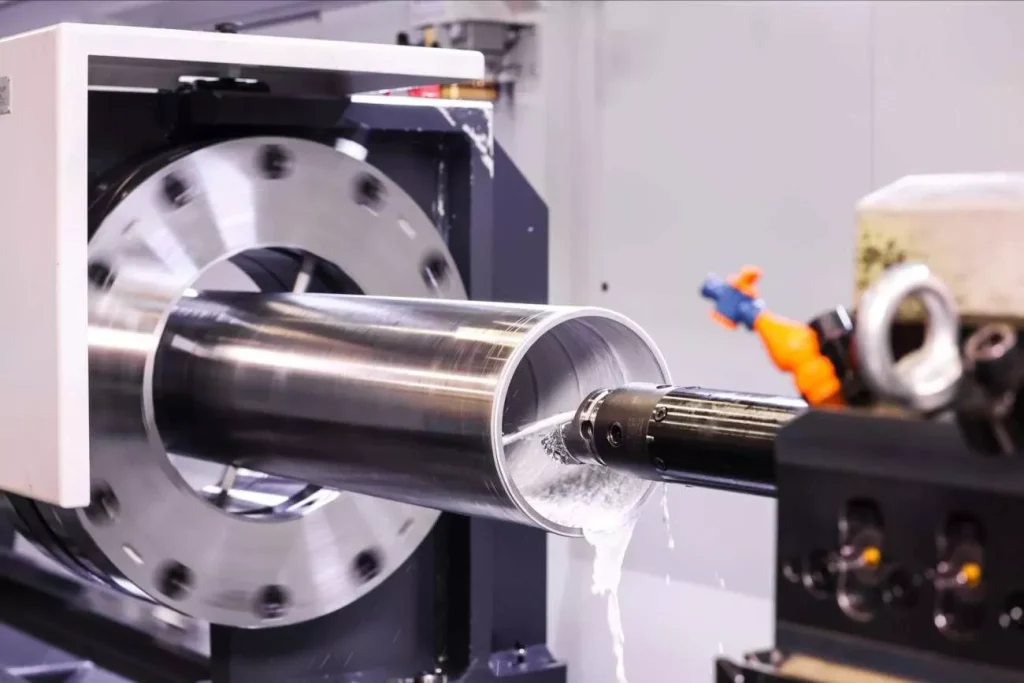
- Flutes and Helix Angle: The flutes are the helical grooves running up the body of the bit. They provide the pathway for material chips to escape. The helix angle determines how quickly chips are lifted out—a higher helix angle is great for softer materials like aluminum, while a lower angle is better for hard steels.
- Point Angle: The point angle is the V-shaped tip of the drill.
118° Point Angle: The industry standard for general-purpose drilling. Ideal for softer metals and plastics.
135° Point Angle: A flatter tip designed for hard or abrasive materials (like stainless steel). It features a split point that prevents the drill from “walking” or drifting across the surface before cutting starts.
- Lip Relief Angle: This is the clearance angle behind the cutting edge. It prevents the heel of the drill bit from rubbing against the freshly cut bottom of the hole, reducing friction and heat.
2. Critical Cutting Parameters
Once the right geometry is chosen, the CNC programmer must dial in three crucial parameters to avoid breaking the tool or damaging the part:
- Spindle Speed (RPM): How fast the drill bit rotates per minute. Harder materials require a slower RPM to prevent overheating, while softer materials can be drilled at much higher speeds.
- Feed Rate (mm/rev or in/rev): The distance the drill bit advances into the workpiece during a single revolution. If the feed rate is too high, the drill bit will snap; if it is too low, the tool will rub against the material instead of cutting it, causing premature wear.
- Dwell Time: A programmed pause (measured in seconds or fractions of a second) when the drill bit reaches the very bottom of the hole. This ensures the bottom of the hole is perfectly clean, flat, and accurate to the drawing’s depth before the tool retracts.
Types of CNC Drilling Operations
CNC machines do not just drill straightforward holes. By swapping tools and changing programming paths, a CNC machine can perform a wide variety of specialized hole-making operations to meet different engineering requirements:
- Standard Drilling: The foundational process of creating a plain blind hole (a hole that stops mid-material) or a through hole (a hole that goes all the way through the part) using a standard twist drill bit.
- Center / Spot Drilling: A preparatory step where a short, rigid drill makes a small, shallow indentation in the material. This acts as a guide, preventing longer, more flexible drill bits from “walking” or drifting off-center when they begin cutting.
- Peck Drilling (Deep Hole Drilling): A technique used for deep holes where the drill bit enters the material a short distance, retracts slightly to break and evacuate chips, and then plunges deeper. This cycle repeats until the final depth is reached, preventing chip clogging and tool breakage.
- Counterboring: An operation that enlarges the entrance of a pre-drilled hole, creating a flat-bottomed cylindrical recess. This is typically used to hide the head of a socket cap screw or bolt below the part’s surface.
- Countersinking: Similar to counterboring, but it creates a cone-shaped enlargement at the top of the hole. This profile matches the angled underside of flat-head or countersunk screws, allowing them to sit perfectly flush with the surface.
- Reaming: A finishing process used on an existing hole. A reamer removes a tiny amount of material to achieve incredibly tight dimensional tolerances (such as H7) and a smooth, mirror-like surface finish.
- Tapping: The process of cutting internal threads into a pre-drilled hole using a tap tool, enabling the hole to accept standard threaded bolts and screws during final assembly.
Materials Used in CNC Drilling
A CNC machine can drill through an incredibly wide range of materials, but each material behaves differently under the cutting edge. Choosing the right parameters and drill bits depends heavily on the workpiece material:
1. Metals
- Aluminum Alloys: Highly machinable, lightweight, and excellent at dissipating heat. CNC drilling in aluminum is fast and efficient, though operators must use the right coolant to prevent soft aluminum chips from sticking to the drill flutes.
- Steel & Stainless Steel: Much harder and prone to work-hardening (where the material hardens as it is cut). Drilling steel requires high torque, lower spindle speeds, and high-pressure coolant to manage heat and friction.
- Titanium: A notorious “superalloy” used in aerospace and medical devices. Titanium has poor thermal conductivity, meaning heat stays trapped at the drill tip. It requires specialized carbide coated tools, slow speeds, and aggressive feed rates.
2. Plastics
- Engineering Plastics (POM/Acetals, Nylon, Polycarbonate): Plastics are easy to drill but highly sensitive to heat. If the drill bit gets too hot, the plastic will melt, deform, or crack. Sharp cutting edges and fast feed rates are necessary to clear material before friction builds up.
3. Composites
- Carbon Fiber (CFRP) & Fiberglass: These materials are made of alternating layers of strong fibers and resin. Standard drill bits will cause delamination (separating the layers) or leave heavy burrs. Drilling composites requires specialized diamond-coated or dagger-style bits to cleanly shear the fibers.
5 Key Factors That Drive CNC Drilling Costs
When it comes to manufacturing budgets, not all holes are priced equally. CNC drilling costs are ultimately determined by machine time, tool wear, and complexity.
Here is what drives the price of your part:
1. Material Machinability
Softer metals like aluminum can be drilled at blazing speeds. Harder materials like stainless steel or titanium force the machine to run slowly and wear down expensive drill bits faster, driving up both cycle times and tool replacement costs.
2. Hole Depth-to-Diameter Ratio ()
Shallow holes are fast and cheap. Deep holes require time-consuming “peck drilling” cycles or specialized machinery to clear trapped chips, which causes machining time—and cost—to rise exponentially.
3. Precision and Tolerances
A simple bolt hole can be drilled in a single, rapid step. However, a high-precision hole (like a bearing pocket) requires a multi-step process: Spot Drill Pre-Drill
Ream. More steps mean more tool changes and a higher price tag.
4. Production Volume
Every job requires upfront setup and programming time. For prototypes, this fixed cost is distributed over just a few parts, making them expensive. For mass production, setup costs are diluted across thousands of units, drastically lowering the cost-per-part.
5. Hole Orientation
If all holes are on a single flat surface, the machine can zip through them in one setup. If holes are placed on multiple faces or at odd angles, the operator must repeatedly stop and reposition the part, adding heavy labor and fixture costs.
DFM Guide: How to Reduce CNC Drilling Costs
The best way to cut manufacturing costs is during the design phase. By implementing these four Design for Manufacturability (DFM) strategies, you can drastically reduce machine cycle times and tool wear:
1. Standardize Hole Sizes: Design your parts using standard drill bit diameters (e.g., M3, M4, M6, or standard fractional sizes). Avoid non-standard or overly unique fractional dimensions. This eliminates the need for custom tooling and minimizes the number of Automatic Tool Changes (ATC) during production.
2. Limit Hole Depths (L/D ≤ 4): Keep your hole depth within 3 to 4 times the hole’s diameter whenever possible. Avoid deep, blind holes that force the machine into slow peck-drilling cycles. If a deep hole is absolutely necessary, consider converting it into a through-hole to make chip evacuation easier.
3. Design Flat Entry Surfaces: Ensure the drill bit enters the material on a surface that is perfectly perpendicular to the tool’s axis. Avoid placing holes on sloped, curved, or uneven faces. Drilling into an angled surface requires an extra milling step to flatten the area first, otherwise, the drill tip will slip and break.
4. Relax Non-Critical Tolerances: Only specify tight tolerances (like H7) and mirror finishes for functional holes, such as bearing pockets or alignment dowels. For standard clearance holes, clearance slots, or weight-reduction holes, use generous tolerances so the operator can punch them through in a single, fast operation.
Industrial Applications & Future Trends
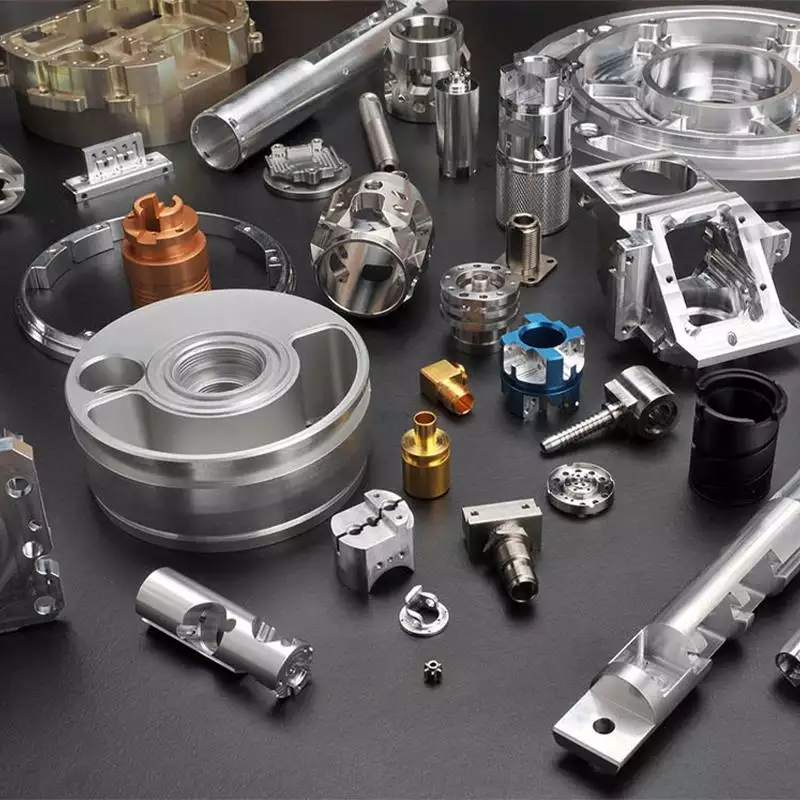
CNC drilling is utilized across almost every major industry where precision assembly and structural integrity are required.
1. Key Industries and Applications
- Aerospace: Commercial and military aircraft require tens of thousands of high-density rivet holes across their wings and fuselage. Additionally, jet engine blades feature micro-drilled cooling holes to withstand extreme temperatures.
- Automotive: Used extensively in manufacturing engine blocks, transmission casings, and brake discs, where precise fluid and cooling channels are vital for vehicle performance.
- Electronics & Semiconductors: Specialized high-speed CNC drilling rigs create millions of microscopic vias (holes) on Printed Circuit Boards (PCBs) and custom test fixtures.
- Medical Devices: Precision drilling is critical for creating orthopedic bone plates, bone screws, and specialized surgical instruments that demand biocompatible materials and sterile, flawless finishes.
2. Future Trends in CNC Drilling
- High-Speed and Ultrasonic-Assisted Drilling: Integrating ultrasonic vibrations into the drilling spindle reduces cutting forces by up to 40%, allowing manufacturers to drill incredibly brittle or hard materials (like ceramics and glass) without cracking them.
- Industry 4.0 Smart Monitoring: Modern CNC machines are increasingly equipped with acoustic and spindle-current sensors. These systems monitor tool wear in real-time, predicting exactly when a drill bit will fail and stopping the machine before a broken tool ruins an expensive workpiece.
Conclusion
The parts assembly is mostly done through fasteners like nuts. Holes serve as the ground for fastening. CNC drilling is a precise and quick method for creating holes in a range of materials. Whether your project demands the creation of small, intricate holes or larger, robust ones, there’s a CNC drilling solution to match every requirement.
Interested in customized drilling services? Reach out to Xtmade today! As an on-demand manufacturing pioneer, Xtmade utilizes advanced multi-axis CNC machines and high-pressure coolant technology to deliver exceptionally accurate holes across aluminum, steel, and engineering plastics. Whether you need rapid prototyping or high-volume production with flawless reaming and tapping, seek help from our professionals—upload your CAD files to Xtmade for an instant quote today!