Service
Alloy Steel Machining
We offer custom alloy steel services, manufacturing parts based on your CAD files, drawings, samples, and specifications, and accommodating a wide range of requirements.
End to End CNC Alloy Steel Machining Services
Xtmade offers comprehensive, end-to-end CNC machining services for alloy steel. We manage the entire process—starting with DFM (Design for Manufacturability) analysis of 3D CAD drawings and the procurement of mill-certified materials—and execute all critical machining operations with precision. To address the challenges associated with alloy steel—such as high hardness, significant cutting forces, and susceptibility to thermal deformation—we ensure high-precision control through dynamic toolpath planning and high-pressure cooling systems. Our workflow seamlessly integrates heat treatments (e.g., carburizing and quenching) with post-processing steps like precision grinding and anti-corrosion coating, while providing CMM final inspection data and full material traceability reports. This allows for direct delivery and installation without the need to coordinate with multiple suppliers; we invite you to submit your CAD drawings for a professional DFM assessment and quotation.
Alloy Steel Grades We Machine
Before processing, the grade, material condition, hardness, and applicable specifications must be verified. Alloy steels encompass a wide range of compositions and heat-treatment conditions. We offer various alloy steel machining service and can flexibly select the appropriate grade based on your specific application requirements; commonly used grades include 4140, 4130, 4340, 1215, A514, and 8620. Please note that the availability of these grades is not guaranteed for every situation. Actual projects must adhere to the material specifications provided in the Request for Quotation (RFQ).
Alloy Steel 1215 Machining
Alloy Steel 4130 Machining
Alloy Steel 4140 Machining
Alloy Steel 4340 Machining
Alloy Steel 8620 Machining
Alloy Steel A514 Machining
Why Choose Us
Our Alloy Steel CNC Machining Capabilities
Machining alloy steel depends on the alloy grade, material condition, geometry, tolerances, heat treatment requirements, and production volume. Leveraging professional expertise and extensive experience, our team produces the specified parts rather than merely processing the material.
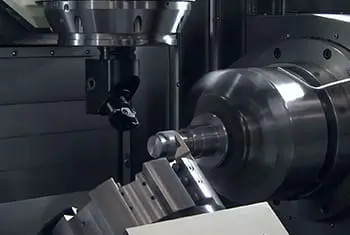
CNC Machining
Alloy Steel 4130 Machining
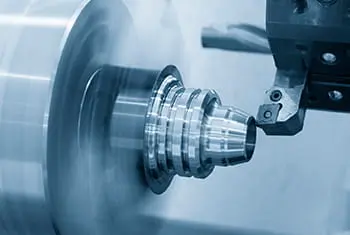
CNC Turning
Hole and Thread Machining
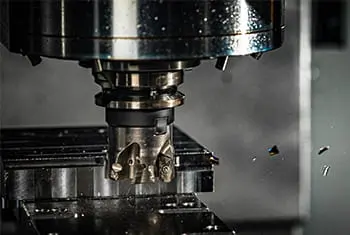
Multi-Axis Machining
Swiss CNC Machining
Heavy-Duty Alloy Steel Machining
We provide specialized heavy-duty alloy steel machining services for large, high-strength components, forgings, and castings. Utilizing heavy-duty machining centers and gantry machining centers—characterized by high-rigidity structures and high-torque spindles—we are able to machine ultra-heavy workpieces safely and stably. Our process employs efficient heavy-duty roughing strategies that combine large depths of cut (DOC) with dynamic toolpaths to achieve exceptionally high material removal rates (MRR). By rapidly removing large amounts of stock—complemented by targeted high-pressure cooling technology to suppress work hardening—we significantly shorten the overall machining cycle prior to high-precision finishing.
Custom Heat Treatment Integration
To achieve critical hardness and structural strength for custom components, we provides heat-treated alloy steel machining services through a seamless, end-to-end workflow. Our engineering team enforces a strict anti-distortion process for hardened alloy steel machining:
Alloy Steel Rough Machining
Heavy stock removal in the soft/annealed state to relieve mechanical stress.
Precision Heat Treatment
Carburizing, quenching, or tempering to exact hardness specs (e.g., HRC 48–52 for 4140) through certified heat treatment services.
Finish Machining & Grinding
Tight-tolerance hard turning, precision milling, or surface grinding to clear post-treatment thermal distortion and hit final drawing dimensions.
By managing both alloy steel heat treatment and final machining under a single PO, we take full accountability for stock allowance planning, stress-relief control, and CMM hardness verification—delivering fully qualified, installation-ready parts with zero vendor hand-off risks.
Hardened Alloy Steel Machining
For high-hardness alloy steel components (reaching HRC 45–62) following heat treatment and quenching, our hardened alloy steel machining capabilities feature advanced hard milling and hard turning technologies. Leveraging high-rigidity machine tool structures and premium CBN (Cubic Boron Nitride) and PCD cutting tools, we perform micron-level precision finishing directly on hardened parts. By employing "milling/turning instead of grinding" processes, we not only machine complex 3D surfaces, internal bores, and precision threads but also consistently achieve surface roughness within Ra 0.4 µm. This approach eliminates costly grinding steps and significantly shortens production cycles while ensuring the consistency and durability of heavy-duty components.
Alloy Steel Machining Expertise
As specialists deeply rooted in industrial manufacturing, our engineers possess a profound understanding of the physical properties and machining challenges associated with alloy steels across diverse operating conditions. Beyond our robust, high-performance machinery, we bring extensive expertise in material processing; in addition to alloy steels, we are highly experienced in machining difficult-to-process materials such as cobalt, titanium, Kovar, Invar, and molybdenum. Our engineering team maintains precise control over the entire workflow—from toolpath planning for roughing in the annealed state and using high-pressure cooling to prevent work hardening, to calculating machining allowances and managing thermal deformation before and after heat treatment. Backed by comprehensive and scientifically rigorous processes, we provide precision alloy steel machining services to global OEM clients, serving as your trusted technical partner.
Managing Alloy Steel Machining Challenges
Machining alloy steel often leads to poor dimensional control and reduced tool life. We address these challenges through specialized, high-end alloy machining technologies.
1. Rapid Tool Wear & Thermal Cracking
The Challenge: Severe cutting heat causes premature tool chipping, accelerated flank wear, and thermal cracking, leading to severe dimensional drift across production runs.
Solution: We enforce dynamic speed/feed profiling based on exact material hardness (e.g., heat-treated 4140/4340). Deploying heat-resistant nano-coated carbide and CBN tooling paired with targeted high-pressure coolant, we maintain strict thermal control and maximum tool stability.
2. Machining Vibration & Geometric Deviation
The Challenge: Excessive cutting resistance generates chatter marks, compromising surface finishes and causing out-of-tolerance runout or concentricity errors—especially on long shafts and thin-walled parts.
Solution: We optimize tool overhang, utilize high-rigidity workholding fixtures, and leverage multi-axis CNC turning centers to execute multi-feature machining under a single setup—eliminating repositioning errors and damping chatter.
3. Surface Micro-Cracks & Thermal Burn
The Challenge: Inadequate cooling or worn inserts produce surface burns, micro-fissures, and irregular work-hardened layers, reducing part fatigue life in critical sealing or load-bearing zones.
Solution: We execute ultra-precise light finish passes backed by constant-temperature coolant delivery and in-process tool offset compensation—consistently achieving smooth surface finishes down to Ra 0.4–0.8 µm.
4. Batch-to-Batch Inconsistency
The Challenge: Quality variations between prototype samples and volume production creates major supply chain risks for OEM buyers.
Solution: We integrate First Article Inspection (FAI) with routine in-process CMM audits. Every shipment includes full Mill Test Reports (MTRs) for 100% material traceability and dimensional verification compliance.
Surface Treatments
Our one-stop alloy steel machining services include surface treatment, which not only enhances the performance of the parts but also improves their aesthetic appeal.
Electroplating
Polishing
Brushing
Passivation
Powder Coating
Black Oxide
Quality Control
We conduct quality inspections throughout the entire custom alloy steel machining process, rigorously screening out defective items at every stage to ensure that the parts delivered to the customer meet all their requirements.
Alloy Steel Parts We Machine
We have handled thousands of CNC alloy steel machining projects, manufacturing a wide range of parts and earning consistent praise from our customers.
Shafts and Pins
Strength, wear resistance and stability. Turning and milling combined for keyways, splines, threads, cross holes and flats.
Bushings and Sleeves
Concentric inner and outer diameters, supported by turning and boring in controlled setups.
Fixtures and Structural Parts
Load-bearing and wear-facing parts for machinery, tooling and automation.
Wear-Resistant Components
Parts under repeated contact, sliding or impact, with grade and hardness set for service conditions.
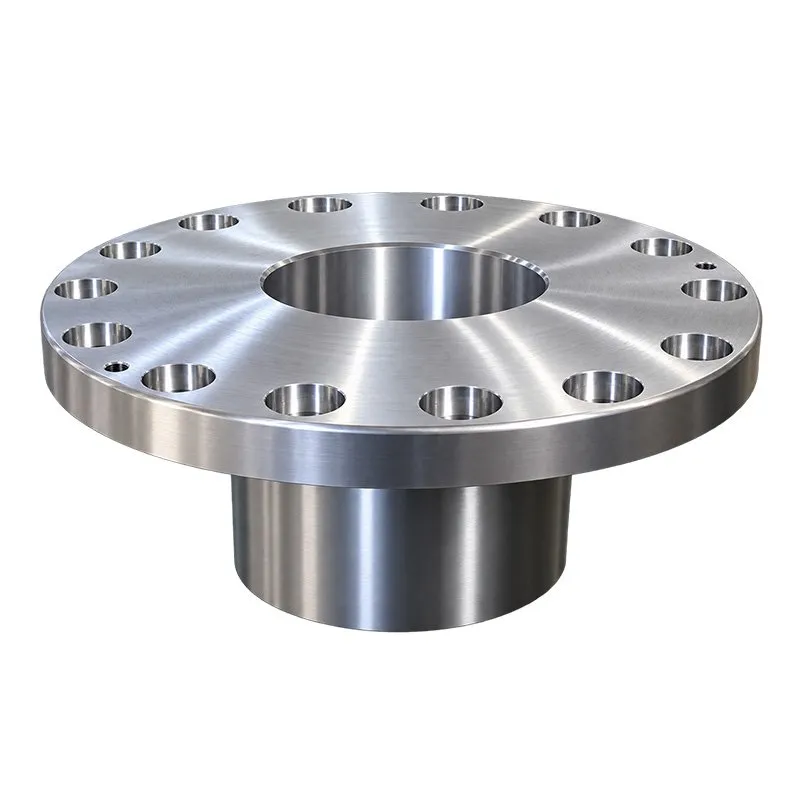
Housings, Brackets, Flanges
Milled parts with bores, mounting faces and hole patterns where position and flatness affect assembly.
Gears and Drive Components
Blanks, hubs and couplings for power transmission. Grinding or gear cutting reviewed at quotation if required.
Clients Love
Testimonial
Xtmade completely resolved the distortion issues we faced after heat-treating 4340 steel shafts. They handled the entire process in-house—from rough machining to hard milling at HRC 52—ensuring tolerances were kept within ±0.008 mm. I am very impressed by their strong sense of technical responsibility.
I am deeply impressed by their gantry machining capabilities for heavy-duty 4140 forgings. All 45 large brackets were delivered on schedule; the surfaces were free of chatter marks with smooth sealing faces, and the MTR (Material Test Report) documentation was complete and accurate. They are a long-term partner of ours.
Our Alloy Steel CNC Machining Facility
Our alloy steel machining workshop specializes in the production of high-strength alloy steel components. Equipped with high-rigidity gantry milling machines, high-torque turning centers, and multi-axis machining equipment, the facility is capable of performing stable, heavy-duty cutting operations on large steel workpieces. All machining platforms utilize high-pressure coolant delivery systems and custom vibration-damping fixtures to effectively manage cutting heat and prevent work hardening. Supported by a temperature-controlled laboratory featuring Zeiss CMMs and digital hardness testers, we precisely verify strict geometric tolerances and post-heat-treatment specifications; meanwhile, a rigorous 5S workshop management system ensures full process traceability and batch consistency.
Ordering Process
Our CNC machining alloy steel services follow this process:
Industries and Applications
Steel Aloy Precision Machining for components are used across a wide range of industries, primarily in applications involving load-bearing, torque transmission, or scenarios subject to friction and wear against other surfaces. If the project entails specific material specifications or standards, please indicate them in your Request for Quotation (RFQ).
Industrial
Automotive
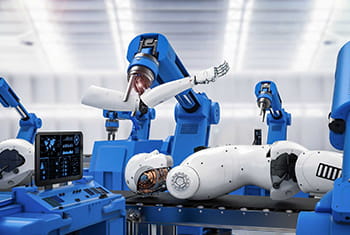
Automation and robotics
Power transmission
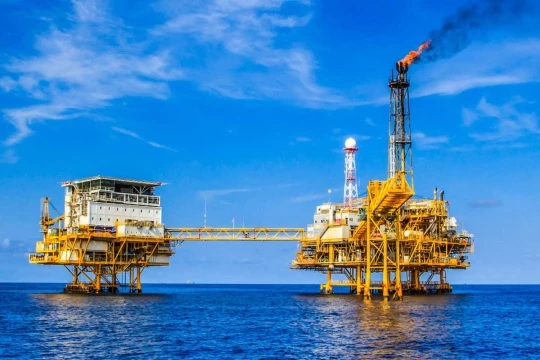
Oil and gas, energy
Heavy equipment
Request an Alloy Steel Machining Quote
Send the information available for your component. The manufacturing review can confirm material requirements, machining considerations, inspection needs, and the appropriate production approach.
FAQ
What is alloy steel CNC machining?
Alloy steel CNC machining is a precision subtractive manufacturing process that utilizes automated CNC milling machines, lathes, and gantry machining centers to cut, shape, and finish steel containing alloying elements such as chromium, molybdenum, nickel, and vanadium. This process is ideal for manufacturing high-stress components that require exceptional strength and wear resistance.
What are the key advantages of machining alloy steel?
Compared to standard carbon steel, alloy steel offers superior tensile strength, toughness, and wear resistance. By employing targeted heat treatment processes, heavy-duty components can achieve extremely high surface hardness while maintaining a tough, resilient core—a combination that is crucial for withstanding rigorous operating loads.
What level of dimensional tolerance can Xtmade achieve when machining alloy steel?
We typically achieve a standard machining tolerance of ±0.01 mm. For critical features, precision holes, and surfaces finished via hard milling, we can maintain strict geometric tolerances as tight as ±0.005 mm (±0.0002″) under temperature-controlled inspection conditions.
What information is required to receive an accurate quote?
To evaluate your project, please provide: 2D/3D CAD drawings (STEP, IGES, PDF), material grade and supply condition, order quantity, dimensional tolerances (GD&T), surface finish standards, heat treatment specifications (HRC), and any specific inspection or certification requirements.
Do you support prototyping as well as high-volume production?
Yes. We accommodate full-lifecycle manufacturing, including rapid prototyping, low-volume bridge production, and high-capacity repetitive manufacturing—applying the same strict ISO 9001 quality controls across all order volumes.
What is the typical lead time for alloy steel machining projects?
Prototype and quick-turn orders are typically delivered within 1 to 7 business days. Projects requiring specialized heat treatment or multi-stage surface finishing average 2 to 3 weeks. Mass production schedules are tailored based on material staging and tooling requirements.
What are your maximum part sizes and machining specs for alloy steel?
We handles a broad dimensional envelope, from heavy-duty structural components to micro-precision features:
- Maximum Part Dimensions:2,300 × 1,500 × 600 mm (handled on high-rigidity gantry machining centers)
- Minimum Feature Size:⌀1 mm (for micro-bores, intricate slots, and delicate details)
- Minimum Wall Thickness:25 mm (supported by dynamic anti-vibration machining strategies)