MRO(Maintenance, Repair and Operations) Services

Support equipment maintenance and repair with custom replacement parts, reverse engineering, and on-demand manufacturing. From obsolete components to recurring replacement-part requirements, Xtmade helps manufacturers maintain existing equipment with parts produced to their required specifications.

What We Offer

Industrial MRO Services, Start to Finish

From standard replacement components to reverse-engineered mechanical parts, we support MRO requirements through sourcing, engineering, manufacturing, and replenishment services.

off the shelf parts

Off the Shelf

We can help source commonly used industrial components, fasteners, and mechanical hardware when they are required as part of a broader MRO manufacturing program.
made to order parts

Made to Order

When standard components do not meet the application requirements, we manufacture components to specified dimensions, materials, tolerances, and other technical requirements.
custom mechanical parts

Custom Mechanical

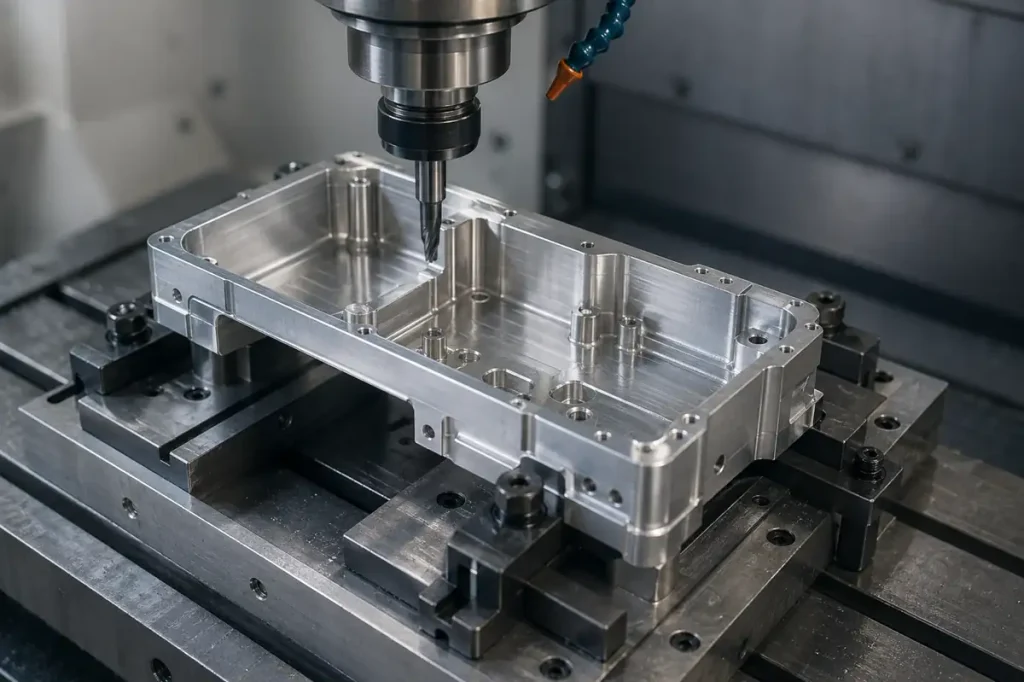
We manufacture custom replacement parts through CNC machining, sheet metal fabrication, injection molding, and additive manufacturing. Parts can be produced from existing designs or recreated through reverse engineering.
e services img updated

Engineering Services

We support MRO engineering requirements with dimensional inspection, 3D scanning, CAD reconstruction, reverse engineering, process planning, and manufacturability review. These services help establish the technical information required to reproduce existing mechanical components.
invent logi img updated

Inventory & Logistics

For recurring MRO requirements, we can support production planning, replacement-part inventory, batch manufacturing, and delivery coordination to help maintain a consistent supply of critical components.
Cobalt Alloy Machining parts 3

How It Works

How Emergency MRO Support Works

Our MRO workflow connects part identification, engineering, manufacturing, and delivery to provide a practical route from an unavailable or damaged component to a production-ready replacement.

Provide an existing drawing, CAD file, sample, physical component, or available specifications so the replacement requirement can be evaluated.

Inspect the available information and, when required, use dimensional inspection, 3D scanning, and CAD reconstruction to establish the replacement part geometry.

Select the appropriate manufacturing process and produce the replacement component according to the approved dimensions, material, tolerances, and specifications.

Verify critical dimensions and required quality characteristics before the replacement parts are released.

Coordinate production quantities and delivery requirements for individual replacement parts, small batches, or recurring MRO orders.

For recurring requirements, establish repeat production and replenishment based on expected consumption and maintenance needs.

Obsolescence Management

Keep Aging Equipment Running with Replacement Parts

Industrial equipment can remain in operation long after original components become obsolete or difficult to source. When an OEM replacement is discontinued, documentation is unavailable, or an existing component can no longer be obtained, we provide a manufacturing route for reproducing the required mechanical part.

CNC machined molybdenum part 2

When Original Parts Are No Longer Available

Obsolete equipment does not always need to be replaced. For mechanical components that are no longer supported or available, a custom replacement can provide a practical way to extend the service life of existing machinery and reduce dependence on discontinued OEM parts.

Typical MRO challenges include:

  • Discontinued or obsolete components
  • Limited OEM support
  • Unavailable drawings or documentation
  • Difficult-to-source replacement parts
  • Damaged components with no replacement available
  • Need for small-batch or on-demand replacement parts

Pilot Roadmap

Get Your Custom MRO Solution Built and Running in 90 Days

For recurring MRO requirements, we can establish a structured program around part identification, manufacturing, inspection, and replenishment. The scope can be adjusted according to the number of components, equipment requirements, and expected replacement frequency.

STEP 01: Requirement Review

Review equipment requirements, existing part information, replacement history, and critical components to determine which parts require manufacturing or reverse engineering.

STEP 02: Part & Process Development

Establish the required CAD data, manufacturing process, material, tolerances, inspection requirements, and production quantities for selected replacement components.

STEP 03: Initial Production

Manufacture and inspect the selected replacement parts to verify that the production process meets the approved technical requirements.

STEP 04: Recurring Supply

Establish repeat production, inventory planning, and replenishment arrangements for components with ongoing MRO requirements.

Ready to stop fighting downtime fires?

Talk to an expert about consolidating your MRO services into a single 90-day pilot for your facility.

Latest News

Machining Processes for Complex, High-Precision Aluminum Alloy Thin-Walled Parts

Machining Processes for…

Machining Processes for Complex, High-Precision Aluminum Alloy Thin-Walled Parts Aluminum…
303 vs. 304 vs. 316 Stainless Steel: Which Is Best for CNC Machining?

303 vs. 304…

303 vs. 304 vs. 316 Stainless Steel: Which Is Best…

What Is the Easiest Material to Machine with CNC?

What Is the…

What Is the Easiest Material to Machine with CNC? When…

Scroll to Top