The Ultimate Guide to CNC Milling: Principles, Machinery, and Designing for Success
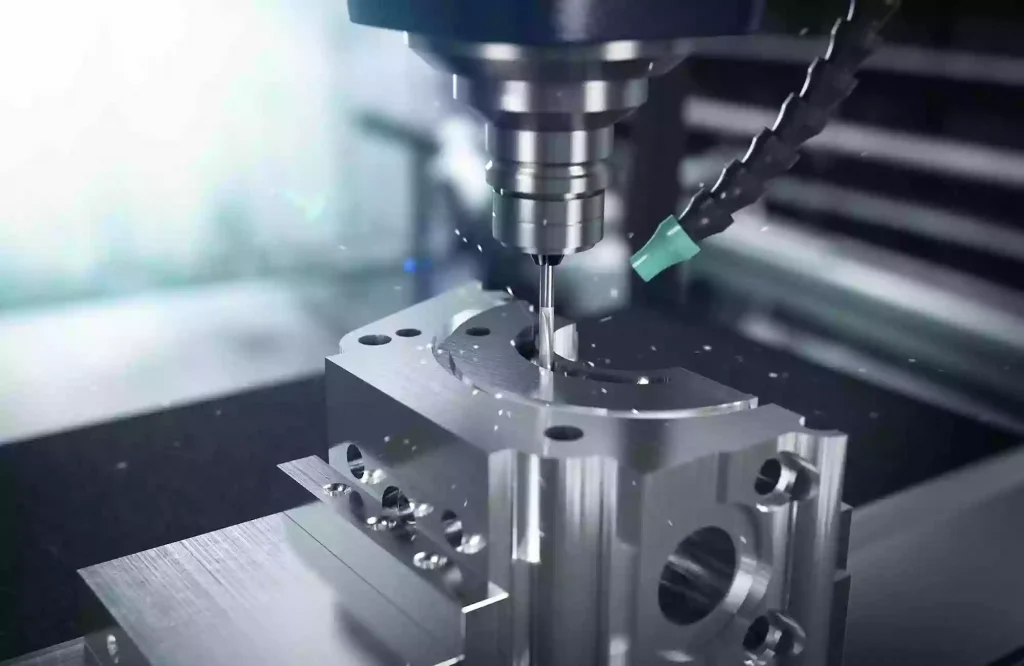
Walk into any modern manufacturing facility and, beneath the constant hum of automation, you’ll find one machine that sits at the core of modern hardware production: the CNC milling machine.
For decades, manufacturing depended heavily on manual milling. Skilled machinists operated machines like the classic Bridgeport mill by hand, turning wheels and adjusting feeds manually to shape metal. It was a craft built on experience and precision—but also one limited by human consistency. A single mistake could ruin an expensive workpiece. Complex organic geometries were extremely difficult to reproduce, and producing thousands of perfectly identical parts was nearly impossible.
Then came CNC (Computer Numerical Control) milling.
At its core, CNC milling is a subtractive manufacturing process. A solid block of raw material—commonly called a billet or blank—is gradually machined into a finished component by removing material with high-speed rotating cutting tools. In many ways, it is digital sculpting: instead of chisels and hammers, modern machinists use carbide end mills spinning at 15,000 RPM or more, guided entirely by computer-controlled motion.
Today, CNC milling is essential across industries ranging from aerospace and automotive to robotics, medical devices, and consumer electronics. Whether you are an engineer optimizing a structural component, a product designer prototyping a new enclosure, or a procurement specialist evaluating manufacturing costs, understanding CNC milling has become a critical advantage.
This guide explains the core principles behind CNC milling, explores machine configurations and machining workflows, and provides practical design insights that help improve manufacturability while reducing production costs.
Core Principles: How CNC Milling Works
To fully understand CNC milling, it’s important to first distinguish it from another major machining process: CNC turning.
Although both are subtractive manufacturing methods, they operate very differently.
- In CNC turning, the material rotates while the cutting tool remains relatively stationary. This process is ideal for cylindrical parts such as shafts, bushings, and threaded components.
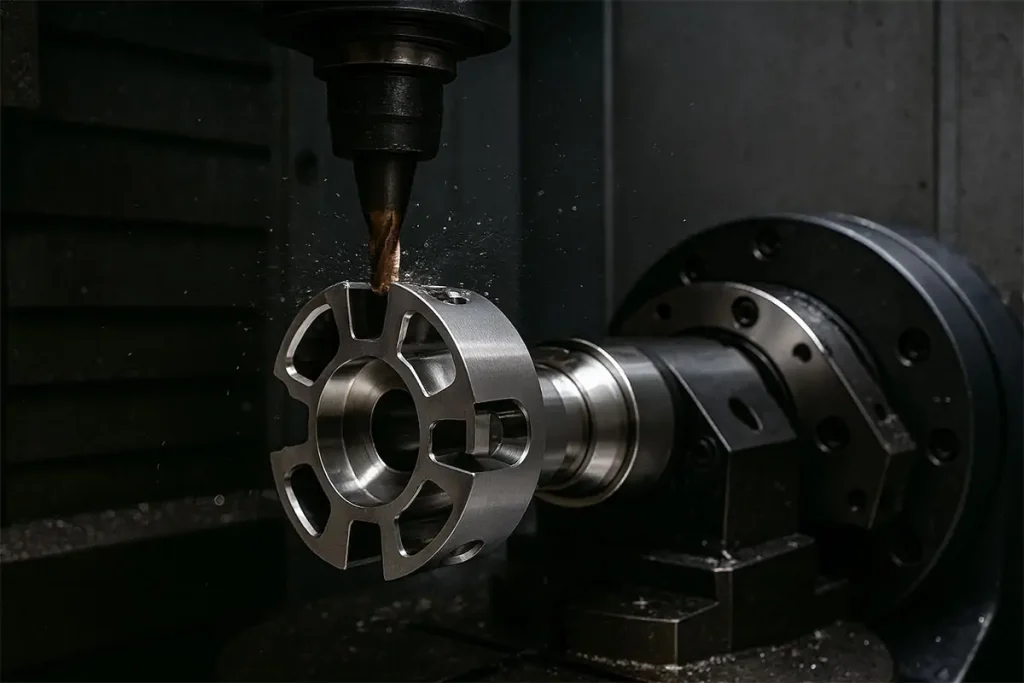
- In CNC milling, the workpiece is securely fixed in place while the cutting tool rotates at high speed and moves dynamically along multiple axes to remove material.
This ability to precisely control tool movement allows CNC milling to create complex geometries, pockets, slots, contours, and freeform surfaces with exceptional accuracy.
The entire process transforms a digital design into a physical component through a structured three-stage workflow:
[ 1. CAD Modeling ] ──> [ 2. CAM Programming ] ──> [ 3. CNC Execution ]
Digital Design Toolpath Generation Physical Machining
Step 1: CAD Modeling — Creating the Digital Blueprint
Every CNC-milled component begins as a 3D digital model.
Engineers and designers use CAD (Computer-Aided Design) software such as:
- SOLIDWORKS
- Autodesk Fusion
- PTC Creo
to create highly detailed component geometry.
At this stage, the focus is entirely on:
- Part geometry
- Functional features
- Tolerances
- Assembly interfaces
- Material considerations
Once finalized, the model is typically exported as a neutral manufacturing format such as:
- .STEP
- .IGES
- .Parasolid
These files serve as the master blueprint for downstream manufacturing.
Step 2: CAM Programming — Translating Geometry Into Machine Instructions
A CNC machine cannot interpret a 3D model directly. It understands only coordinates, movements, and machine commands.
To bridge this gap, the CAD model is imported into CAM (Computer-Aided Manufacturing) software.
Within the CAM environment, the programmer defines:
- Cutting strategies
- Tool selection
- Spindle speeds (RPM)
- Feed rates
- Step-over distances
- Depths of cut
- Tool approach and retract motions
The CAM software then generates a complete toolpath that determines exactly how the machine will remove material.
Finally, the software converts these toolpaths into machine-readable code, primarily consisting of:
G-Code — Motion Instructions
G-code controls machine movement and cutting behavior.
It defines:
- Linear motion
- Circular interpolation
- Positioning coordinates
- Feed movement
- Tool trajectories
The machine continuously interprets positional commands across the X, Y, and Z axes to execute the programmed geometry with extreme precision.
M-Code — Machine Functions
M-code controls auxiliary machine operations such as:
- Starting or stopping the spindle
- Activating coolant systems
- Automatic tool changes
- Program pauses
- Machine resets
Together, G-code and M-code form the operational language of CNC machining.
Step 3: CNC Execution — Transforming Material Into a Finished Part
Once the program is complete, machining moves from the digital environment to the shop floor.
The machinist uploads the CNC program to the machine controller and begins the physical setup process.
This setup phase is critical and typically includes:
- Securing the raw material in a vise or custom fixture
- Installing cutting tools into the tool changer
- Setting tool offsets
- Establishing the work coordinate system
- Defining the workpiece zero point (X0 Y0 Z0)
After verification and simulation checks are completed, the machine begins operation.
The enclosure doors close, coolant floods the cutting zone, and the spindle accelerates to thousands of RPM. Guided entirely by programmed instructions, the machine removes material layer by layer with extraordinary repeatability.
Modern CNC milling machines routinely achieve tolerances tighter than:
±0.01 mm
and can repeat the same operation across hundreds or thousands of parts with near-identical consistency.
This combination of precision, repeatability, and scalability is what makes CNC milling one of the most important manufacturing technologies in the modern industrial world.
Advanced CNC Milling: From 3-Axis to 5-Axis—What’s the Difference?
When sourcing CNC machining services or planning a manufacturing project, you will constantly encounter terms like 3-axis, 4-axis, and 5-axis machining. These “axes” refer to the number of independent directions in which the machine or cutting tool can move.
In simple terms, the more axes a machine has, the more complex the geometries it can produce. However, increased capability also comes with higher equipment costs, more sophisticated programming requirements, and longer setup times. Understanding the balance between machining complexity and manufacturing efficiency is essential for making cost-effective engineering decisions.
3-Axis Milling: The Industry Workhorse
3-axis CNC milling is the most common and foundational machining configuration used in modern manufacturing.
The cutting tool moves along three linear directions:
- X-Axis — Left to right
- Y-Axis — Front to back
- Z-Axis — Up and down
The workpiece remains fixed to the machine table while the spindle approaches from above.
Because of its simplicity and efficiency, 3-axis machining is highly cost-effective and ideal for:
- Flat components
- Mounting brackets
- Enclosures
- Pockets and slots
- Face machining
- Standard drilled features
For the majority of machined parts, 3-axis milling offers the best balance between capability, speed, and affordability.
The Limitation of 3-Axis Machining
The primary limitation of 3-axis machining is accessibility.
If features need to be machined on multiple sides of the component, the machine must stop so the operator can:
- Remove the part
- Reposition or flip it
- Re-clamp it securely
- Re-establish the work coordinate system
Each additional setup increases:
- Labor time
- Manufacturing cost
- Alignment risk
- Tolerance stack-up
For complex geometries, repeated manual repositioning quickly becomes inefficient.
4-Axis Milling: Adding Rotational Capability
A 4-axis CNC machine builds upon standard 3-axis motion by adding a rotary axis—typically referred to as the A-axis.
This allows the workpiece to rotate around the X-axis during machining, essentially placing the material on a motorized rotary table inside the machine.
The additional rotational movement enables the machine to automatically access multiple faces of the part without manual repositioning.
4-axis machining is especially effective for:
- Shafts
- Gears
- Splines
- Cylindrical components
- Wrapped engraving
- Continuous side machining
Compared to 3-axis machining, 4-axis systems reduce setup time, improve positional consistency, and increase overall machining efficiency for rotational parts.
5-Axis Milling: Maximum Geometric Freedom
5-axis machining represents the highest level of CNC milling capability used in advanced manufacturing industries.
In addition to the standard X, Y, and Z linear movements, the machine incorporates two additional rotational axes—commonly called the B-axis and C-axis.
These additional motions allow either:
- The spindle head to tilt and rotate, or
- The machine table itself to articulate dynamically
As a result, the cutting tool can approach the workpiece from nearly any direction.
This makes 5-axis machining essential for producing:
- Aerospace structures
- Turbine impellers
- Propeller blades
- Medical implants
- Complex mold surfaces
- Organic freeform geometries
3+2 Axis (Positional 5-Axis)
In positional 5-axis machining, the machine rotates the workpiece to a fixed angle and then performs traditional 3-axis cutting operations.
The rotational axes remain stationary during machining.
This method allows the machine to access deep cavities, angled surfaces, and undercut regions without requiring manual repositioning.
It provides many advantages of 5-axis accessibility while remaining more stable and easier to program than full simultaneous 5-axis machining.
Continuous 5-Axis (Simultaneous)
In simultaneous 5-axis machining, all five axes move continuously at the same time.
The cutting tool dynamically tilts and rotates throughout the machining cycle, maintaining optimal tool orientation against the surface being cut.
This capability is mandatory for highly complex components such as:
- Aerospace impellers
- Turbine blades
- Advanced medical implants
- High-performance aerodynamic surfaces
Although incredibly powerful, simultaneous 5-axis machining requires:
- Advanced CAM programming
- Collision simulation
- Sophisticated post-processing
- Highly experienced machinists
It is also the most expensive machining configuration due to equipment cost and programming complexity.
| Machine Configuration | Setup Complexity | Ideal Applications | Relative Cost |
| 3-Axis | Low | Flat parts, brackets, housings, simple pockets | $ |
| 4-Axis | Medium | Cylindrical parts, gears, shafts, wrapped engraving | $$ |
| 5-Axis | High | Aerospace components, impellers, organic surfaces | $$$ |
The Machinery & Tooling Arsenal
To truly understand CNC milling, it is important to understand not only the machining process itself, but also the physical equipment and cutting tools that make precision manufacturing possible.
Modern machine shops rely on highly specialized machine configurations and tooling systems optimized for different materials, geometries, and production volumes.
Machine Configurations: VMC vs. HMC vs. Gantry Mills
Vertical Machining Centers (VMCs)
The Vertical Machining Center (VMC) is the most common CNC milling configuration found in machine shops today.
In a VMC, the spindle is mounted vertically, pointing downward toward the workpiece.
Because of their versatility, visibility, and relatively straightforward programming, VMCs are ideal for:
- Flat components
- General-purpose machining
- Face milling
- Prototype work
- Low-to-medium production runs
For most job shops, VMCs form the backbone of everyday CNC production.
Horizontal Machining Centers (HMCs)
In an HMC, the spindle is mounted horizontally, parallel to the ground.
This orientation provides a major production advantage: gravity naturally pulls metal chips away from the cutting zone rather than allowing them to accumulate on top of the workpiece.
As a result, HMCs typically offer:
- Better chip evacuation
- Improved thermal stability
- Longer tool life
- Higher production efficiency
Many HMC systems also include automatic pallet changers, allowing operators to load new material while the machine continues cutting another part. This dramatically reduces downtime and makes HMCs highly effective for high-volume manufacturing environments.
Gantry Mills
Gantry mills are large-format machining systems designed for oversized or extremely heavy components.
Rather than moving the workpiece extensively, the machine uses a bridge-style structure that travels over the material.
These machines are commonly used for:
- Aircraft structural components
- Automotive stamping dies
- Energy-sector equipment
- Industrial machinery bases
- Large molds and tooling systems
Gantry mills prioritize rigidity, stability, and massive machining envelopes capable of handling parts that would be impossible to fit inside conventional machining centers.
The Tooling Arsenal: The Business End of CNC Milling
Even the most advanced CNC machine is only as effective as the cutting tools interacting directly with the material.
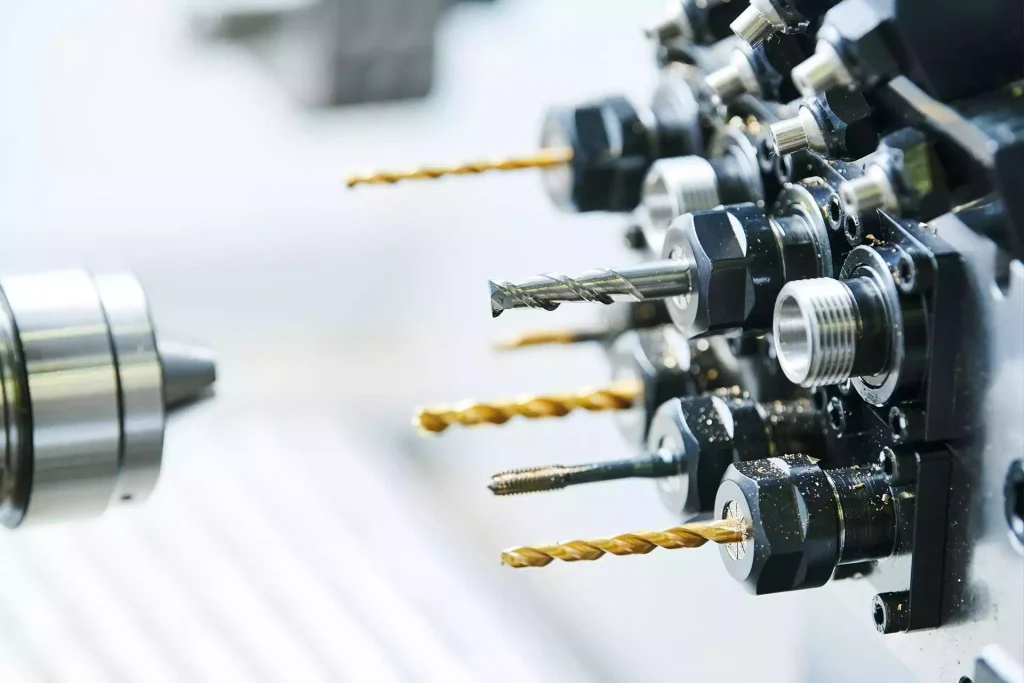
Modern machining centers use automatic tool changers (ATCs) that rapidly swap tools during machining cycles, often within seconds.
Different cutting tools are optimized for different operations, materials, and surface requirements.
Flat End Mills
Flat end mills are the general-purpose workhorses of CNC milling.
They feature:
- A flat cutting bottom
- Sharp 90-degree corners
- Excellent slotting and profiling capability
These tools are commonly used for:
- Pocket machining
- Sidewall profiling
- Slot cutting
- General roughing operations
- Flat surface machining
Ball Nose End Mills
Ball nose end mills feature a hemispherical cutting tip designed specifically for smooth 3D contouring.
They are essential for:
- Mold manufacturing
- Surface finishing
- Organic geometries
- Aerospace surfacing
- Complex curved features
Their rounded profile allows the tool to glide smoothly across complex surfaces without leaving sharp transition marks.
Face Mills
Face mills are large-diameter cutters equipped with multiple indexable carbide inserts.
Rather than machining deep features, they are optimized for rapidly flattening large surfaces and creating precision reference planes.
Face mills are commonly used for:
- Surfacing raw stock
- Creating datum surfaces
- Improving flatness
- High-efficiency material removal
Drills and Taps
Dedicated drilling and threading tools are used to create precision holes and internal threads.
- Drills produce cylindrical holes
- Taps cut internal threads for bolts and fasteners
These operations are fundamental to nearly every machined component used in industrial manufacturing today.
Materials Guide: Choosing the Right Substrate
Selecting the right material for a CNC-milled component is always a balance between performance requirements and manufacturability.
Engineers must evaluate factors such as:
- Strength
- Weight
- Corrosion resistance
- Temperature resistance
- Wear characteristics
- Cost
- Machinability
In CNC machining, machinability refers to how easily a material can be cut without causing excessive tool wear, heat buildup, poor surface finish, or unstable cutting conditions.
Some materials machine quickly and predictably, while others require slower cutting speeds, rigid setups, and advanced tooling strategies.
Metals
Aluminum (6061-T6, 7075)
Aluminum is the undisputed king of CNC milling.
It combines:
- Low weight
- Excellent machinability
- Strong corrosion resistance
- High cutting efficiency
- Relatively low material cost
Because aluminum cuts easily and dissipates heat efficiently, it allows for extremely high spindle speeds and fast material removal rates, making it one of the most economical materials for CNC production.
6061-T6 Aluminum
6061-T6 Aluminum is the industry-standard general-purpose aluminum alloy.
It is widely used because it:
- Machines exceptionally well
- Welds easily
- Offers good corrosion resistance
- Maintains excellent dimensional stability
- Is cost-effective for both prototypes and production
Common applications include:
- Structural brackets
- Consumer electronics housings
- Robotics components
- Automotive fixtures
- General industrial parts
7075 Aluminum
7075 Aluminum is alloyed primarily with zinc and is significantly stronger than 6061.
Its strength-to-weight ratio rivals many steels while remaining substantially lighter.
Because of this, 7075 is heavily used in:
- Aerospace structures
- Racing components
- High-performance mechanical systems
- Defense applications
However, it is generally:
- More expensive
- Less corrosion-resistant
- More difficult to weld
than 6061.
Stainless Steel (304, 316)
304 Stainless Steel and 316 Stainless Steel are valued for their:
- Excellent corrosion resistance
- High durability
- Strength
- Long-term environmental stability
However, stainless steel is considerably more challenging to machine than aluminum.
One of its biggest machining challenges is work hardening.
During cutting, excessive heat and friction can harden the material at the cutting zone. If the tool dwells too long in one area, the metal becomes progressively harder to cut, dramatically increasing tool wear and cutting forces.
As a result, stainless steel machining typically requires:
- Rigid machine setups
- High-torque spindles
- Optimized feed rates
- Aggressive chip evacuation
- Generous coolant application
304 Stainless Steel
304 is the most common general-purpose stainless steel alloy.
It is widely used for:
- Kitchen equipment
- Structural components
- Consumer products
- Industrial hardware
Its combination of corrosion resistance and affordability makes it one of the most versatile engineering materials available.
316 Stainless Steel
316 stainless steel contains added molybdenum, significantly improving resistance to:
- Saltwater corrosion
- Chlorides
- Harsh chemicals
Because of this, 316 is commonly used in:
- Marine equipment
- Medical devices
- Pharmaceutical systems
- Chemical-processing environments
It is often referred to as marine-grade stainless steel.
Titanium (Grade 5 / Ti-6Al-4V)
Ti-6Al-4V is considered one of the premier materials in aerospace and medical manufacturing.
Titanium offers:
- Exceptional strength-to-weight ratio
- Outstanding corrosion resistance
- High-temperature stability
- Excellent biocompatibility
These properties make it ideal for:
- Aerospace structures
- Jet engine components
- Medical implants
- High-performance motorsports
However, titanium is notoriously difficult to machine.
Unlike aluminum, titanium conducts heat very poorly. During machining, heat does not dissipate efficiently through the chips. Instead, it concentrates directly at the cutting edge of the tool.
This creates several challenges:
- Rapid tool wear
- Heat-induced edge failure
- Vibration sensitivity
- Reduced cutting speeds
Successful titanium machining requires:
- Precise feeds and speeds
- Stable machine rigidity
- High-performance carbide tooling
- Advanced coolant delivery systems
Plastics and Engineering Composites
POM (Delrin / Acetal)
Delrin, also known as POM (Polyoxymethylene) or Acetal, is one of the most machinable engineering plastics available.
It offers:
- Excellent dimensional stability
- Low friction
- High wear resistance
- Good impact strength
- Clean machining characteristics
Unlike softer plastics, Delrin machines cleanly without producing excessive burrs or melted edges.
It is commonly used for:
- Bushings
- Gears
- Mechanical housings
- Precision fixtures
- Sliding components
For many machined plastic parts, Delrin is often the first material engineers consider.
PEEK
PEEK is an ultra-high-performance engineering thermoplastic designed for extreme operating environments.
PEEK offers:
- Exceptional chemical resistance
- High thermal stability
- Excellent mechanical strength
- Low moisture absorption
- Outstanding long-term dimensional stability
It can operate in environments where standard plastics would rapidly fail.
Typical applications include:
- Semiconductor manufacturing
- Aerospace systems
- Medical devices
- Oil and gas equipment
- High-temperature industrial assemblies
In some cases, PEEK can even replace metal components.
Its primary drawback is cost—both the raw material and machining process are significantly more expensive than conventional engineering plastics.
Post-Processing & Surface Finishes
Once a part completes the machining cycle, it is functionally finished—but not necessarily cosmetically or environmentally optimized.
Post-processing operations are used to improve:
- Surface appearance
- Corrosion resistance
- Wear resistance
- Texture
- Durability
- Brand aesthetics
The chosen finish can dramatically affect both performance and visual presentation.
As-Milled (Raw Finish)
An as-milled finish refers to the surface condition directly after machining, with no secondary finishing process applied.
The surface will typically show:
- Fine circular tool paths
- Cutter marks
- Directional machining patterns
Although visually industrial in appearance, as-milled parts often maintain the highest dimensional accuracy because no additional material is removed or chemically altered after machining.
This finish is commonly preferred for:
- Precision mechanical interfaces
- Tight-tolerance assemblies
- Internal industrial components
Bead Blasting
Bead blasting is a mechanical surface-finishing process used to remove visible machining marks and create a uniform matte texture.
The part is placed inside a sealed blasting cabinet where compressed air propels microscopic glass beads against the surface.
This process:
- Removes tool marks
- Produces a smooth satin appearance
- Reduces visual inconsistencies
- Improves cosmetic appearance
Bead-blasted finishes are especially popular for:
- Consumer electronics
- Premium industrial products
- Aerospace housings
- Prototype presentations
The matte texture also helps hide fingerprints and minor scratches.
Anodizing (Type II & Type III)
Anodizing is an electrochemical surface treatment used exclusively on aluminum.
The process converts the outer aluminum surface into a controlled oxide layer that improves:
- Corrosion resistance
- Surface hardness
- Wear resistance
- Cosmetic appearance
Type II Anodizing (Decorative Anodizing)
Type II anodizing creates a thinner porous oxide layer capable of absorbing dyes.
This allows aluminum parts to be finished in colors such as:
- Black
- Red
- Blue
- Gold
- Silver
It is widely used in:
- Consumer electronics
- Automotive components
- Robotics
- Branded hardware products
Type III Anodizing (Hardcoat Anodizing)
Type III anodizing—commonly called hardcoat anodizing—creates a much thicker and denser oxide layer.
This finish prioritizes:
- Wear resistance
- Surface hardness
- Abrasion resistance
- Long-term durability
Hardcoat anodizing is frequently used for:
- Military equipment
- Hydraulic systems
- Industrial machinery
- Firearm components
- Heavy-duty mechanical assemblies
The resulting finish is typically dark gray, black, or olive-toned.
Powder Coating
Powder coating is a dry finishing process in which electrostatically charged powder is sprayed onto the part and then heat-cured into a durable protective layer.
Compared to conventional liquid paint, powder coating offers:
- Higher impact resistance
- Better scratch resistance
- Greater coating thickness
- Excellent color consistency
It is available in a wide range of:
- Colors
- Textures
- Gloss levels
- Surface effects
Powder coating is commonly used for:
- Industrial equipment
- Automotive parts
- Outdoor hardware
- Consumer products
- Structural metal assemblies
Because of its durability and versatility, it remains one of the most popular industrial finishing methods today.
Design for Manufacturing: Optimizing for the Machine
When designing a component in CAD software, it is easy to fall into the trap of creating mathematically perfect geometry—razor-sharp internal corners, ultra-thin walls, and extremely deep cavities. On a computer screen, these features look clean and precise. In a real machine shop, however, every design is constrained by the physical realities of rotating cutting tools, material deflection, heat generation, and machine vibration.
This is where Design for Manufacturing (DFM) becomes critical. DFM is the practice of subtly refining a part’s geometry so it can be machined faster, more reliably, and at a significantly lower cost, all without compromising the functionality of the final component. In many cases, small adjustments made during the design stage can dramatically reduce cycle time, improve surface finish, and prevent costly machining issues later on.
One of the most common issues in CNC milling is the perfectly sharp internal corner. Because milling cutters are cylindrical, they naturally leave a radius whenever they machine an internal edge. A standard end mill cannot produce a true 90-degree internal corner where two walls meet. If such geometry is required, it often forces the use of secondary processes like EDM (Electrical Discharge Machining), which significantly increases cost and lead time.
A more practical approach is to design internal radii that match the cutting tool. As a general guideline, the internal corner radius should be slightly larger than the cutter radius. This allows the tool to move smoothly through the corner instead of abruptly changing direction under load. When a tool is forced into tight corners, it can lead to vibration, tool deflection, poor surface finish, and faster tool wear.
Pocket depth is another critical factor in CNC design. While deep cavities may seem efficient for weight reduction or compact design, they introduce serious machining limitations. As tool length increases, rigidity decreases significantly. A common rule of thumb is:
Maximum recommended tool length ≈ 4 × tool diameter
Beyond this ratio, the tool behaves less like a rigid cutting instrument and more like a flexible beam. This leads to deflection, chatter, tapered walls, and poor dimensional accuracy. In extreme cases, the tool may even break inside the workpiece. Keeping cavity depths within this limit helps maintain machining stability and consistency.
Wall thickness is equally important. During machining, cutting forces can cause thin walls to flex away from the tool, resulting in vibration and dimensional instability. This often leads to chatter marks, poor surface finish, or even part failure.
For aluminum components, a practical minimum wall thickness is around:
0.8 mm
For softer engineering plastics such as Delrin, a safer minimum is typically:
1.5 mm
Designing below these values increases the risk of deformation and scrap. In practice, slightly thicker walls often improve manufacturability significantly while having minimal impact on weight or function.
Future Horizons: Where CNC Milling Is Heading
Although CNC milling is already a mature manufacturing technology, the industry is currently undergoing a major digital transformation driven by automation, artificial intelligence, and increasingly intelligent software systems.
One of the most significant advancements is happening before the machine even begins cutting material. Traditionally, CAM programming required experienced machinists to manually define cutting strategies, optimize toolpaths, and carefully balance spindle speeds with feed rates. This process could take hours, especially for complex components.
Today, AI-assisted CAM systems are beginning to automate much of that work. Modern software can analyze a 3D model, identify machinable features automatically, select efficient tooling strategies, and generate optimized toolpaths with minimal human intervention. Adaptive machining algorithms can even maintain consistent tool engagement throughout the cut, ensuring that the cutter experiences a stable cutting load at all times. The result is shorter cycle times, improved tool life, reduced vibration, and greater overall machining efficiency.
At the same time, the manufacturing industry is moving toward hybrid production systems that combine additive and subtractive technologies within a single machine platform. For many years, CNC machining and metal 3D printing were viewed as competing manufacturing methods. Increasingly, however, advanced production facilities are integrating both processes together.
These hybrid systems can first build a near-net-shape component using directed energy deposition or metal additive manufacturing, creating highly complex internal structures that would be impossible to machine conventionally. Once the additive process is complete, the same machine immediately switches to high-speed CNC milling to finish critical surfaces, precision bores, and sealing interfaces to extremely tight tolerances. This combination of additive flexibility and subtractive precision is opening entirely new possibilities for aerospace, medical, and high-performance industrial applications.
Automation is also rapidly reshaping the economics of CNC manufacturing. The concept of the “lights-out” machine shop—once considered a luxury reserved for elite factories—is quickly becoming standard practice in advanced manufacturing environments.
By integrating robotic loading systems, automatic pallet changers, intelligent tool monitoring, and in-process probing, modern CNC machining centers can now operate continuously with little or no human supervision. Operators prepare fixtures and raw material during the day, and once production begins, the machines continue running overnight in complete darkness, automatically changing worn tools, loading fresh material, and verifying machining accuracy throughout the cycle.
This shift toward autonomous manufacturing is dramatically increasing machine utilization while reducing labor dependency, making high-precision production more scalable and economically competitive than ever before.
Partnering for Precision: Why Choose Xtmade?
Navigating the complexities of CNC milling—from geometric optimization to material selection—is significantly easier when you have the right manufacturing partner. That is where Xtmade comes in.
As a premier on-demand manufacturing platform, Xtmade specializes in high-precision CNC machining services tailored to your exact specifications. Whether you are an aerospace engineer developing an intricate 5-axis prototype, a medical device designer requiring biocompatible PEEK components, or a hardware startup scaling up to a massive production run, we bridge the gap between your digital CAD models and physical reality.
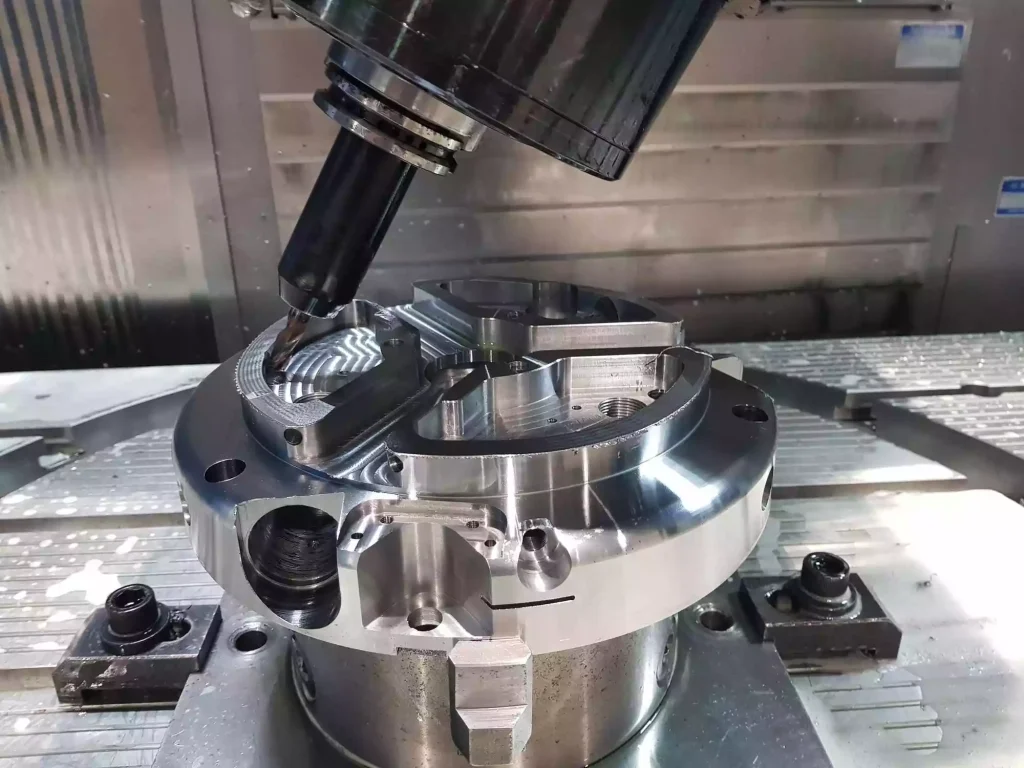
Our state-of-the-art machine shop houses advanced 3-axis, 4-axis, and simultaneous 5-axis milling configurations, allowing us to tackle geometries that other shops turn down. Beyond standard machining, Xtmade offers an integrated ecosystem of post-processing treatments, including bead blasting, Type II and Type III hardcoat anodizing, and powder coating, giving you a completely finished, market-ready assembly from a single, reliable vendor.
What truly sets Xtmade apart is our commitment to Design for Manufacturing (DFM). We don’t just cut metal; our team of experienced engineers reviews your designs to catch potential manufacturing bottlenecks before the spindle even spins, saving you valuable time and overhead. With transparent quoting, rigorous quality control down to micron-level tolerances, and rapid global shipping, Xtmade is built to keep your product development timelines moving forward.
Conclusion
From simple machined brackets to highly complex aerospace structures, CNC milling remains one of the foundational technologies behind modern manufacturing. Its ability to produce precise, durable, and highly repeatable components from an enormous range of materials makes it indispensable across industries including aerospace, automotive, robotics, medical devices, electronics, and industrial equipment.
Successfully navigating the world of CNC milling ultimately comes down to understanding the relationship between digital design and physical manufacturing constraints. Choosing the appropriate machine configuration, selecting materials based on both performance and machinability, and designing features that work with the natural behavior of cutting tools can dramatically improve production efficiency while lowering manufacturing costs.
Whether you are developing a single prototype or scaling into full production, mastering these principles ensures that your digital designs translate smoothly into reliable, high-quality physical components.