CNC Turning Explained: Process, Machines, Materials, Applications & Design Guide
CNC turning remains one of the most widely used and production-efficient machining processes in modern manufacturing, especially for components with rotational symmetry. Despite the rise of multi-axis machining and additive manufacturing, turning continues to dominate industries that require high-volume production of precision cylindrical parts such as shafts, pins, bushings, connectors, and fluid system components.
The reason is simple: most engineered parts are still fundamentally rotational in geometry. In these cases, CNC turning is not just an alternative—it is the most direct and cost-efficient method to achieve tight tolerances, stable surface finish, and consistent dimensional repeatability at scale.
Compared to milling, which builds geometry through multi-directional tool movement, CNC turning removes material through continuous rotation of the workpiece against a stationary cutting tool. This creates a naturally efficient cutting condition for cylindrical shapes, reducing cycle time and improving concentricity control. As a result, turning is often the preferred process in production environments where speed, consistency, and cost per part are critical performance factors.
In practical manufacturing decisions, CNC turning is rarely chosen because it is “simpler,” but because it is structurally better suited for specific part geometries and production requirements. Even in hybrid machining environments, turning often serves as the foundational process before secondary milling or finishing operations are introduced.
What Is CNC Turning (Engineering Definition)
CNC turning is a subtractive manufacturing process in which a cutting tool removes material from a rotating workpiece to produce parts with cylindrical or rotational symmetry. The motion principle is fundamentally based on rotation: the workpiece is clamped and spun at high speed by a spindle, while a stationary or moving cutting tool gradually engages the surface to shape the final geometry.
Unlike milling, where the cutting tool rotates and moves around a fixed workpiece, CNC turning reverses this relationship. The workpiece becomes the primary source of motion, and the tool performs controlled linear movements along defined axes (typically X and Z in standard CNC lathes). This configuration makes turning inherently efficient for producing round, tubular, and axisymmetric components.
At its core, CNC turning is designed to optimize material removal along a constant rotational axis. This allows manufacturers to achieve high dimensional consistency, excellent concentricity, and stable surface finish, especially in features such as outer diameters, inner bores, grooves, and threads.
In modern CNC systems, turning is no longer limited to simple 2-axis operations. Advanced CNC lathes may integrate live tooling and additional axes, enabling secondary milling, drilling, and complex contouring within a single setup. However, the fundamental principle remains unchanged: controlled cutting of a rotating workpiece to generate precise cylindrical geometry efficiently and repeatably.
CNC Turning Machine Overview
A CNC turning machine, commonly referred to as a CNC lathe, is the core equipment used to perform CNC turning operations. Its primary function is to securely hold and rotate a workpiece while precision cutting tools remove material to create cylindrical or rotationally symmetric parts.
At the center of the machine is the spindle system, which drives the rotation of the workpiece at controlled speeds depending on material type, diameter, and cutting conditions. The workpiece is typically fixed using a chuck or collet, ensuring stable clamping force and minimal runout during high-speed rotation.
Surrounding this rotating system is the tool structure, usually in the form of a turret. The turret holds multiple cutting tools and indexes between them automatically during machining, allowing different operations such as roughing, finishing, threading, and grooving to be completed in a single setup without manual tool changes.
Modern CNC turning machines also integrate high rigidity machine beds, precision guideways, and advanced servo control systems to ensure stability, accuracy, and repeatability. In more advanced configurations, live tooling capabilities allow the machine to perform limited milling and drilling operations, effectively turning the lathe into a hybrid machining center.
Overall, the CNC turning machine is designed as a highly efficient production system optimized for speed, precision, and repeatability in manufacturing rotational parts.
CNC Turning Process Workflow
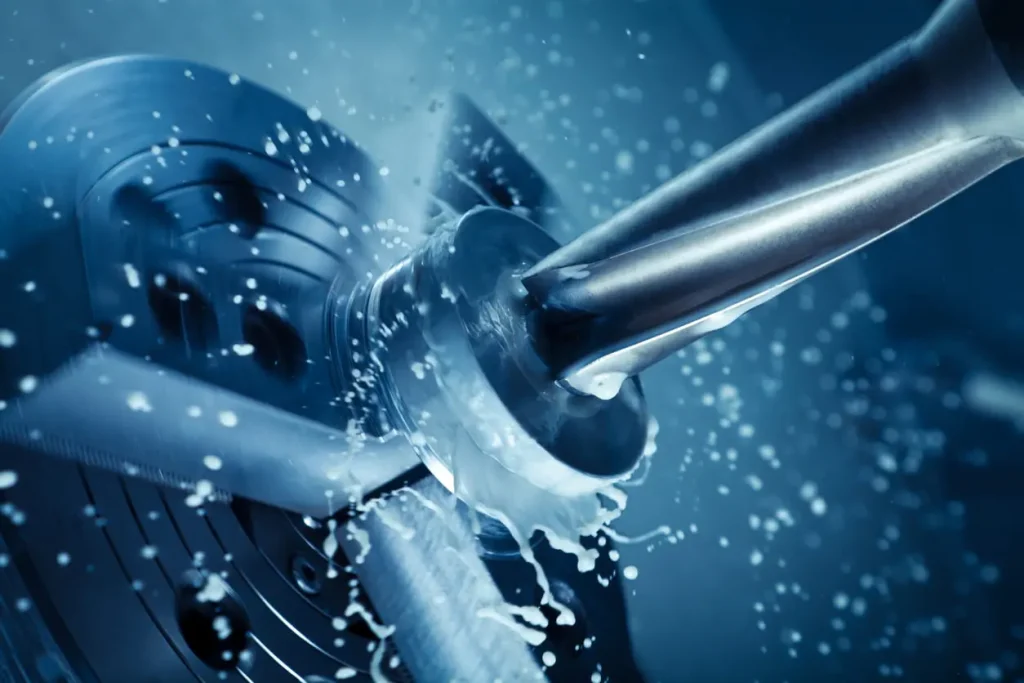
The CNC turning process follows a structured manufacturing workflow that transforms a CAD design into a finished precision component. Each stage is designed to ensure dimensional accuracy, surface quality, and production efficiency.
The process typically begins with a design review, where engineers evaluate the part geometry for manufacturability. This step often includes a DFM (Design for Manufacturing) assessment to ensure the design is suitable for turning operations and does not introduce unnecessary machining complexity.
Once the design is confirmed, CAM programming is carried out to generate toolpaths and machining strategies. This includes defining cutting parameters such as spindle speed, feed rate, depth of cut, and tool selection based on material and geometry requirements.
After programming, the machine setup stage begins. The workpiece is securely clamped using a chuck or collet system, and the required cutting tools are installed in the turret. Proper alignment and calibration are critical at this stage to ensure accuracy during cnc machining.
The machining phase typically starts with rough turning, where excess material is removed quickly to approximate the final shape. This is followed by semi-finishing, which improves dimensional stability and reduces internal stress. The final finishing pass is then applied to achieve tight tolerances and the required surface finish.
After machining is complete, the part undergoes inspection and quality control. Measurements such as diameter, concentricity, runout, and surface roughness are checked to ensure compliance with specifications before the part is released for delivery or further processing.
Types of CNC Turning Operations
CNC turning operations can be categorized based on the type of geometry being produced and the function of the machining process. Each operation serves a specific purpose in shaping cylindrical components efficiently and accurately.
External Turning Operations
External turning operations are used to machine the outer surface of a rotating workpiece. These operations define the overall shape and diameter of the part.
- Straight turning
- Taper turning
- Contour turning
Internal Turning Operations
Internal turning operations are performed inside a pre-drilled or hollow workpiece to create internal features and cavities.
- Boring
- Internal grooving
- Reaming
Cutting and Separation Operations
These operations are used to finalize part geometry, create threads, or separate the finished component from the stock material.
- Facing
- Threading (external and internal)
- Parting-off
 Materials Used in CNC Turning
The choice of material in CNC turning directly affects machining performance, tool wear, surface finish, and overall production efficiency. Different materials behave differently under cutting forces, heat generation, and chip formation, which makes material selection a critical part of process planning.
Aluminum Alloys
Aluminum is widely used due to its excellent machinability, low cutting resistance, and high production speed potential. It allows high surface finish quality and is commonly used in aerospace, automotive, and consumer product components.
Stainless Steel
Stainless steel offers high strength and corrosion resistance but is more challenging to machine. It generates higher tool wear and requires optimized cutting parameters to control heat and maintain dimensional accuracy.
Brass
Brass is highly machinable and produces clean, short chips, making it ideal for high-speed turning. It is often used in fittings, connectors, and precision mechanical parts where dimensional stability is important.
Carbon Steel
Carbon steel provides a balance between strength and machinability. It is widely used in structural and industrial components, but machining conditions must be controlled to manage hardness variations.
Engineering Plastics
Engineering plastics such as POM, PA, PEEK, and PPS are increasingly used in precision turning applications. These materials require careful control of heat buildup to avoid deformation while maintaining dimensional accuracy and stability in final parts.
CNC Turning Tolerances & Accuracy Factors
The accuracy of CNC turning is determined by a combination of machine capability, tooling condition, material behavior, and process control. Achieving tight tolerances requires not only precision equipment but also stable machining conditions throughout the entire cutting process.
One of the most critical factors is spindle runout, which refers to the deviation in the spindle’s rotational axis. Even minimal runout can directly affect concentricity and surface quality, especially in high-precision cylindrical parts.
Tool deflection is another key contributor to dimensional variation. During cutting, the tool is subjected to force from the workpiece, which can cause slight bending or vibration. This becomes more significant in long or thin parts, where rigidity is lower.
Thermal deformation also plays an important role in accuracy. Heat generated during machining can cause both the tool and workpiece to expand, leading to dimensional drift if not properly controlled through cutting parameters or cooling strategies.
Fixture rigidity determines how securely the workpiece is held during rotation. Insufficient clamping force or unstable fixturing can introduce vibration and reduce repeatability, particularly in high-speed operations.
Finally, surface finish and dimensional consistency are closely linked to process stability. In CNC turning, typical precision is evaluated using metrics such as concentricity, roundness, and surface roughness (Ra), which together define the final quality level of the machined part.
CNC Turning Design Guidelines (DFM)
Design for Manufacturing (DFM) in CNC turning focuses on shaping parts in a way that ensures efficient machining, stable accuracy, and lower production cost. Good design decisions can significantly reduce cycle time, tool wear, and risk of defects during production.
One key consideration is wall thickness. Extremely thin walls are prone to deformation under cutting forces, especially in metal parts, so maintaining consistent and sufficient thickness improves stability during machining.
Deep grooves and narrow internal features should be avoided or minimized. These features require specialized tooling and multiple passes, which increase machining time and reduce tool accessibility.
Internal corners should not be designed as sharp 90-degree angles. Instead, adding a radius helps reduce stress concentration and allows standard cutting tools to machine the feature more efficiently.
Thread design should follow standard sizes whenever possible. Non-standard threads increase tooling complexity and setup time, and may require custom programming or tools.
The length-to-diameter ratio is another critical factor. Long, slender parts are more likely to experience deflection and vibration during machining, so additional support or process adjustments may be required to maintain accuracy.
CNC Turning vs CNC Milling
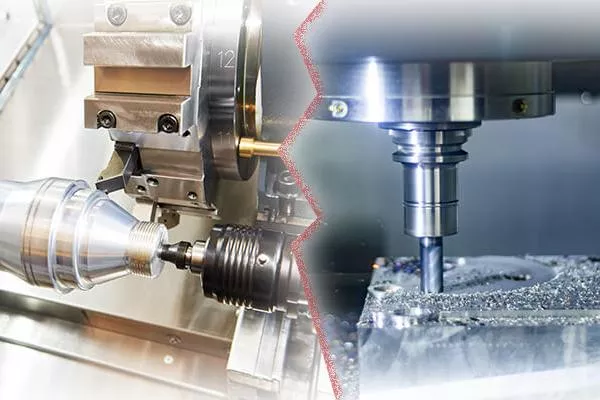
CNC turning and CNC milling are two core subtractive manufacturing processes, but they are fundamentally different in how material is removed and what types of geometry they are best suited for. The choice between them is less about which is “better” and more about which is structurally more efficient for a given part.
In CNC turning, the workpiece rotates while the cutting tool remains relatively stationary and moves along controlled linear axes. This makes turning ideal for parts with rotational symmetry such as shafts, bushings, and rings, where geometry is defined around a central axis.
In CNC milling, the cutting tool rotates while the workpiece remains fixed. This allows multi-directional cutting and makes milling more suitable for complex geometries, flat surfaces, pockets, and non-axisymmetric features.
From a cost perspective, turning is generally more efficient for cylindrical parts because it involves continuous cutting with fewer tool changes and simpler toolpaths. Milling, on the other hand, often requires more tool movements and longer cycle times for similar rotational parts.
In terms of accuracy, both processes can achieve high precision, but turning naturally provides better concentricity for round parts due to its rotational cutting principle. Milling excels in geometric flexibility but may require additional setups to achieve similar roundness control.
In modern manufacturing, these two processes are often not competitors but complementary methods. Many precision parts are produced using a hybrid approach, where turning is used for primary cylindrical features and milling is applied for secondary features such as holes, flats, or complex contours.
Applications of CNC Turning
CNC turning is widely used across industries that require high-precision rotational components, especially where consistency, scalability, and cost efficiency are critical. Its strength lies in producing repeatable cylindrical parts with tight tolerances in both prototyping and mass production.
In the automotive industry, CNC turning is commonly used for manufacturing shafts, hubs, bushings, and various drivetrain components. These parts require high concentricity and durability under continuous mechanical stress.
In aerospace applications, turning is used to produce precision pins, connectors, fasteners, and structural components where weight optimization and dimensional accuracy are essential.
In the medical field, CNC turning supports the production of surgical instruments, implant components, and precision fittings. These parts demand extremely tight tolerances and stable surface finishes to ensure safety and performance.
In robotics and automation systems, turning is used for actuator components, joint parts, and precision mechanical interfaces that require smooth rotational movement and reliable alignment.
In hydraulic and pneumatic systems, CNC turning is essential for producing valves, fittings, cylinders, and sealing components that must maintain pressure integrity and dimensional stability under dynamic conditions.
CNC Turning Cost Factors
The cost of CNC turning is determined by a combination of time, material behavior, machine efficiency, and production strategy. Understanding these factors is essential for optimizing both unit price and overall manufacturing budget.
One of the most significant cost drivers is cycle time. Parts that require longer machining durations directly increase machine usage costs, especially in high-volume production environments where spindle time is a key expense metric.
Setup time also plays a major role. Every time a machine is configured for a new part—tool loading, workpiece clamping, and calibration—it adds non-productive time that increases overall cost, particularly in low-volume or prototype runs.
Material machinability strongly influences cost as well. Softer materials like aluminum reduce cutting time and tool wear, while harder materials such as stainless steel increase tool consumption and require slower cutting speeds, raising production costs.
Tool wear is another critical factor. Frequent tool changes or specialized tooling requirements increase both direct tooling expenses and indirect downtime during production.
Batch size has a major impact on unit cost. Larger production runs distribute setup costs across more parts, significantly reducing per-unit pricing, while small batches tend to have higher individual costs.
Finally, secondary operations such as polishing, anodizing, threading, or additional machining steps can further increase total manufacturing cost depending on the complexity and finishing requirements of the part.
Common CNC Turning Mistakes & Misconceptions
Despite being one of the most established machining processes, CNC turning is often misunderstood or incorrectly specified during design and production planning. These misconceptions can lead to higher costs, lower efficiency, or unnecessary design limitations.
One common misconception is that CNC turning is outdated compared to modern multi-axis machining. In reality, turning remains one of the most efficient processes for rotational parts, especially in high-volume production where cycle time and consistency are critical.
Another misunderstanding is that CNC turning is only suitable for simple geometries. While it is optimized for cylindrical shapes, modern CNC lathes with live tooling can handle complex features such as drilling, milling, and contouring within a single setup.
Some assume that milling can fully replace turning. However, for axisymmetric parts, milling is typically less efficient and may introduce unnecessary complexity in setup and toolpath programming.
There is also a misconception that CNC turning produces lower surface quality compared to milling. In practice, turning often achieves excellent surface finishes on cylindrical surfaces due to continuous cutting and stable rotational motion, especially when parameters are properly optimized.
Finally, many underestimate the importance of design-for-manufacturing considerations. Poorly designed features—such as unnecessary sharp corners, overly deep grooves, or unrealistic tolerances—can significantly increase machining difficulty and cost, even if the turning process itself is highly efficient.
Future of CNC Turning Technology
CNC turning continues to evolve from a traditional subtractive process into a more integrated, automated, and intelligent manufacturing system. While the core principle of rotating workpiece machining remains unchanged, the surrounding technology is rapidly advancing to improve speed, precision, and production flexibility.
One major development is the integration of automation systems. Modern production lines increasingly use robotic loading and unloading systems, enabling continuous “lights-out” manufacturing with minimal human intervention. This significantly improves throughput and reduces labor dependency.
Another key trend is the rise of hybrid machining centers that combine CNC turning and milling capabilities in a single machine. These systems reduce setup time, improve accuracy by minimizing part repositioning, and allow more complex geometries to be completed in one workflow.
Smart manufacturing is also reshaping CNC turning processes. Real-time monitoring of vibration, temperature, and tool wear allows manufacturers to adjust cutting parameters dynamically, improving consistency and reducing scrap rates.
Artificial intelligence is beginning to play a role in predictive maintenance and process optimization. AI-driven systems can forecast tool degradation, optimize cutting strategies, and improve overall machine efficiency based on historical production data.
Finally, high-precision micro turning is expanding the application of CNC turning into industries such as medical devices, electronics, and aerospace micro-components, where extremely tight tolerances and small-scale geometries are required.
Conclusion
CNC turning remains a foundational process in modern manufacturing due to its efficiency in producing high-precision rotational parts at scale. While manufacturing technologies continue to evolve toward multi-axis machining and hybrid systems, turning still provides unmatched advantages in cycle time, dimensional consistency, and cost efficiency for axisymmetric components.
Across industries such as automotive, aerospace, medical, robotics, and fluid systems, CNC turning continues to serve as a reliable backbone for producing critical components that require stable geometry and tight tolerances. Its ability to deliver repeatable accuracy makes it especially valuable in both high-volume production and precision engineering applications.
Rather than being replaced, CNC turning is increasingly being integrated into more advanced manufacturing ecosystems. Combined with automation, smart monitoring, and hybrid machining technologies, it continues to adapt to modern production demands while maintaining its core role in precision component manufacturing.