CNC-bewerking van messing
Custom brass CNC machining for precise geometries, tight tolerances, and reliable surface quality. From prototypes to production runs, we provide consistent machining solutions for brass applications across industries.
Brass CNC Machining Company
We are a brass CNC machining company specializing in precision machining for custom brass specifications, complex geometries, and tight dimensional requirements. Our experienced team combines advanced CNC equipment, skilled machining, and rigorous quality control to deliver consistent results. As a brass CNC machining exporter, we serve customers worldwide with coordinated production, inspection, packaging, and international delivery. From material selection to final inspection, every stage is managed to ensure reliable quality and accurate results.
Brass Grade We Machined
With extensive experience in CNC machining brass, we work with a wide range of brass alloys and understand how different grades respond to cutting, drilling, turning, and milling. From highly machinable grades to brass alloys requiring greater strength or corrosion resistance, we select machining parameters according to the material and your specifications to achieve consistent dimensional accuracy and surface quality.
210 Brass
230 Brass
260 Brass
270 Brass
360 Brass
377 Brass
464 Brass
CZ121 Brass
Brass Machining Advantages
Brass is well suited for CNC machining because of its excellent machinability and balanced mechanical properties. Its combination of cutting performance, dimensional stability, corrosion resistance, and surface quality makes it a practical material for different applications.
Brass can be cut at high speeds with relatively low tool wear, supporting efficient machining and consistent results.
Its good dimensional stability helps maintain accurate geometries and tight tolerances during machining.
Brass provides reliable resistance to moisture and corrosion, making it suitable for components exposed to demanding environments.
Its high electrical conductivity makes brass a preferred material for connectors, terminals, and other electrical applications.
Brass can achieve a clean, smooth finish directly after machining, reducing the need for extensive secondary finishing.
Brass has favorable friction and wear characteristics, making it suitable for bushings, gears, valves, and other moving or contacting components.
Waarom Kies voor ons
Challenges in CNC Brass
Although brass is generally easy to machine, different grades and complex geometries can still present challenges. Our brass machining experience allows us to adjust tooling, cutting parameters, and workholding to maintain stable results.
Brass can form burrs around holes, slots, threads, and sharp edges when cutting conditions are not properly controlled. We optimize tool geometry and cutting parameters and apply appropriate deburring methods to keep edges clean and precise.
Some brass grades can cause material to accumulate on the cutting edge, affecting surface quality and dimensional accuracy. We select suitable sharp tooling and optimize cutting speeds and feeds to reduce material buildup and maintain consistent machining.
Thin walls and delicate features can deform under cutting forces or clamping pressure. We use appropriate workholding and machining sequences to reduce deformation and maintain dimensional stability.
Brass grades vary in hardness, lead content, strength, and machinability. We adjust tooling and machining parameters according to the specific grade rather than applying the same process to every material.
Our Brass Machining Capabilities
We provide online brass CNC machining capabilities tailored to customer drawings and technical specifications. With extensive experience machining different brass grades, we handle demanding requirements involving complex geometries, tight dimensions, fine details, and high appearance standards while maintaining consistent quality.
For OEM brass CNC machining projects, we work directly from your drawings, 3D models, material specifications, tolerances, and finish requirements. Our production is organized around the specific requirements of each project to ensure the finished products meet the intended design and quality standards.
Our Capabilities Include
Coordinated support from drawing review and material confirmation through production, inspection, and required secondary services.
Careful control of critical dimensions, positional requirements, and fine features for applications with demanding tolerances(up to 0.005mm).
Suitable for brass components with complex surfaces, multi-angle features, and difficult-to-access areas requiring greater machining flexibility.
Focused on surface uniformity, edge quality, fine details, and overall visual consistency for brass products with high appearance requirements.
Production based on customer-supplied drawings, 3D models, brass grades, tolerances, and technical standards rather than fixed standard specifications.
Types of Brass CNC Machining Service
With years of hands-on experience machining brass, we understand how different brass grades respond to cutting and how machining conditions affect accuracy, surface quality, and tool performance. From everyday brass machining to wholesale brass CNC machining requirements, we apply practical production experience to keep machining stable and deliver consistent results across different geometries and specifications.
Brass CNC Machining Production Capability
Our production experience covers a wide range of brass requirements, from lead-free brass CNC machined components with specific material and compliance requirements to large batch complex shape brass CNC machined products requiring stable quality and consistent dimensions. We coordinate material selection, production control, and inspection around the actual requirements of each project to maintain reliable results throughout the order.
Kwaliteitscontrole
We maintain documented quality controls throughout precision machining for brass components, covering material verification, dimensional inspection, and final quality review. Our inspection approach is adapted to the requirements of each project to keep brass machining accurate and consistent.
- Materiaalcontrole— Confirm brass grade and material specifications before production.
- Drawing Review— Check dimensions, tolerances, threads, fits, and technical requirements before machining.
- Inspectie tijdens het productieproces— Monitor critical features during production and address deviations promptly.
- Eindcontrole— Verify finished products against approved drawings and specifications before shipment.
- VMM Optical Measurement System
- Micrometers & Digital Calipers
- Height Gauges & Thread Gauges
Our inspection equipment is selected according to the dimensional and geometric requirements of each project, supporting precision machining for brass components with reliable measurement results.
- Dimensional Inspection Reports
- Eerste-artikelinspectie (FAI)
- Drawing Requirement Verification
- Brass Assembly Inspection
For brass assembly CNC projects, we can verify critical dimensions and fit between mating components before delivery, helping ensure the finished assembly meets the specified requirements.
Our Brass CNC Machining Factory
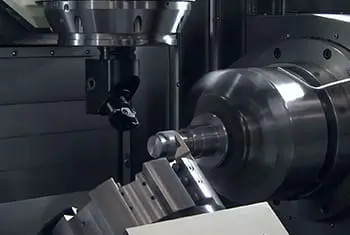
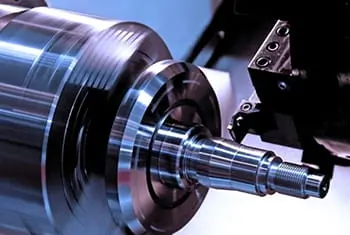
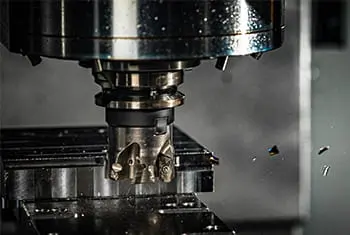
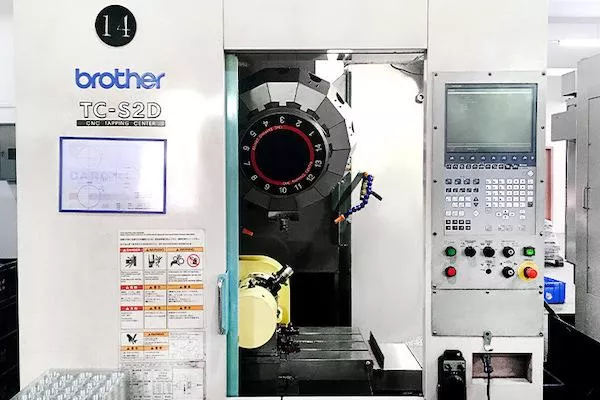
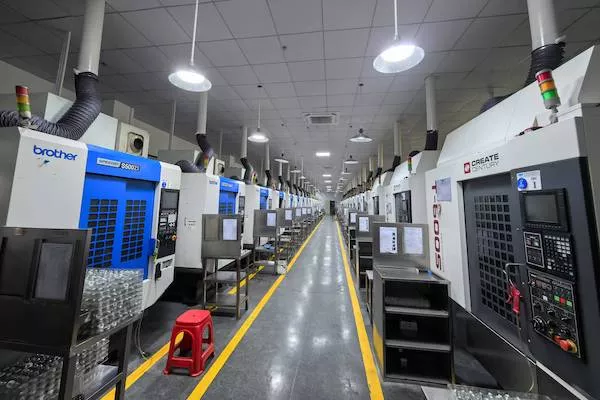
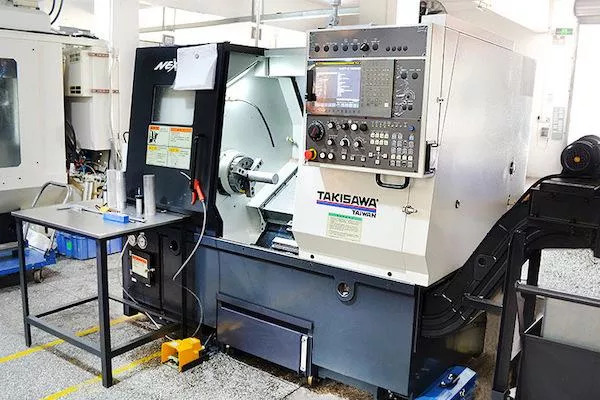
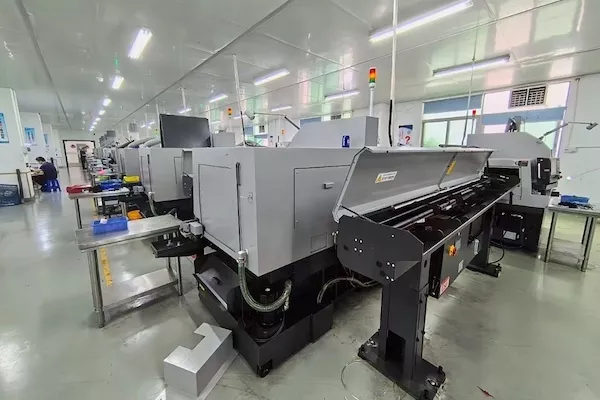
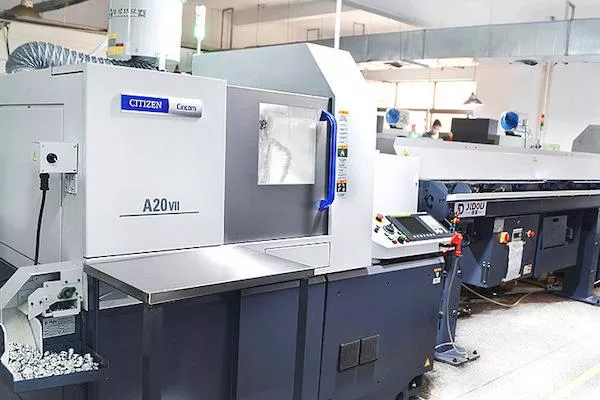
Our brass CNC machine shop is equipped for demanding custom machining work, with modern CNC machining centers and Swiss-type turning platforms suited to different brass geometries. Our machinists have extensive hands-on experience working with brass and understand how changes in alloy and geometry can affect cutting behavior, allowing them to make practical adjustments during production rather than relying solely on standard machining settings. Advanced CNC programming also enables our brass CNC machining factory to handle profiles, off-axis features, fine details, and other geometries that require more than conventional machining approaches. As experienced brass CNC machining manufacturers, we manage production in-house and coordinate the machining, finishing, and preparation required to deliver finished products ready for assembly or further use.


Our Equipment
Our brass CNC machining capabilities are supported by equipment from established manufacturers such as Mazak, DMG MORI, Haas, Okuma, and Citizen. Our equipment range includes CNC machining centers, CNC turning centers, 4-axis and 5-axis machining centers, and Swiss-type CNC lathes, providing the machine flexibility needed for different brass machining requirements. We select equipment according to the component geometry, dimensional requirements, and production needs to maintain stable and repeatable machining results.
Brass CNC Machining Engineering Support
Our engineering team brings hands-on experience to brass CNC machining, reviewing drawings, 3D models, material grades, tolerances, and structural details before production begins. We use DFM principles to identify potential issues such as difficult tool access, thin walls, deep features, excessive tolerances, or burr-prone areas, while considering how different brass grades may respond during machining. When a design could create unnecessary machining difficulty or affect dimensional consistency, our engineers communicate with customers early and suggest practical adjustments based on actual production experience. This approach helps turn demanding designs into reliable precision brass CNC machining results while keeping the original design intent and functional requirements in focus.
Opties voor oppervlakteafwerking
Our brass CNC machining experience allows us to control the machined surface according to the required appearance and application. Depending on the brass grade, geometry, and final requirements, we can provide a range of finishing options to improve surface smoothness, appearance, edge condition, corrosion resistance, or wear performance. We select the finishing method based on the actual product requirements rather than applying the same treatment to every brass component.
Zoals bewerkt
Polijsten
Tandenpoetsen
Tumbling
Coating
Ontbramen

Brass CNC Machining Applications
Our CNC machined brass components are used in applications where reliable mechanical performance, electrical conductivity, corrosion resistance, or a clean appearance is required.
Brass is widely used for components that control, direct, or contain fluids. Our machined brass products are suitable for valves, fittings, manifolds, pump components, and fluid connectors, where dimensional accuracy and reliable sealing surfaces are important.
The conductivity and machinability of brass make it well suited for electrical connectors, terminals, contact pins, cable components, and conductive hardware. We machine the fine holes, threads, slots, and contact features required for reliable electrical connections.
Brass components are commonly used where smooth movement, wear resistance, and dimensional stability are required. Applications include bushings, bearings, gears, shafts, pins, and other precision mechanical components.
For products where both function and appearance matter, brass provides a combination of machinability and an attractive natural finish. We produce locks, hinges, handles, trim, decorative fittings, and other architectural hardware with attention to surface consistency and visible details.
Productgalerij


ODM Brass CNC Machining Service
Looking for an experienced partner for custom brass development and manufacturing? Our brass CNC machining service for ODM combines engineering support, material expertise, and production capabilities to help turn your concepts into finished products with reliable quality and fast delivery.
Veelgestelde vragen
Is het CNC-bewerken van messing goedkoper dan het bewerken van aluminium?
Dat hangt af van het project. Messing is doorgaans per gewichtseenheid duurder dan gangbare aluminiumsoorten, maar dankzij de uitstekende bewerkbaarheid kan de bewerkingstijd worden verkort en de slijtage van het gereedschap worden beperkt. De uiteindelijke kosten hangen ook af van de geometrie van het onderdeel, de hoeveelheid, het materiaalgebruik, de afwerking en andere eisen; daarom vergelijken we de volledige productie-eisen in plaats van alleen de materiaalprijs.
Hoe kan ik voorkomen dat bewerkt messing verkleurt?
Messing krijgt na verloop van tijd van nature een donkerder uiterlijk wanneer het wordt blootgesteld aan lucht, vocht en gebruik. Als u het messing een glanzender uiterlijk wilt behouden, kunt u beschermende afwerkingen overwegen. Als u de voorkeur geeft aan een verouderde of antieke uitstraling, kan het oppervlak in plaats daarvan worden behandeld om het gewenste decoratieve effect te bereiken.
Kunt u complexe bewerkingsprojecten met messing aan?
Ja. Wij hebben ervaring met het verspanen van messing onderdelen met complexe geometrieën, nauwe toleranties, dunne wanden, diepe uitsparingen en andere veeleisende details. Ons engineeringteam beoordeelt het ontwerp vóór de productie om mogelijke bewerkingsproblemen te identificeren en een praktische aanpak te bepalen die consistente resultaten oplevert.
Welke toleranties kun je bereiken bij het CNC-bewerken van messing?
De haalbare tolerantie hangt af van de messingkwaliteit, de geometrie van het onderdeel, de afmetingen van de details en de vereiste bewerkingsomstandigheden. Wij beoordelen kritische afmetingen afzonderlijk op basis van de tekening, in plaats van voor elk detail dezelfde tolerantie toe te passen. Bij strenge tolerantie-eisen kan ons team het ontwerp beoordelen en de haalbare tolerantie bevestigen voordat de productie van start gaat.
Hoe snel kan ik mijn CNC-gefreesde onderdelen van messing ontvangen?
Delivery time depends on the part complexity, quantity, material, finishing requirements, and inspection needs. After reviewing your drawings and specifications, we can confirm the expected lead time and discuss expedited production options when a project requires faster delivery.
What information should I provide to get a brass machining quote?
Please provide your CAD files or 3D models, 2D drawings, required quantity, brass grade, surface finishing requirements, dimensional tolerances, inspection requirements, and packaging specifications if applicable. Complete technical information helps us evaluate the project accurately and provide a more reliable quotation.