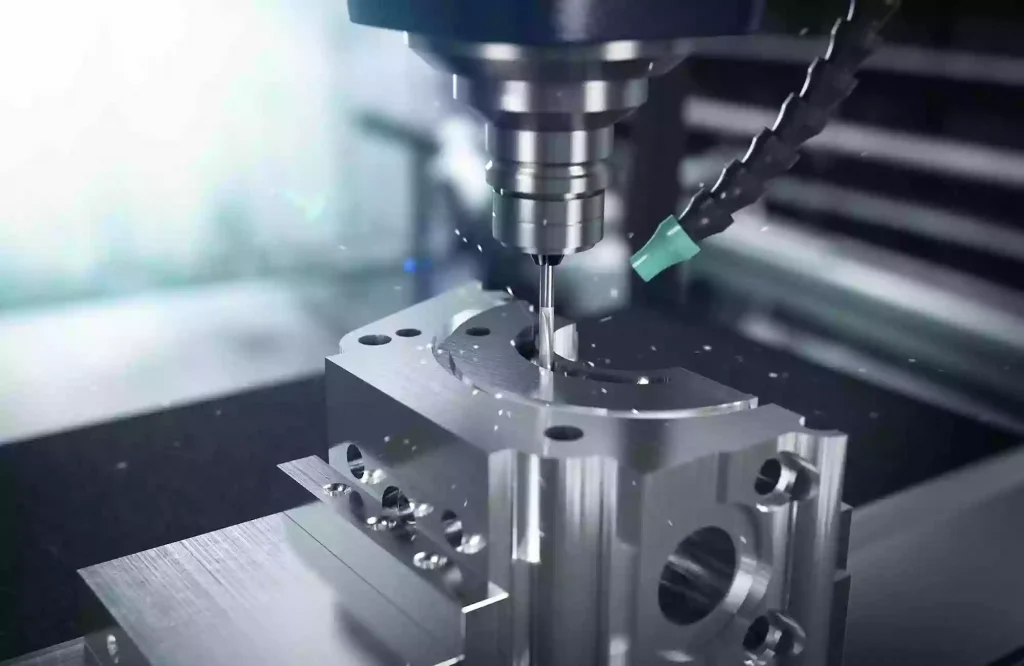
Easy-to-Machine Metals for CNC Machining
Free-machining metals are widely used in CNC manufacturing; they typically enable efficient cutting while maintaining consistent dimensional accuracy and surface quality. Their machining characteristics help reduce cutting times, control tool wear, and ensure production consistency across the entire process—from prototyping to mass production. A material’s machinability is not determined solely by its name; factors such as alloy composition, material condition, part geometry, tolerance requirements, surface finish, tool selection, machine setup, and production needs all influence the actual machining process. This guide introduces common free-machining metals and their machining characteristics, typical CNC processes, application areas, and key production considerations.
What is CNC machining of free-cutting metals?
“Free-machining” metals are those that can be cut efficiently using CNC equipment while maintaining stable tool performance, high dimensional accuracy, and excellent surface quality. These metals typically generate moderate cutting forces and produce controllable chip formations, enabling efficient material removal during milling, turning, drilling, and other machining operations.
In CNC manufacturing, good machinability helps boost productivity, minimize unnecessary tool wear, and ensure consistent results across repeated production runs. Consequently, certain metals are particularly well-suited for component manufacturing—whether for prototyping, small-batch production, or large-scale manufacturing.
What Makes a Metal Easy to Machine?
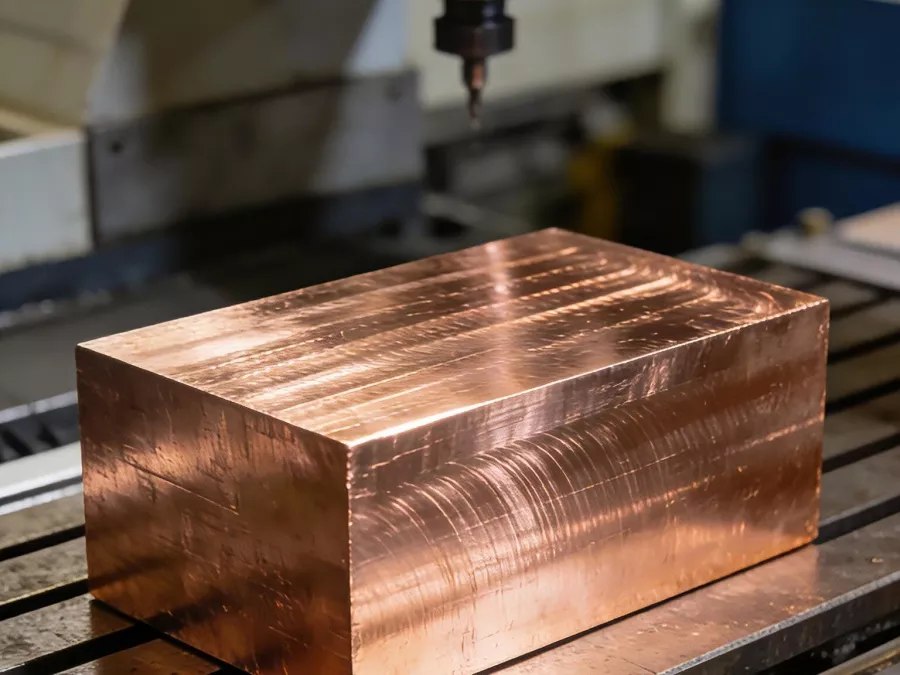
“Machinability” refers to the ease with which a material can be cut and processed into a finished component under suitable machining conditions. It is influenced by various factors, including cutting forces, chip formation, tool wear, achievable surface finish, and dimensional stability. Materials with good machinability can typically be removed efficiently without generating excessive cutting resistance or causing process instability. This offers significant benefits for both prototyping and mass production.
Lavorabilità
During CNC machining, the cutting tool must remove material from the workpiece while maintaining a controlled cutting process. Materials with favorable machining characteristics produce predictable chip formations and require moderate, controllable cutting forces. This makes operations such as milling, turning, drilling, tapping, and boring easier to manage. Actual machining processes must still be adjusted based on the specific material grade and component geometry.
Tool Wear and Tool Life
Tool wear directly impacts machining consistency and production efficiency. If a material does not cause excessive tool wear, the tool can remain in use over longer production cycles. Stable tool performance helps maintain consistent dimensions and surface finishes. In mass production, this reduces downtime caused by frequent tool changes and ensures consistency (repeatability) across different product batches.
Surface Finish and Dimensional Control
Machinability also affects the ability to achieve consistent surface quality and maintain specified dimensions. When cutting conditions are stable, the results of finishing operations become more predictable. This is particularly important for components featuring precision holes, mating surfaces, threads, cavities, or other elements that must strictly adhere to engineering drawings.
Production Efficiency
Favorable machining characteristics help shorten cycle times and make the production process more predictable.
In large-scale CNC manufacturing, even minor differences in cutting efficiency can accumulate into significant disparities when processing hundreds or thousands of parts. Consequently, easy-to-machine metals are often the preferred choice in applications where production efficiency and repeatability are paramount.
Common Free-Machining Metals
Many commonly used metals possess excellent machining characteristics. While suitability depends on the specific material grade and application, the following materials are frequently used in CNC component manufacturing where high-efficiency machining is required.
Alluminio
Aluminum is one of the most widely used metals in CNC machining. Various grades—such as 6061, 7075, and 2024—offer distinct advantages regarding strength, weight, corrosion resistance, and mechanical properties. With its low density and excellent machinability, aluminum is suitable for a wide range of CNC milling and turning operations. It allows for the machining of relatively complex geometries while maintaining high dimensional accuracy. Aluminum is commonly used for aerospace and automotive components, electronics housings, brackets, fixtures, heat sinks, and weight-sensitive mechanical assemblies.
Ottone
Brass is renowned for its exceptional machining characteristics and is widely used for precision turned and milled parts. Free-machining grades like C360 are particularly common for features involving threads, holes, slots, and intricate details. Brass offers a combination of good machinability, corrosion resistance, strength, and electrical conductivity. It is frequently used for pipe fittings, connectors, valves, fasteners, bushings, and electrical hardware. Its consistent cutting properties also make it ideal for the mass production of small, precision components.
Acciaio a lavorabilità facile
Free-machining steels are specially formulated to enhance cutting performance and improve chip formation. Grades such as 12L14 and 1215 are often selected when machining efficiency is a critical production factor. These steels are commonly used to manufacture turned parts, shafts, fittings, pins, fasteners, and other mechanical products featuring complex geometries. Their machining characteristics facilitate efficient material removal and support mass production, though the chosen grade must still meet the mechanical and application requirements of the final component.
1018 Steel and Other Low-Carbon Steels
Low-carbon steels like 1018 are widely used because they strike an excellent balance between machinability, strength, material availability, and cost. 1018 steel is suitable for manufacturing brackets, shafts, fixtures, mechanical assemblies, and general industrial hardware. Unlike specialized free-machining steels, the selection of this material is typically based on a comprehensive assessment of material properties and manufacturing requirements, rather than solely on machinability. In CNC production, low-carbon steel can be processed using milling, turning, drilling, tapping, and other conventional machining techniques.
303 Stainless Steel
Not all stainless steels share the same machining characteristics. 303 stainless steel is highly valued for its superior machinability compared to many other stainless steel grades. It is frequently used to manufacture screws, fittings, shafts, bushings, connectors, and precision hardware—applications that require a balance of corrosion resistance and good machinability. It is essential to verify the specific stainless steel grade against the engineering drawings, as alloy composition and material condition significantly influence machining performance during manufacturing.
Copper and Copper Alloys
Copper is widely selected for its exceptional electrical and thermal conductivity. Common grades include C10100 and C11000, while other copper alloys offer varying combinations of conductivity, strength, and machining characteristics. Copper components are widely used in electrical contacts, terminals, heat transfer assemblies, connectors, and thermal management systems. Although copper is easily machined, specific material grades and component geometries must be carefully considered when planning CNC production.
Easy-to-Machine Metals Comparison
| Materiale | Common Grades | Machining Characteristics | Key Advantages | Applicazioni tipiche |
| Alluminio | 6061, 7075, 2024 | Generally favorable | Lightweight, versatile | Aerospace, automotive, electronics |
| Ottone | C360, C260 | Very favorable for many applications | Good machinability, conductivity | Raccordi, connettori, valvole |
| Acciaio a lavorabilità facile | 12L14, 1215 | Designed for efficient machining | Efficient chip formation | Shafts, fittings, hardware |
| Low-Carbon Steel | 1018 | Generally favorable | Strength, availability | Machinery, fixtures, brackets |
| Acciaio inossidabile | 303 | Improved machinability among stainless grades | Resistenza alla corrosione | Fittings, shafts, precision hardware |
| Rame | C10100, C11000 | Grade-dependent | Electrical and thermal conductivity | Electrical and thermal components |
This comparison provides a general manufacturing reference. Actual machining performance can vary with material grade, temper, geometry, tooling, machine configuration, and required tolerances.
CNC Machining Processes for Free-Machining Metals
Free-machining metals can be processed using a variety of CNC machining operations, with the specific machining path determined by material properties, geometry, and required features. Productivity can often be significantly enhanced through efficient roughing, high-speed finishing, and streamlined post-processing steps.
High-Speed Fresatura CNC
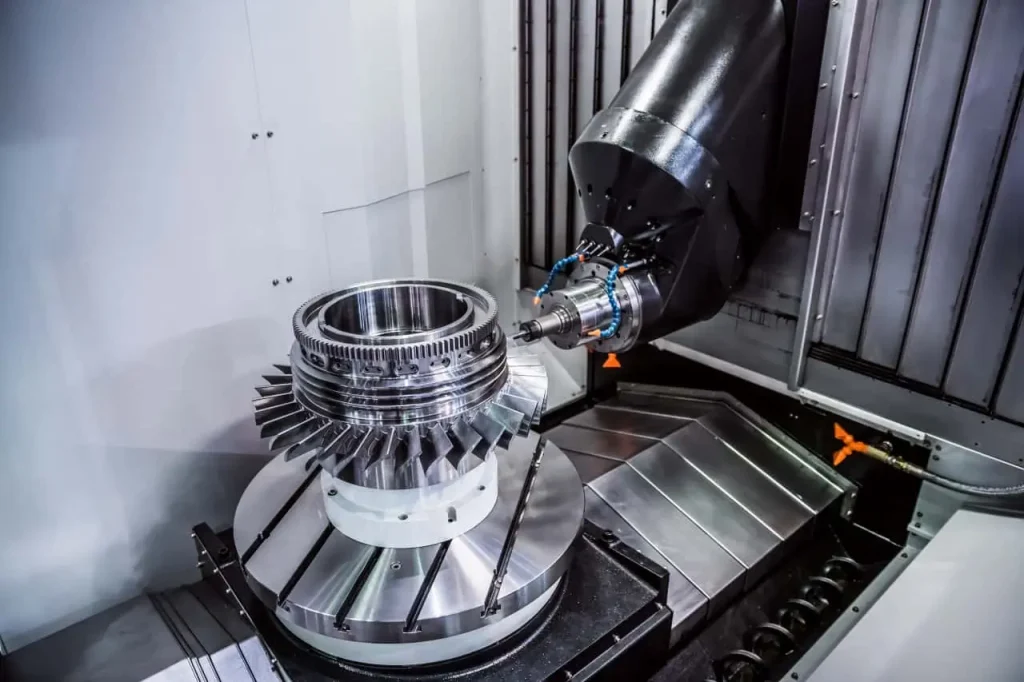
High-speed milling is commonly used for aluminum, brass, and other metals with excellent machinability. By employing higher spindle speeds and optimized feed rates, it is possible to achieve efficient material removal while maintaining superior surface quality. This process is suitable for machining cavities, contours, thin ribs, and complex 3D surfaces, allowing for the removal of large amounts of material without generating excessive cutting forces.
CNC Turning and Live Tooling
For cylindrical parts, CNC turning can be combined with live tooling to machine multiple features in fewer operations. Turning is used to create the primary cylindrical geometry, while live tooling allows for the machining of transverse holes, slots, flats, and other non-axisymmetric features. This combined process is ideal for shafts, bushings, fittings, pins, and other components made from aluminum, brass, or free-machining steels.
Tapping and Thread Milling
Free-machining metals are suitable for both conventional tapping and CNC thread milling. Tapping offers high efficiency for mass-producing internal threads, whereas thread milling provides greater flexibility when dealing with varying thread sizes, materials, and depths. For parts requiring both internal and external threads, turning, tapping, or thread milling processes can be combined according to design specifications.
Reaming and Precision Boring
When standard drilling fails to meet dimensional accuracy or surface quality requirements, reaming and boring can be employed as finishing operations. Reaming is commonly used for holes requiring high diameter consistency, while precision boring offers tighter control over the dimensions of larger or deeper holes. These processes are suitable for machining bushings, bearing housings, mounting holes, and other functional features.
Swiss-Type CNC Machining
For small, slender, or complex parts, Swiss-type CNC machining enables controlled cutting operations performed in close proximity to the guide bushing. This approach helps minimize workpiece deformation when machining features with high length-to-diameter ratios (i.e., slender parts). Free-machining materials—such as brass, aluminum, and suitable grades of steel—are ideal for efficient processing on Swiss-type machines, particularly for the high-volume production of pins, shafts, connectors, and miniature mechanical components.
CNC Sawing and Bar Stock Processing
For components made from bar stock, CNC sawing or automated bar processing can be performed either prior to or in conjunction with the machining operations. Raw material is cut to the required length before turning, milling, drilling, or other machining processes take place. This practice streamlines material preparation for repetitive production runs and reduces unnecessary manual handling between process steps.
Automated Deburring and Edge Finishing
Since free-machining metals facilitate efficient, high-volume production, deburring and edge finishing are often critical stages in the overall manufacturing workflow. Depending on specific part characteristics, methods such as CNC deburring, brushing, barrel tumbling, vibratory finishing, or manual trimming may be employed to remove sharp edges and machining burrs prior to inspection and final finishing.
Advantages of Using Free-Machining Metals
Selecting a metal that meets component functional requirements while offering excellent machinability yields several production advantages.
Efficient Material Removal
Superior machinability facilitates the efficient removal of excess material during the roughing stage. This advantage is particularly significant when processing large blanks or components requiring substantial material removal.
Reduced Tool Wear
Controlled cutting conditions help manage tool wear and maintain consistent machining performance throughout the production process. Tool life remains dependent on factors such as material grade, tool selection, cutting conditions, coolant usage, geometry, and machine settings.
Consistent Surface Quality
Stable machining conditions make it easier to control surface quality during finishing operations. This is crucial for surfaces with specific roughness (Ra) requirements or those designed to mate with other components.
Repeatable Production
Consistent machining characteristics simplify process control for repeat orders. Once a stable production process is established, subsequent batches can utilize the same machining steps, supported by appropriate inspection measures.
High-Volume Manufacturing
Materials with excellent machinability are well-suited for production environments that demand high cycle-time efficiency and process repeatability. Components such as fittings, connectors, shafts, brackets, fasteners, housings, and other mass-produced parts benefit significantly from predictable machining processes.
Applications of Free-Machining Metals
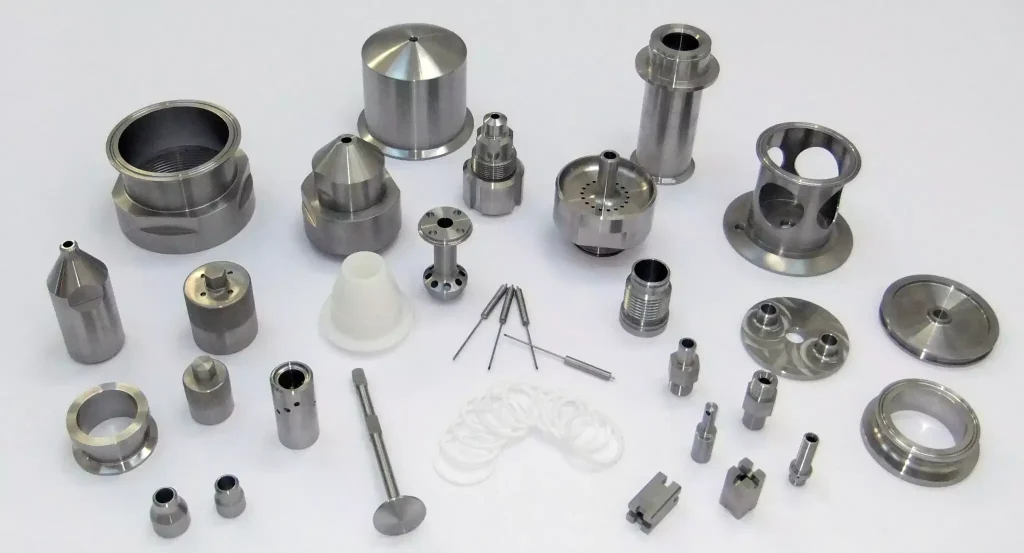
Free-machining metals are widely used in the manufacture of precision components for the automotive, electronics, industrial equipment, aerospace, robotics, and other industries.
Componenti automobilistici
Used to manufacture brackets, shafts, housings, fittings, fixtures, and other mechanical parts. Aluminum is often used for lightweighting applications, while steel and brass meet specific strength and wear-resistance requirements.
Electronic and Electrical Components
Aluminum, copper, and brass are frequently machined into housings, connectors, terminals, heat sinks, and mounting components.
Macchinari industriali
Machined aluminum, steel, brass, and other metal materials are used to produce shafts, brackets, housings, fixtures, fittings, and various mechanical parts.
Aerospace Components
In applications where weight and dimensional control are critical, aluminum is widely used to manufacture lightweight brackets, housings, structural components, and precision fixtures.
Robotics and Automation Equipment
CNC machining technology is used to manufacture robot arms, joints, brackets, housings, shafts, linkages, and sensor mounts, with material selection based on weight and mechanical property requirements.
Fittings and Connectors
Brass and free-machining metals are commonly used to manufacture fittings, connectors, valves, and threaded components; these parts typically require high dimensional consistency and suitability for efficient, high-volume production.
Design Considerations for CNC Machining of Free-Machining Metals
Even when using materials with excellent machinability, Design for Manufacturing (DFM) principles must still be applied. The component’s geometry remains a key factor in determining machining efficiency.
Wall Thickness and Geometry
Regardless of the material, features such as thin walls, narrow ribs, deep cavities, and long overhangs can present various manufacturing challenges. Whenever possible, the design should ensure sufficient rigidity to facilitate workholding and the machining process itself, while still meeting the component’s functional requirements.
Holes and Threads
Hole diameters, depths, locations, and thread specifications should be clearly indicated on the drawings. Deep holes and densely packed features may require additional machining steps or specialized workholding setups. Ensuring clear tool access to the areas being machined helps streamline the production process.
Internal Corners and Tool Accessibility
Since CNC cutting tools are typically round, internal corner designs should incorporate appropriate radii. Extremely small internal corner radii may necessitate the use of smaller tools or additional machining operations. A well-designed internal corner radius improves machining efficiency without compromising the component’s functional intent.
Tolleranze
Not all features require the same dimensional tolerances. Specifying unnecessarily tight tolerances for non-critical features increases the complexity of both manufacturing and inspection. Critical dimensions should be clearly identified so that focus remains on the features that impact assembly and functionality during machining and inspection.
Requisiti relativi alla finitura superficiale
Surface finish requirements should align with the surface’s actual function. Machined surfaces can generally meet various finish requirements through appropriate roughing and finishing operations. If specialized surface finishing processes are required, they should be clearly specified, along with the dimensional limits that must be maintained after the finishing process.
Free-Machining Metals and Production Requirements
In metalworking, machinability is merely one factor determining the overall manufacturing process. Even with materials that are relatively easy to machine, meticulous process planning is essential if the parts involve complex geometries, tight tolerances, thin-walled structures, deep cavities, or stringent surface finish requirements, or if they are intended for high-volume production.
Machine tool capabilities are equally critical. While simple parts can be produced efficiently on 3-axis machines, complex parts may be better suited for 4-axis or 5-axis machining to optimize tool accessibility and minimize the number of setups.
Production volume is another key consideration. Prototyping may prioritize flexibility and rapid iteration, whereas high-volume production demands stable toolpaths, standardized work instructions, inspection protocols, and repeatable process controls.
Ultimately, optimal production results can only be achieved through the seamless coordination of materials, part specifications, CNC equipment, process strategies, and inspection methods.
CNC Machining of Easy-to-Machine Metals at Xtmade
As a manufacturer of metal parts, Xtmade leverages capabilities in milling, turning, and multi-axis machining to provide CNC services for aluminum, brass, steel, stainless steel, copper, and other engineering metals. Customers can submit drawings, CAD files, material specifications, quantities, tolerances, and surface finish requirements prior to production to undergo engineering evaluation and receive DFM (Design for Manufacturing) feedback. Our CNC machining and inspection processes accommodate prototyping, low-volume orders, and recurring production runs while strictly ensuring adherence to the dimensional accuracy and quality standards specified for each project.