
Le tournage CNC expliqué : procédé, machines, matériaux, applications et guide de conception
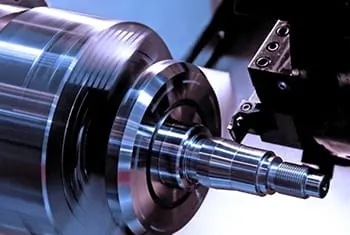
CNC turning is a highly efficient machining process used to produce precision rotational parts by rotating the workpiece while a stationary cutting tool removes material. It is widely used for cylindrical components such as shafts, bushings, and connectors due to its high accuracy, fast cycle time, and excellent concentricity control.
The process includes operations like turning, boring, threading, and parting, and is compatible with materials such as aluminum, stainless steel, brass, carbon steel, and engineering plastics. Key factors affecting accuracy include spindle runout, tool deflection, thermal stability, and fixturing rigidity.
CNC turning is cost-efficient for high-volume production but requires careful design (DFM), especially for wall thickness, corner radii, and thread features. Compared to CNC milling, turning is more suitable for axisymmetric parts and offers better efficiency and consistency.
It remains a core manufacturing process across industries such as automotive, aerospace, medical, robotics, and fluid systems, and is evolving with automation, hybrid machining, and smart manufacturing technologies.

 English
  German
  Russian
  French
  Italian
  Spanish
  Portuguese
  Dutch
Dutch