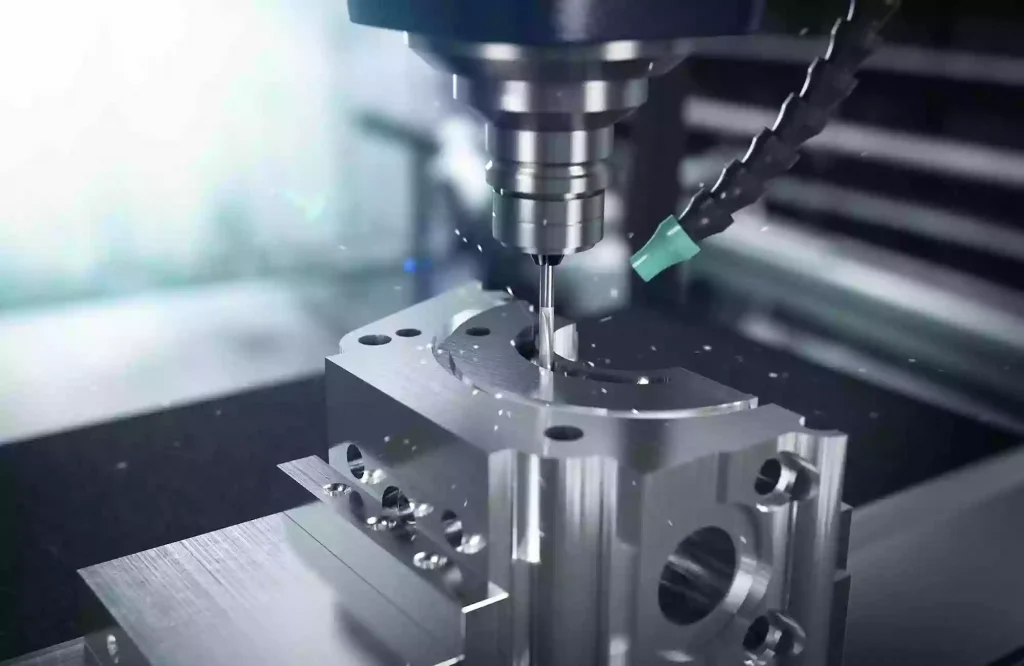
How Does Corrosion Resistance Affect CNC Machining Material Selection?
Corrosion resistance is an important factor when selecting materials for CNC machined parts, especially when components are exposed to moisture, chemicals, saltwater, or other aggressive environments. A material that performs well in a clean, dry environment may deteriorate quickly when exposed to corrosive substances. Over time, corrosion can affect surface quality, reduce the effective thickness of a component, damage functional features, and compromise the reliability of an assembly.
Choosing a corrosion-resistant material helps extend part service life and reduce maintenance requirements. However, the most corrosion-resistant material is not always the best choice for every application. Engineers must also consider mechanical properties, machining requirements, material cost, and the conditions in which the finished part will operate.
Understanding how corrosion resistance affects CNC machining material selection helps manufacturers produce parts that meet both functional and environmental requirements.
What Is Corrosion Resistance?
Corrosion is the phenomenon where a material gradually deteriorates due to chemical or electrochemical reactions with its surrounding environment. For metals, this typically occurs when the material reacts with oxygen, water, salts, acids, or other chemical substances.
Corrosion resistance refers to a material’s ability to withstand these reactions without sustaining unacceptable damage. Different materials employ various mechanisms to resist corrosion: some form a protective surface layer that slows down subsequent reactions, while others rely on coatings, plating, or other surface treatments to minimize contact with corrosive agents.
For instance, stainless steel contains chromium, which facilitates the formation of a dense, passive oxide film on its surface; under appropriate conditions, this film effectively inhibits further corrosion. Aluminum also naturally forms a protective oxide layer, granting it good corrosion resistance in a wide range of environments.
Corrosion resistance is not an absolute property that remains constant under all conditions. A material might perform well in fresh water yet corrode in an environment rich in chloride ions. Factors such as temperature, chemical concentration, surface condition, and contact with other materials can all influence corrosion resistance.
When selecting materials for CNC-machined parts, it is essential to fully consider the actual operating environment rather than relying solely on the material’s name.
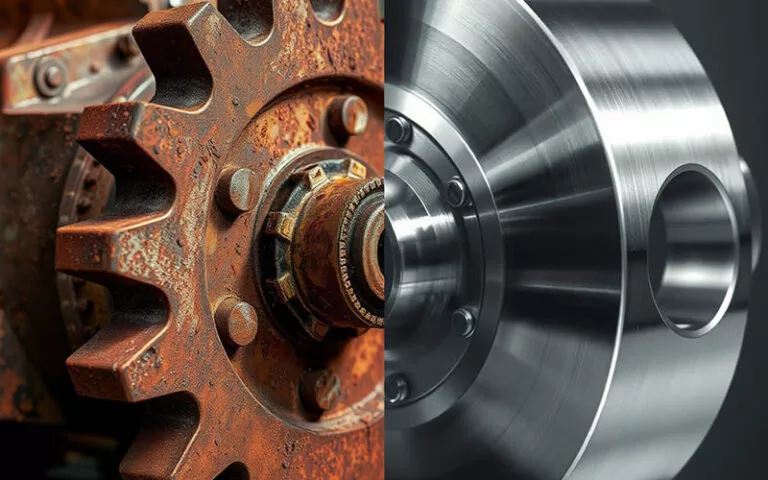
Why Does Corrosion Resistance Matter for CNC Machined Parts?
Corrosion can affect more than the appearance of a machined component. Depending on the application, it can change dimensions, damage mating surfaces, interfere with movement, and reduce the reliability of mechanical connections.
Consider a CNC machined shaft operating in a humid environment. If corrosion develops on its bearing surface, the resulting roughness or material loss can interfere with the required fit and accelerate wear. A threaded component exposed to corrosive chemicals may become difficult to remove or may lose material around its threads. In fluid-handling equipment, corrosion can damage sealing surfaces and contribute to leakage.
These problems are particularly important when parts must maintain tight tolerances. Even relatively small amounts of corrosion can affect precision surfaces, sliding fits, bearing seats, or sealing interfaces. A component may meet its dimensional requirements immediately after machining but fail to maintain them throughout its service life if the material is unsuitable for its environment.
Corrosion resistance also affects maintenance planning. Parts that deteriorate quickly may require more frequent inspection, cleaning, replacement, or protective treatment. Selecting an appropriate material at the beginning can help reduce these ongoing costs.
How the Operating Environment Affects Material Selection
The first step in selecting corrosion-resistant materials is to understand the environmental conditions the component will face during actual use.
For components used outdoors or in environments prone to condensation, moisture and humidity are common considerations. Saltwater and airborne salts create harsher corrosive environments, particularly for materials susceptible to chloride-induced corrosion. Components in industrial equipment may come into contact with cleaning agents, process chemicals, oils, or acidic and alkaline solutions.
Temperature is also a critical factor. High temperatures can accelerate certain corrosion reactions or compromise the stability of protective surface layers. Chemical concentration and duration of exposure further influence the rate of material degradation. For instance, the material requirements for a component briefly exposed to a mild cleaning solution may differ significantly from those for a component continuously immersed in a chemical bath.
Component design is equally vital. Narrow crevices, threaded connections, joints, and areas where moisture tends to accumulate can create conditions that trigger localized corrosion. If the component’s geometry causes corrosive substances to become trapped or hinders effective cleaning, even corrosion-resistant alloys may experience issues.
Therefore, material selection should take into account a range of factors, including environmental exposure, component geometry, operating temperature, expected service life, and maintenance conditions.
Which CNC Machining Materials Offer Good Corrosion Resistance?
Several material families are commonly used for corrosion-resistant CNC machined parts. Their suitability depends on the specific environment, mechanical requirements, and manufacturing constraints.
Acier inoxydable
Stainless steel is widely used for CNC-machined components that require a combination of corrosion resistance, strength, and durability. Common applications include shafts, fittings, housings, fasteners, and various components for food processing or industrial equipment.
Different grades of stainless steel offer varying levels of corrosion resistance. For instance, 304 stainless steel performs well in many general-purpose environments; however, 316 stainless steel contains molybdenum, providing superior corrosion resistance compared to 304 in environments involving chlorides.
Nevertheless, this does not mean that any grade of stainless steel is completely immune to corrosion. In certain chloride-rich environments, stainless steel can still suffer from pitting or crevice corrosion. Selecting the appropriate grade depends on the specific operating environment, rather than simply relying on the material’s classification as “stainless steel.”
Machinability also varies across different stainless steel grades. Some grades are relatively easy to machine, while others may generate excessive heat or undergo work hardening during the cutting process. Consequently, appropriate machining strategies must be taken into account when selecting the material.
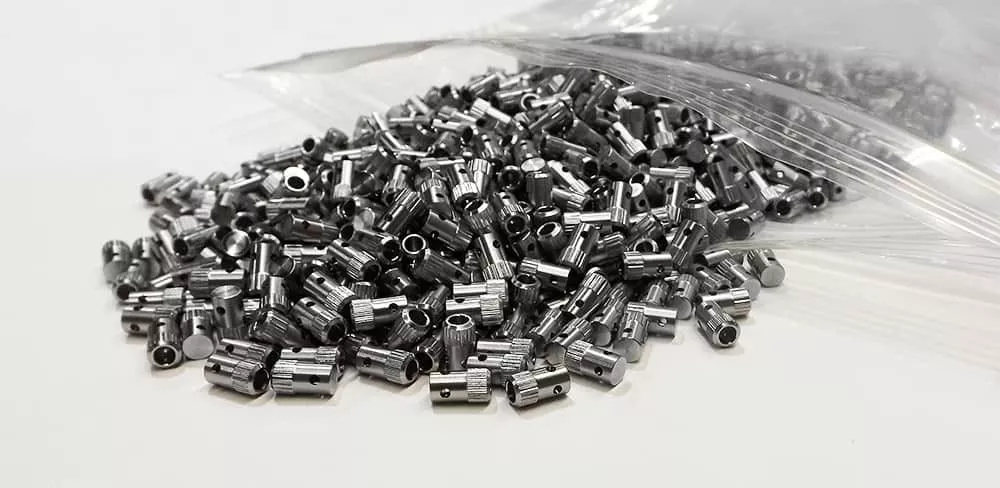
Alliages d'aluminium
Aluminum is a common choice when a part needs low weight and useful corrosion resistance. Its naturally forming oxide layer protects the underlying metal in many environments, making aluminum suitable for housings, brackets, structural components, and equipment enclosures.
However, corrosion performance varies by alloy and exposure conditions. Some aluminum alloys provide better corrosion resistance than others, and certain environments can cause localized attack. Contact with dissimilar metals in the presence of moisture may also lead to galvanic corrosion.
Surface treatments such as anodizing can improve the surface protection of suitable aluminum alloys. The selected treatment should match the intended environment and functional requirements, particularly where wear resistance, electrical conductivity, or tight dimensional tolerances matter.
Alliages de titane
Titanium alloys offer excellent corrosion resistance in many demanding environments, including seawater and certain chemical-processing applications. Their combination of corrosion resistance and high specific strength makes them useful for specialized industrial, marine, aerospace, and medical components.
However, titanium is not universally resistant to every chemical. Its performance depends on the alloy, temperature, chemical composition, and operating conditions. It is also generally more expensive than common aluminum or steel grades.
Titanium alloys can be challenging to machine because they retain heat near the cutting zone and can cause significant tool wear if cutting conditions are unsuitable. They are most appropriate when their performance advantages justify the additional material and manufacturing costs.
Copper and Copper Alloys
Copper and its alloys are used in applications that require electrical or thermal conductivity alongside suitable corrosion resistance. Depending on the grade, these materials may be used for electrical components, fluid-handling parts, connectors, and specialized fittings.
Brass often provides good corrosion resistance in many general environments, but its performance varies with alloy composition. Some brass grades are susceptible to dezincification, a form of corrosion in which zinc is selectively removed from the alloy. This can weaken the material and damage its structure.
Copper alloys should therefore be selected according to the fluid, temperature, and service conditions involved, rather than conductivity or machinability alone.
Plastiques techniques
Corrosion resistance is not limited to metals. Engineering plastics such as PEEK, PTFE, POM, and certain grades of nylon can be suitable for components exposed to particular chemicals or moisture.
Unlike metals, plastics do not develop metallic rust. However, they are not automatically resistant to every chemical. Certain solvents can cause swelling, softening, cracking, or loss of mechanical properties. Temperature, stress, and exposure duration can also affect long-term performance.
For plastic CNC machined parts, engineers should verify chemical compatibility alongside stiffness, dimensional stability, wear behavior, and operating temperature limits.
Does Corrosion Resistance Affect CNC Machining Difficulty?
Corrosion resistance and machinability are different material properties. A material that resists corrosion well is not necessarily easy to machine, and a material that is easy to machine may not provide enough protection in the intended environment.
For example, 316 stainless steel offers improved resistance to many chloride-related conditions compared with 304 stainless steel, but it can be more demanding to machine than common free-machining steels. Titanium alloys provide excellent corrosion resistance in many environments but require careful control of cutting heat and tool engagement. Some engineering plastics resist chemicals well but may expand, deform, or develop burrs during machining if cutting conditions are unsuitable.
These differences affect tool selection, cutting parameters, workholding, chip control, and dimensional inspection. Material grade and condition should be established before the machining process is finalized.
There is also an important distinction between the material’s resistance to corrosion and the condition of its machined surface. Tool marks, embedded contaminants, damaged passive layers, and surface residues can influence corrosion behavior in certain applications. For critical components, machining and post-processing requirements may need to address surface cleanliness and finish as well as dimensional accuracy.
How CNC Machining and Surface Finishing Affect Corrosion Resistance
Choosing a corrosion-resistant material is only part of the solution. The manufacturing process and any subsequent surface treatment can also affect how the finished part performs.
Machining creates the final geometry and surface condition of a component. Depending on the material and process, the surface may contain tool marks, burrs, embedded particles, or residues from cutting fluids. If these are not appropriately controlled, they can interfere with cleaning or contribute to localized corrosion in susceptible environments.
For stainless steel, suitable cleaning and passivation may be specified to help restore or enhance the protective passive surface after manufacturing. Passivation is a chemical treatment, not a coating that simply covers the metal. Its suitability depends on the grade, process requirements, and applicable specification.
For aluminum, anodizing can provide a controlled oxide layer that improves corrosion protection and may also improve wear resistance. Different anodizing types and sealing requirements serve different purposes, so the treatment should be selected according to the part’s function.
Other components may require plating, protective coatings, or specialized finishing processes. These treatments can affect dimensions, surface properties, and the condition of threads or mating features. If tight tolerances are required, the manufacturing plan should account for the dimensional changes introduced by finishing.
Surface treatment cannot compensate for every material-selection error. A coating may be damaged during assembly or service, while an unsuitable base material may still deteriorate under severe exposure. The material and finishing process should be selected as a coordinated solution.
How to Choose a Corrosion-Resistant Material for CNC Machining
Material selection should begin with the part’s actual operating requirements. Identify the substances the component will contact, whether exposure is continuous or occasional, the operating temperature, and the expected service life. These details help narrow the range of suitable materials.
Next, consider the mechanical and dimensional requirements. A component may need to withstand pressure, impact, repeated loading, wear, or precise alignment in addition to resisting corrosion. The material must satisfy these requirements throughout its service life, not just when it leaves the machine shop.
Manufacturing constraints also matter. Material availability, machinability, stock dimensions, surface finishing, inspection requirements, and total cost can all influence the final decision. A more corrosion-resistant alloy may be justified for a critical component, while a more economical material with an appropriate protective treatment may be suitable for a less demanding environment.
Finally, consider the part’s geometry and how it will be maintained. Features that trap moisture or chemicals may need particular attention, and assemblies involving dissimilar metals may require measures to reduce galvanic corrosion. Where the consequences of failure are significant, material compatibility should be verified against relevant technical data and application-specific standards.
The best material is the one that meets the corrosion-resistance requirement while also satisfying the component’s mechanical, dimensional, manufacturing, and cost constraints.
How Xtmade Approaches Corrosion-Resistant CNC Machined Parts
Xtmade manufactures custom CNC machined parts based on customer-provided drawings, CAD files, samples, and specifications. When corrosion resistance is a key requirement, material selection and manufacturing planning should reflect the component’s intended operating environment and functional requirements.
Material grade, part geometry, machining operations, dimensional tolerances, and specified surface treatments all need to be considered together. For example, a part exposed to moisture or chemicals may require a different material or finishing process from a similar component used in a dry indoor environment. Where surface treatments are specified, critical dimensions and functional interfaces should also be considered during manufacturing planning.
By working from the customer’s existing design and material requirements, Xtmade focuses on manufacturing parts that meet the specified dimensional and quality requirements while accounting for the practical considerations of machining and finishing.
Conclusion
Corrosion resistance plays an important role in CNC machining material selection because it affects how well a component maintains its surface condition, dimensions, and functionality during service. Stainless steel, aluminum, titanium, copper alloys, and engineering plastics each offer different levels of protection under different environmental conditions. No material should be selected based on its general reputation for corrosion resistance alone.
Xtmade manufactures custom CNC machined parts according to customer-provided drawings and specifications. By considering material grade, operating environment, part geometry, machining requirements, and specified surface treatments together, we help align manufacturing decisions with the component’s intended application. The objective is to produce parts that meet the required dimensional and quality standards while supporting reliable performance in their working environment.