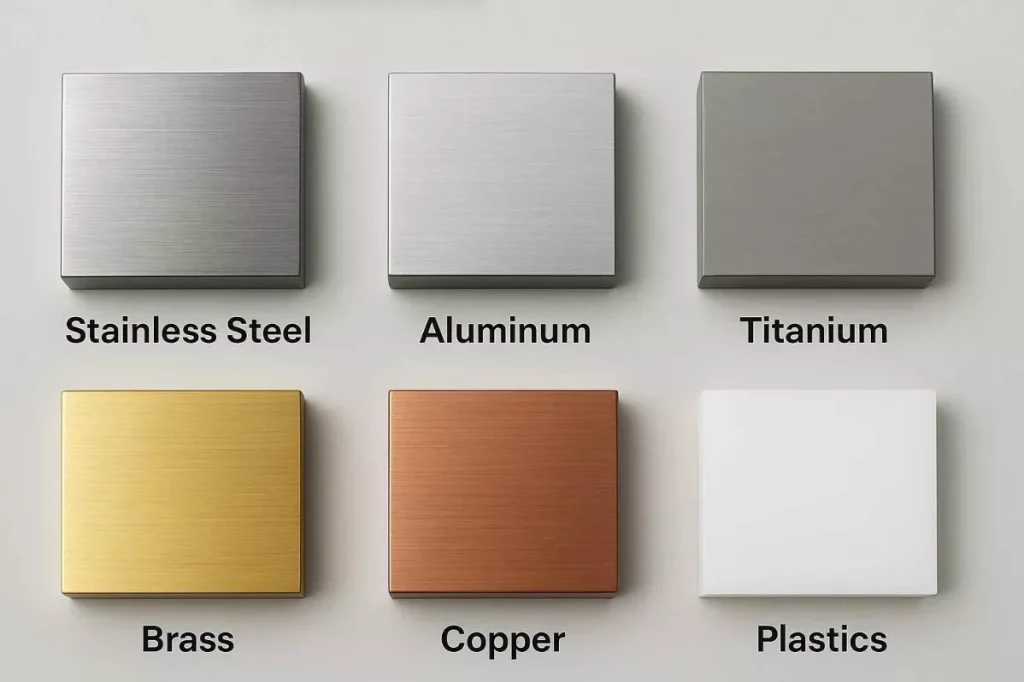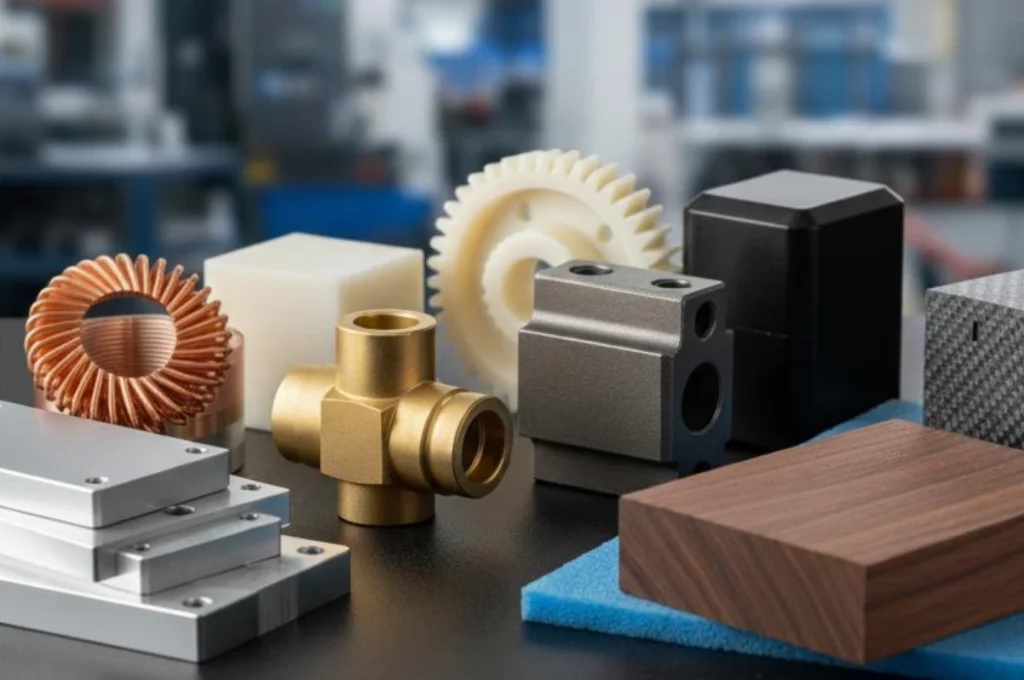
What Plastics Can Be CNC Machined?
Plastic CNC machining can produce precise plastic components from a wide range of engineering plastics, including ABS, nylon, POM, HDPE, PEEK, PTFE, and polycarbonate. Each material offers different levels of strength, rigidity, heat resistance, chemical resistance, and machinability, making the right material important for both part performance and production efficiency.
This guide explains the common plastics used in CNC machining, their machining characteristics, typical applications, and key considerations for selecting the right material for your project.
What Is CNC Machining Plastics?
CNC plastics is a subtractive manufacturing process that uses computer-controlled cutting tools to remove material from a plastic workpiece and create precise shapes, holes, pockets, threads, and other features. It is commonly used for prototypes, functional components, custom enclosures, fixtures, and low- to high-volume production.
Unlike metal machining, plastic machining requires careful control of heat, cutting forces, and workholding because many plastics are softer, more flexible, and more sensitive to temperature. Selecting suitable tooling and cutting parameters helps prevent melting, deformation, burrs, and dimensional changes while maintaining the required accuracy and surface finish.
Plastics are one of the major material categories used in CNC machining. For an overview of what types of materials can be processed using CNC machines, including metals, plastics, composites, and specialty materials, see our materials classification guide.
How Does CNC Machining Plastics Work?
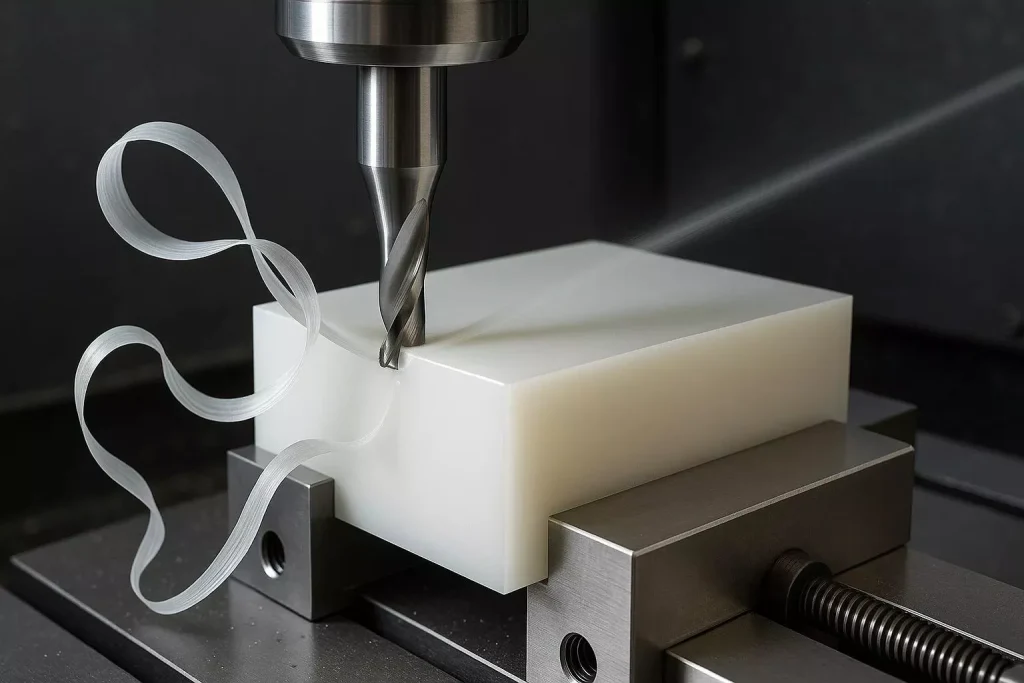
CNC machining plastics follows the same basic subtractive principle as metal machining, but the cutting process must be adjusted for the properties of each plastic. A typical workflow includes:
- CAD/CAM Programming: A 3D model or engineering drawing is converted into CNC toolpaths based on the part geometry and material.
- Workholding: The plastic workpiece is securely positioned while avoiding excessive clamping force that could cause deformation.
- CNC Machining: Milling or turning tools remove material to create the required dimensions and features. Cutting speed, feed rate, and depth of cut are adjusted to control heat and cutting forces.
- Chip and Heat Control: Proper chip evacuation and coolant or air flow help prevent heat buildup, melting, and surface damage.
- Finishing and Inspection: Parts may be deburred or polished before dimensional inspection to verify tolerances and surface requirements.
The specific machining approach depends on the plastic, part geometry, wall thickness, tolerances, and required surface finish.
What Plastics Can Be CNC Machined?
A wide range of engineering plastics can be used for CNC machining, but their performance during cutting varies considerably. Some plastics are rigid and dimensionally stable, making them suitable for precision features and tight tolerances. Others are softer or more flexible and require greater attention to workholding, heat generation, and cutting conditions.
The most common plastics for CNC machining include ABS, Nylon, POM, HDPE, Polycarbonate, Acrylic, PP, PVC, PTFE, PEEK, and UHMW-PE. The right choice depends not only on the material’s mechanical properties, but also on how it behaves during machining and what the finished component needs to withstand.
ABS
ABS is a general-purpose engineering plastic that offers a practical balance of impact resistance, toughness, machinability, and cost. For ABS for CNC machining, these characteristics make it a common choice when a project needs functional plastic components without the higher material cost of high-performance polymers.
ABS is relatively easy to cut compared with many tougher engineering plastics. CNC machining ABS can produce clean pockets, holes, slots, and contoured features when sharp tools and appropriate cutting conditions are used. However, excessive heat can soften the material and affect the surface finish, particularly in deep cuts or areas with poor chip evacuation.
Because ABS is easy to machine and relatively economical, it is often selected for prototypes, electronic enclosures, covers, fixtures, housings, and other components exposed to moderate mechanical loads.
Nylon
Nylon combines good strength, toughness, wear resistance, and low friction, which makes it useful for mechanical components that experience repeated movement or contact. It is one of the more versatile CNC machinable plastics for gears, bushings, rollers, spacers, and similar components.
The main consideration when machining Nylon is moisture absorption. Nylon can absorb water from the surrounding environment, causing dimensional changes and variations in its mechanical properties. This matters when CNC machining Nylon for close-tolerance components, because the material condition before and after machining can affect the final dimensions.
Nylon can also deform when subjected to excessive cutting forces or when internal stresses are released during material removal. Proper workholding and machining strategies are therefore important for maintaining dimensional stability.
POM (Delrin / Acetal)
POM, commonly known as Delrin or Acetal, is one of the most widely used plastics for precision CNC machining. Its combination of high stiffness, low friction, wear resistance, low moisture absorption, and good dimensional stability makes it particularly suitable for components where accurate movement and repeatable dimensions are important.
The excellent machinability of POM allows it to produce clean edges and precise features with relatively predictable results. This is one reason POM is frequently chosen for CNC machined plastic parts that require tighter tolerances than softer plastics can reliably maintain.
POM is especially effective for gears, bushings, bearings, rollers, sliding components, valves, and precision mechanical parts. However, thin sections and areas with uneven material removal can still deform because of internal stresses, so part geometry and machining strategy should be considered during production.
HDPE
HDPE is a lightweight polyethylene with excellent chemical resistance, low moisture absorption, and good impact resistance. It is an economical option for applications where corrosion resistance and low weight are more important than high stiffness.
HDPE is generally straightforward to machine, but its relatively low rigidity creates a different challenge from harder plastics. Thin walls and unsupported sections can flex under cutting or clamping forces, making workholding an important part of HDPE CNC machining.
The material’s tendency to generate flexible chips also makes chip evacuation important. Excessive heat can soften the surface and affect dimensional accuracy, particularly when the cutting tool rubs instead of producing a clean chip.
Typical CNC machined HDPE components include liners, wear strips, guides, spacers, fluid-handling components, tanks, and industrial equipment parts.
Policarbonato (PC)
Polycarbonate is a tough engineering plastic known for high impact resistance, strength, and transparency. It is often selected when a CNC machined plastic part needs greater impact performance than acrylic can provide while still allowing a transparent or translucent design.
Polycarbonate machines well with sharp tooling, but heat control remains important. Excessive heat or aggressive cutting can damage the surface or produce unwanted deformation. When optical appearance is important, machining marks may also require additional finishing.
CNC machining polycarbonate is commonly used for protective covers, guards, housings, windows, optical components, and custom enclosures where impact resistance is a priority.
Acrílico (PMMA)
Acrylic, or PMMA, is widely used when transparency, appearance, and weather resistance are important. Compared with polycarbonate, acrylic is generally more brittle, so the machining strategy needs to account for its tendency to crack or chip around thin sections and sharp features.
For acrylic CNC machining, heat management is particularly important. If the cutting tool generates excessive heat, the material can soften and leave a rough or melted surface rather than a clean machined edge. Sharp tools, appropriate feeds and speeds, and effective chip evacuation help maintain surface quality.
Machined acrylic is commonly used for transparent covers, display components, light guides, panels, optical components, and visual prototypes. If optical clarity is required on a machined surface, polishing may be necessary after machining.
Polipropileno (PP)
Polypropylene is lightweight, chemically resistant, and has very low moisture absorption. It also has good fatigue resistance, making it useful for components that undergo repeated flexing or movement.
The main machining challenge is its relatively low stiffness. During CNC machining PP, thin walls and small features can move away from the cutting tool, making them more difficult to produce accurately. Excessive clamping pressure can create another source of deformation.
PP is commonly used for fluid-handling components, laboratory equipment, containers, fittings, and industrial components exposed to moisture or chemicals.
PVC
Rigid PVC is a practical plastic for CNC machining when chemical resistance, low moisture absorption, and economical material cost are important. It is generally easier to machine than many high-performance polymers and can produce useful dimensional accuracy with suitable cutting conditions.
During CNC machining PVC, heat generation should still be controlled because excessive temperatures can affect the material and surface quality. Rigid PVC is better suited to machining than softer or flexible PVC formulations, which may deform during cutting.
Common applications include fittings, covers, housings, fluid-handling components, and industrial equipment parts.
PTFE
PTFE is best known for its extremely low friction, excellent chemical resistance, and broad temperature capability. These properties make it valuable for applications where conventional plastics may wear quickly or react with aggressive chemicals.
However, PTFE is not one of the easiest plastics to machine. Its softness and relatively high thermal expansion can make dimensional control difficult, especially for thin sections and close-tolerance features. During PTFE CNC machining, excessive cutting forces can cause the material to deform instead of being cleanly cut.
PTFE is therefore commonly used where its functional properties justify the additional machining considerations, including seals, bushings, bearing components, valve seats, and chemically resistant components.
PEEK
PEEK is a high-performance engineering thermoplastic used when ordinary plastics cannot provide sufficient mechanical, thermal, or chemical performance. It offers high strength and stiffness, excellent wear resistance, and strong dimensional stability under demanding operating conditions.
These properties also make CNC machining PEEK more demanding than machining general-purpose plastics. Material cost is higher, and machining parameters, tooling, heat control, and dimensional requirements need to be carefully managed to avoid unnecessary material waste and maintain part accuracy.
PEEK is typically reserved for demanding applications in aerospace, medical equipment, semiconductor equipment, and high-performance industrial systems where its performance justifies the additional cost.
UHMW-PE
UHMW-PE is a very tough polyethylene with exceptional abrasion resistance, impact strength, low friction, and chemical resistance. It is particularly valuable for applications where a component must withstand continuous sliding or repeated contact with other materials.
Its low stiffness and tendency to deform make UHMW-PE CNC machining more challenging than machining rigid plastics such as POM. The material can flex away from the cutting tool, while frictional heat can soften the surface if chips are not removed efficiently.
For this reason, workholding, sharp tooling, chip evacuation, and heat control are especially important when producing accurate UHMW-PE components. Typical applications include wear strips, liners, guides, rollers, chutes, conveyor components, and material-handling equipment.
How Plastic Properties Affect CNC Machining?
Plastic properties directly affect machining accuracy, surface finish, and production efficiency. Compared with metals, plastics are generally more sensitive to heat and cutting forces, so material selection and machining parameters need to be carefully matched.
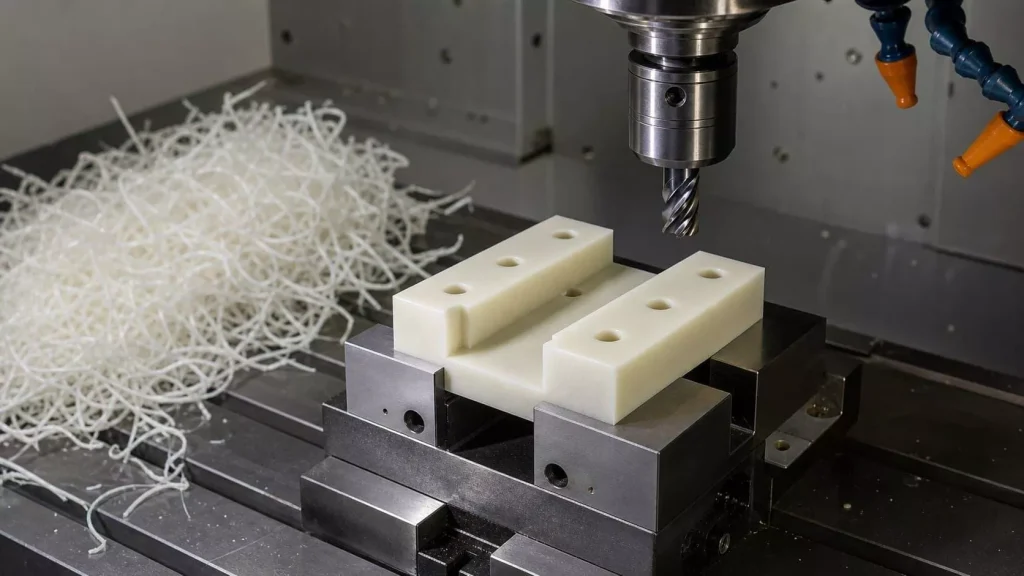
- Machinability: Rigid plastics such as POM and ABS are generally easier to machine, while softer materials may deform or produce burrs more easily.
- Heat: Excessive cutting heat can cause softening, melting, or surface damage.
- Thermal Expansion: Plastics can expand and contract significantly with temperature changes, affecting dimensional accuracy.
- Moisture Absorption: Materials such as Nylon can absorb moisture and change dimensions over time.
- Rigidity: Flexible plastics are more susceptible to deflection during cutting and clamping.
- Dimensional Stability: Temperature, moisture, internal stress, and cutting forces can all influence final dimensions.
- Tool Wear: Sharp, properly selected cutting tools help reduce friction, heat buildup, and surface defects.
Understanding these properties helps determine the appropriate plastic, tooling, cutting conditions, and workholding method for CNC machining.
Which Plastics Are Easiest to CNC Machine?
Some plastics are easier to CNC machine because they combine good rigidity, dimensional stability, and clean cutting characteristics. Common choices include:
- POM (Delrin): Excellent machinability, low friction, and good dimensional stability make it a strong choice for precision CNC machining.
- ABS: Easy to cut and relatively forgiving, making it suitable for prototypes, housings, and general-purpose components.
- HDPE: Generally easy to machine and resistant to moisture and chemicals, although its lower rigidity requires careful workholding.
- Nylon: Good machinability and wear resistance make it suitable for mechanical components, but moisture absorption should be considered.
- Acrylic (PMMA): Relatively easy to machine when heat and cutting forces are properly controlled.
Among these materials, POM is often preferred for precision CNC machined plastic parts because it offers a particularly good balance of machinability, rigidity, wear resistance, and dimensional stability.
Which Plastics Are More Difficult to CNC Machine?
Some plastics require more careful machining because of their flexibility, softness, heat sensitivity, or dimensional changes. Common examples include:
- PEEK: High strength and temperature resistance make it more demanding to machine and typically more expensive than standard plastics.
- PTFE: Its softness and high thermal expansion can make tight tolerances and dimensional control more difficult.
- PP: Low rigidity can cause thin walls and small features to deflect during machining.
- UHMW-PE: Its flexibility and low stiffness can make workholding, chip control, and dimensional accuracy more challenging.
These materials can still be CNC machined successfully, but they generally require appropriate tooling, cutting parameters, and workholding to control heat, deformation, and dimensional variation.
What Are the Main Challenges of CNC Machining Plastics?
CNC machining plastics requires careful control of heat, cutting forces, and material movement. The main challenges include:
- Heat Buildup: Excessive heat can soften or melt plastic and affect surface quality. We use sharp tooling, optimized cutting parameters, and effective chip evacuation to keep machining temperatures under control.
- Warping and Deformation: Flexible materials may deform during machining or under clamping pressure. We select suitable workholding methods and adjust cutting strategies to minimize material deflection.
- Moisture Absorption: Plastics such as Nylon can change dimensions as they absorb or release moisture. We consider material conditioning and environmental factors when machining close-tolerance plastic components.
- Burrs and Chips: Improper cutting conditions can create burrs or long chips that interfere with machining. Proper tool selection and chip evacuation help maintain clean cutting and consistent results.
- Thin-Wall Machining: Thin sections are more susceptible to vibration, deflection, and deformation. We control cutting forces and machining sequences to maintain wall thickness and dimensional accuracy.
- Acabamento da superfície: Tool selection, cutting parameters, and heat control all affect the final surface finish. We optimize these factors according to the plastic material and required finish.
With appropriate tooling, workholding, machining parameters, and inspection, these challenges can be controlled to produce accurate and consistent CNC machined plastic components.
What Is the Best CNC Machine for Plastic?
There is no single best CNC machine for every plastic application. The right equipment depends on the material, part geometry, feature complexity, tolerances, and production requirements.
- 3-Axis CNC Milling: Suitable for many standard plastic components with flat surfaces, pockets, holes, and straightforward geometries.
- 4-Axis CNC Machining: Provides additional rotational positioning for parts with features on multiple sides, reducing setups and improving consistency.
- 5-Axis CNC Machining: Well suited to complex contours, angled features, deep cavities, and intricate plastic components that require access from multiple directions.
- Torneamento CNC: Ideal for cylindrical plastic components such as bushings, spacers, rollers, and other round parts.
At Xtmade, we use different CNC machining configurations according to the material and part requirements. Selecting the appropriate machine and machining strategy helps control cutting forces, reduce unnecessary setups, and achieve the required dimensional accuracy and surface finish.
How to Choose a Plastic for CNC Machining?
Choosing the right plastic for CNC machining starts with the part’s operating requirements rather than machinability alone. Consider the following factors:
- Strength: Choose a material that can withstand the required mechanical loads and impact.
- Temperature: Consider the operating temperature and whether the plastic needs to maintain its properties under heat.
- Chemical Resistance: For exposure to oils, solvents, water, or other chemicals, select a plastic with suitable chemical resistance.
- Wear: POM, Nylon, and UHMW-PE are common choices for components exposed to friction or repeated movement.
- Moisture: If the component will operate in humid environments or requires tight tolerances, moisture absorption should be considered.
- Dimensional Stability: Materials with good dimensional stability are generally preferable for precision features and tight tolerances.
- Cost: Balance material cost with the performance required for the application. Higher-performance plastics such as PEEK may not be necessary for less demanding components.
The best plastic for CNC machining is ultimately the one that provides the required performance while remaining practical to machine and cost-effective for the project. For demanding applications, Xtmade can evaluate the part requirements and help select a suitable material for production.
For a broader comparison of CNC machining material selection, properties, applications, and other material considerations, see our materials guide.
CNC Machined Plastic Applications
CNC machined plastics are used across industries where lightweight construction, electrical insulation, chemical resistance, low friction, or corrosion resistance is required. Common applications include:
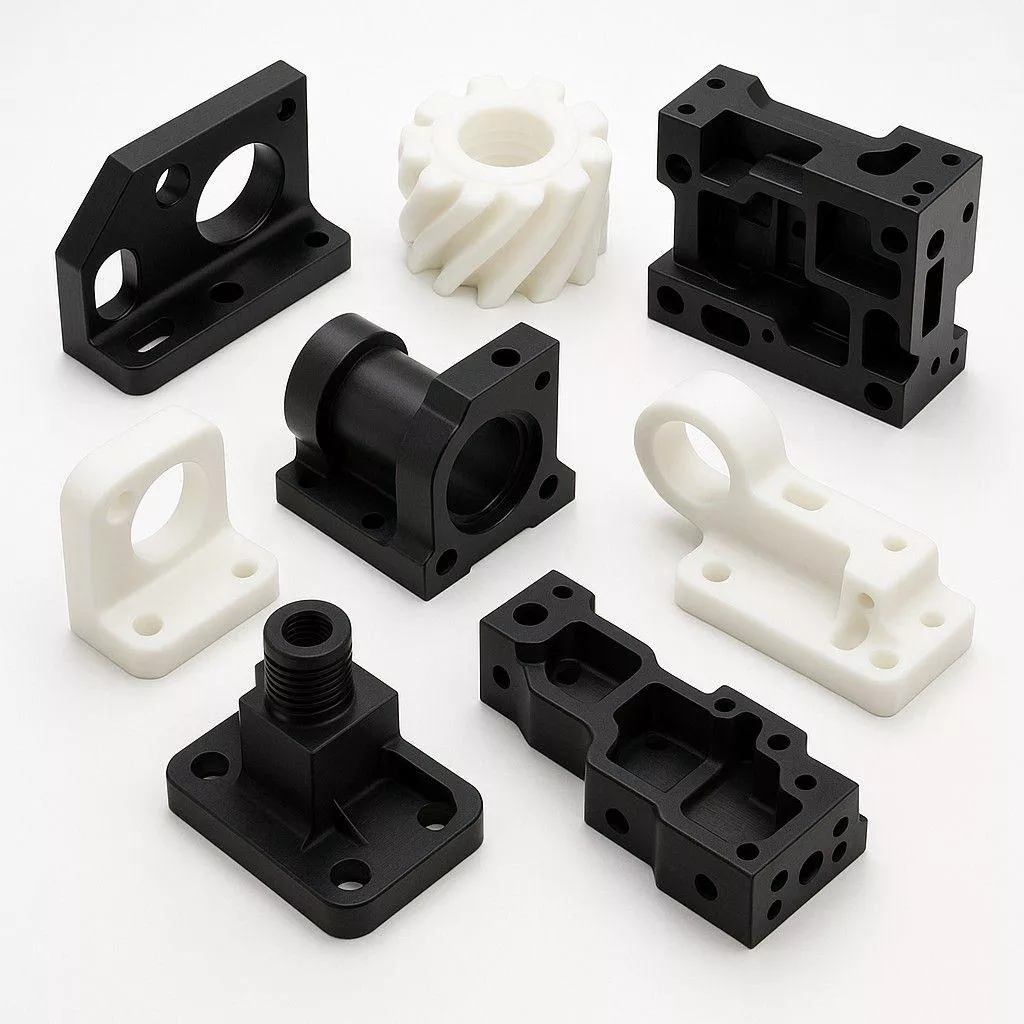
- Automóvel: Bushings, spacers, guides, covers, and custom components for vehicle systems.
- Aeroespacial: Lightweight housings, brackets, insulation components, and specialized mechanical components.
- Médico: Custom housings, fixtures, instrument components, and components made from medical-grade plastics.
- Electronics: Enclosures, insulating components, covers, connectors, and precision mounting components.
- Robótica: Bushings, gears, rollers, spacers, and lightweight mechanical components.
- Equipamento industrial: Wear strips, liners, guides, seals, fittings, housings, and other custom plastic components.
The suitable plastic depends on the application’s mechanical, thermal, chemical, and dimensional requirements. Maquinação CNC also allows these components to be produced with complex geometries and application-specific tolerances without requiring dedicated molds.
How Much Does Plastic CNC Machining Cost?
The cost of plastic CNC machining depends on more than the price of the raw material. Key factors include:
- Material: Standard plastics such as ABS and HDPE are generally more economical, while high-performance materials such as PEEK cost more.
- Machining Time: Larger parts, complex geometries, deep features, and extensive material removal increase machining time.
- Tolerance: Tight dimensional and geometric tolerances may require slower machining, additional setups, and more inspection.
- Part Complexity: Multi-sided features, thin walls, deep cavities, and complex contours can increase programming and machining requirements.
- Quantity: Higher production volumes can reduce the per-part cost by spreading setup and programming costs across more components.
- Finishing and Secondary Operations: Deburring, polishing, coating, assembly, or other post-processing can add to the total cost.
For an accurate plastic CNC machining cost, the best approach is to evaluate the material, part geometry, tolerances, quantity, and finishing requirements together rather than comparing material prices alone.
Need Help Choosing a CNC Machining Plastic?
Choosing the right plastic involves balancing material performance, machinability, dimensional requirements, and cost. If you are unsure which plastic is suitable for your application, Xtmade can help evaluate your part requirements and recommend a practical material and machining approach.
With CNC milling and turning capabilities, suitable tooling, and quality inspection, we support custom plastic components from prototypes to production quantities.
Perguntas frequentes
What plastics can CNC machines cut?
CNC machines can cut a wide range of plastics, including ABS, Nylon, POM, HDPE, Polycarbonate, Acrylic, PP, PVC, PTFE, PEEK, and UHMW-PE. The suitable material depends on the required strength, temperature resistance, chemical resistance, dimensional stability, and application.
What is the easiest plastic to CNC machine?
POM, ABS, HDPE, Nylon, and Acrylic are generally considered relatively easy plastics to machine. POM is particularly suitable for precision work because of its good machinability and dimensional stability.
Can PEEK be CNC machined?
Yes. PEEK can be CNC machined into precise components, but its high strength, temperature resistance, and material cost make it more demanding to machine than standard plastics. Appropriate tooling, cutting parameters, and heat control are important.
Can soft plastics be CNC machined?
Yes. Soft plastics such as PTFE, PP, and UHMW-PE can be CNC machined, although their flexibility can make workholding, dimensional control, and thin-wall machining more challenging.
Is CNC machining plastic cheaper than metal?
CNC machining plastic can be less expensive than machining metal because many plastics have lower material and cutting costs. However, the total cost depends on the material, part complexity, tolerances, machining time, quantity, and finishing requirements.