How Do Thermal Properties Affect CNC Machining?
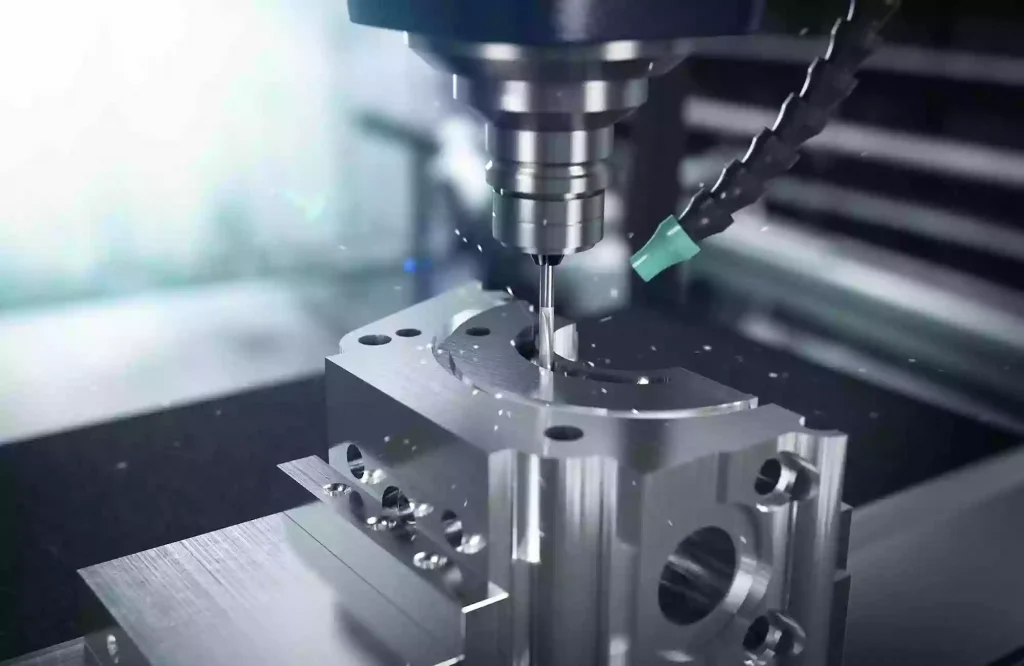
Heat is inevitably generated during the CNC machining of materials. As the cutting edge engages the material, the workpiece deforms and chips are formed, while friction arises between the tool, the chips, and the machined surface. A significant portion of the energy consumed during this process is converted into heat.
The behavior of the generated heat depends, to a certain extent, on the thermal properties of the material being machined. Some materials conduct heat away from the cutting zone relatively quickly, whereas others cause heat to accumulate near the cutting edge, resulting in high temperatures that affect both the tool and the workpiece. Furthermore, materials expand when heated, yet not all materials exhibit the same expansion rates or reactions to temperature fluctuations.
These differences explain why a CNC machining process suitable for one material might lead to issues such as tool wear, dimensional deviations, or poor surface quality when applied to another. Thermal properties influence CNC machining by affecting heat generation, distribution, and control during the cutting process. Understanding these properties enables manufacturing engineers to select appropriate cutting tools, set machining parameters, manage workpiece temperatures, and ensure dimensional accuracy.
What Are Thermal Properties in CNC Machining?
Thermal characteristics describe how a material responds to heat. While various properties are relevant to Maquinação CNC, three are particularly important: thermal conductivity, thermal expansion, and specific heat capacity.
Thermal conductivity describes the ease with which heat is conducted through a material. Under comparable conditions, materials with high thermal conductivity generally dissipate heat more effectively from localized high-temperature zones than those with low thermal conductivity.
Thermal expansion describes the tendency of a material’s dimensions to change in response to temperature fluctuations. Metals typically expand when heated and contract when cooled. The extent of this expansion depends on the material itself, the magnitude of the temperature change, and the direction of measurement.
Specific heat capacity describes the amount of energy required to raise the temperature of a given mass of material by a specific amount. It influences the rate of temperature change when the material is heated, although the actual thermal response also depends on thermal conductivity, mass, geometry, and heat transfer conditions.
These properties reflect different aspects of thermal behavior. A material with high thermal conductivity does not necessarily exhibit low thermal expansion; conversely, a material requiring significant energy to raise its temperature does not necessarily dissipate heat generated during cutting rapidly. In the context of CNC machining, the critical issue is not merely whether a material’s thermal properties are “good” or “bad,” but rather how its thermal behavior interacts with the machining process and the specific requirements of the finished part.
Where Does Heat Come From During CNC Machining?
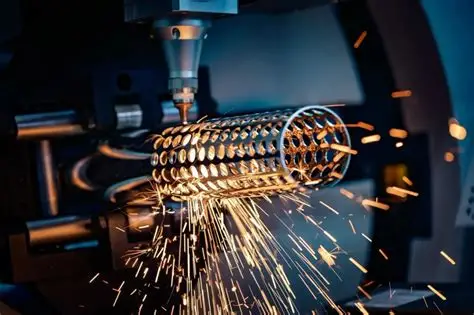
How is heat generated during the cutting process? When a milling cutter or turning tool removes material, the workpiece undergoes deformation and separation, resulting in the formation of chips. This deformation process consumes energy, the majority of which is converted into heat. Additionally, friction—generated as chips slide across the tool’s rake face and through the interaction between the tool and the workpiece—produces further heat.
Temperatures near the cutting edge can be significantly higher than the average temperature of the workpiece or the surrounding workshop environment. Heat is distributed among the chips, the tool, the workpiece, and the surrounding environment. The specific distribution ratio depends on factors such as the material, cutting speed, tool geometry, feed rate, coolant application method, and the specific machining operation.
This heat distribution is critical: although chips carry away a substantial amount of heat, the tool and workpiece can still experience significant temperature fluctuations.
Consider, for example, the machining of a part with a small, concentrated cutting zone. If chips efficiently carry away heat, the thermal response of the tool and workpiece will differ drastically from a scenario where heat accumulates heavily near the cutting edge. If heat builds up around precision features, localized temperature increases can impair tool performance or lead to dimensional deviations during and after machining. While thermal properties certainly influence the process, they are not the sole determining factor; cutting conditions and the interaction between the tool and the workpiece play equally crucial roles.
How Thermal Conductivity Affects CNC Machining
When evaluating thermal effects during CNC machining, thermal conductivity is one of the most critical material properties to consider. Materials with high thermal conductivity can more effectively dissipate heat from the cutting zone to other parts of the workpiece. Depending on specific machining conditions, this helps mitigate localized heat buildup.
Materials with low thermal conductivity are relatively inefficient at conducting heat away, leading to greater heat accumulation near the tool-chip interface and increasing the thermal load on the cutting edge. This distinction is particularly pronounced when machining materials such as titanium alloys and nickel-based superalloys, which generally possess lower thermal conductivity compared to many common aluminum alloys.
However, low thermal conductivity does not imply that every part of the workpiece will become hotter under all cutting conditions. Actual temperature distribution depends on factors such as cutting speed, chip formation, tool geometry, coolant usage, contact time, and the volume of material removed. The practical issue is that when heat concentrates near the cutting edge, the tool may be subjected to higher thermal stress. Depending on the tool material and cutting conditions, this can accelerate specific wear mechanisms or lead to cutting edge failure.
For instance, a cutting strategy suitable for aluminum alloys may not be appropriate for nickel-based alloys. Aluminum alloys typically dissipate heat rapidly, whereas nickel-based alloys tend to retain more heat near the cutting zone. Consequently, applying the same approach regarding cutting speeds, tool selection, and heat management does not necessarily yield the same machining results. Tailoring machining conditions to the specific material is essential. While thermal conductivity helps explain these differences, the final machining strategy must also account for factors such as material strength, hardness, work-hardening characteristics, tool compatibility, and the specific machining operations involved.
Why Heat Can Cause Dimensional Inaccuracy
In precision machining, one of the most significant effects of temperature is thermal expansion. A workpiece might meet dimensional specifications at a certain temperature, yet measurements may shift as the temperature changes. This does not necessarily indicate a loss of positioning accuracy in the CNC machine; rather, the material itself may be undergoing thermal expansion or contraction.
Consider the milling of a metal part with strict dimensional tolerances: during the cutting process, the machined area and its surroundings generate heat. If the part is measured while still retaining residual heat, the data obtained may differ from measurements taken after the part has returned to a stable temperature. While this discrepancy might be slight, even minute dimensional changes can be critical when the allowable tolerance range is tight. For a simple part free to expand, the change in length can be estimated using the following formula:
ΔL = αL₀ΔT
where ΔL is the change in length, L₀ is the initial length, α is the material’s coefficient of thermal expansion, and ΔT is the change in temperature.
This relationship highlights the importance of material properties, initial dimensions, and temperature fluctuations. Given the same temperature change, a longer part made of the same material will typically exhibit a greater absolute change in length than a shorter one.
Real-world machining scenarios are far more complex than this simple model suggests. Temperature distribution across the part may be uneven, and workholding fixtures can constrain thermal expansion. Thin-walled structures, asymmetrical geometries, and non-uniform material removal all make thermal effects difficult to predict. Dimensional control involves more than just precise coordinate programming; the workpiece’s thermal state, the machining sequence, the clamping method, and the inspection process all influence the final measurement results.
How Thermal Expansion Affects Different Parts
Thermal expansion is a critical factor when machining large components, thin-walled structures, and precision parts with tight tolerances. Large metal components can undergo significant dimensional changes even with moderate temperature fluctuations; the greater the relevant dimension, the larger the potential absolute expansion or contraction. Thin-walled structures present a different set of challenges. Due to limited rigidity and a lack of substantial material support, their response to uneven heating and cooling can affect both their shape and dimensions.
Consider the milling of a deep cavity into a component: material is removed from one side, reducing the remaining wall thickness. If the cutting process causes uneven heating in that area, the wall may undergo localized expansion during machining and subsequently deform upon cooling. Since cutting forces and residual stresses can also cause deformation, thermal effects are not the sole cause of such issues.
Therefore, thermal deformation should not be confused with conventional tool deflection. Tool deflection refers to the phenomenon where cutting forces cause the tool to deviate from its intended path, whereas thermal deformation refers to changes in material dimensions or shape caused by temperature fluctuations. Both affect part accuracy and can occur simultaneously during the same machining process. When troubleshooting dimensional issues, engineers must distinguish between these different causes rather than simply assuming that all deviations stem from the CNC machine or the cutting tool.
How Thermal Properties Affect Cutting Tool Life
Cutting tools operate under the combined influence of mechanical loads and high temperatures. The impact of heat on tool life depends on the tool material, workpiece material, cutting conditions, and the associated wear mechanisms.
At high temperatures, certain tool materials may lose hardness or become more susceptible to wear. Depending on the material combination and operating conditions, heat can also influence chemical interactions between the tool and the workpiece. When materials have low thermal conductivity, heat may accumulate near the cutting edge. In demanding cutting operations, this increases the thermal load on the tool, thereby accelerating the degradation of its performance.
Nickel-based superalloys serve as a prime example. While these materials are engineered to maintain excellent mechanical properties at high temperatures, this does not imply they are easy to machine. The combined effects of their mechanical strength, thermal properties, and tendency to work-harden often subject the cutting edge to severe operating conditions.
An important distinction must be made here: a material’s ability to withstand high temperatures during service is not equivalent to its ability to dissipate heat during machining. Even components designed for high-temperature engine environments may require strictly controlled cutting conditions during manufacturing. Thermal conductivity alone cannot predict tool life; factors such as cutting speed, feed rate, tool geometry, coatings, coolant application methods, and specific wear mechanisms must also be taken into account.
Does Higher Cutting Speed Always Mean More Heat?
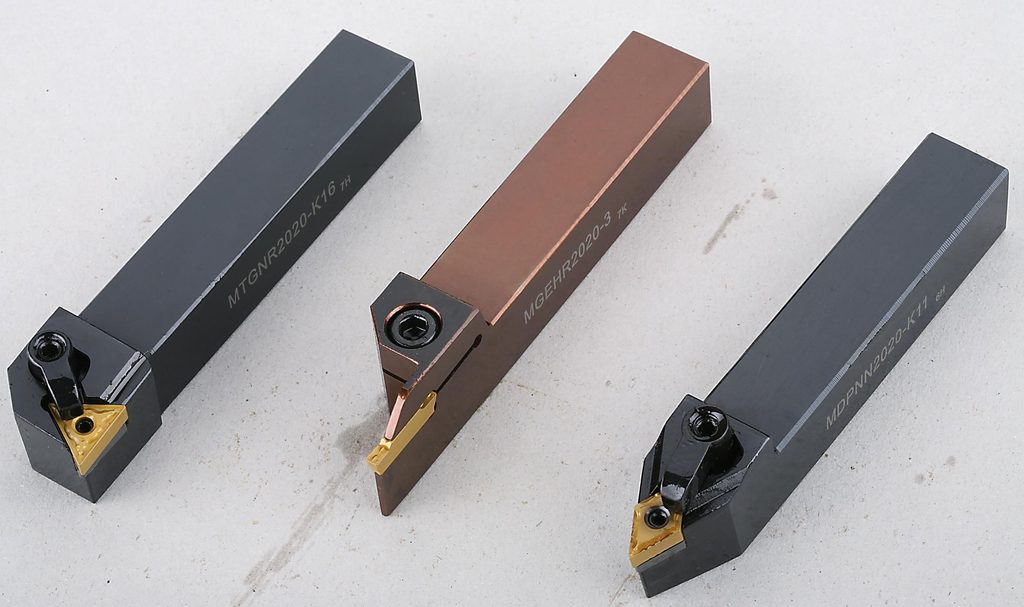
Increasing cutting speed generally accelerates the rate at which mechanical energy converts into thermal energy and alters how heat is distributed among the chip, the tool, and the workpiece. It is misleading to assume that higher cutting speeds inevitably result in the same degree of temperature rise throughout the workpiece.
At higher speeds, the time available for heat transfer within the cutting zone during each contact event is reduced. Depending on the material and the machining operation, a larger proportion of the generated heat may be carried away with the chips. Simultaneously, the cutting edge may experience higher localized temperatures, and the tool may face more severe thermal loading. These effects can occur concurrently. The ultimate outcome depends on the material, the tool, the cutting engagement, and the machining conditions. A cutting speed that enhances efficiency for one specific material might reduce tool life or cause process instability when applied to a different material.
Lowering the cutting speed is not necessarily the optimal solution, either. In some instances, excessively low cutting parameters can lead to built-up edge (BUE) formation, friction (rather than cutting), or other adverse machining phenomena. The objective is to determine an appropriate machining range for a specific material-tool combination and to validate that range based on criteria such as tool life, dimensional stability, surface quality, and production requirements.
The Role of Coolant in Thermal Management
While coolant is commonly associated with temperature reduction, its role in CNC machining extends far beyond simply lowering the workpiece temperature. Depending on the specific machining operation and cooling system, coolant facilitates heat dissipation, lubricates the contact interface between the tool and the workpiece, reduces friction, and aids in chip evacuation. Its effectiveness depends on its ability to reach the cutting zone and whether the machining process allows for adequate heat transfer. In certain operations—such as when a tool penetrates deep into a cavity or drills a deep hole—accessing the cutting interface can be challenging.
Cooling strategies must be tailored to the material being machined and the specific operation; a cooling approach suitable for open milling may not yield the same results in deep-hole machining. Factors such as tool design, coolant delivery methods, chip evacuation, and cutting conditions must all be considered holistically. Furthermore, coolant cannot entirely eliminate thermal expansion. Even when cutting temperatures are controlled, the workpiece may still heat up during machining or undergo temperature fluctuations between machining and inspection. For precision parts, the use of coolant is not an end in itself; the ultimate goal is to effectively manage thermal conditions to ensure dimensional consistency and reliable surface quality.
Why Temperature Control Matters During Inspection
The dimensions of machined parts often do not remain stable immediately after cutting. If a part heats up during machining, its dimensions may shift as it cools. Consequently, measurements taken immediately after processing may differ from those taken after the temperature has stabilized.
This is particularly critical when tolerances are so tight that dimensional fluctuations caused by temperature changes cannot be ignored relative to the allowable tolerance. For the same reason, the environmental conditions during inspection are vital. Precision measurement results are influenced by the temperature of the workpiece and, where applicable, the measuring equipment. To ensure that measurement data is reliably comparable to drawing specifications, the measurement process should be conducted under appropriate and controlled temperature conditions.
This does not imply that all CNC-machined parts require a lengthy cooling period. The specific approach depends on factors such as part size, material, tolerance requirements, measurement methods, and production needs. For large, precision components, the temperature stabilization process is often a critical step in the inspection protocol rather than an optional finishing touch. It is also important to distinguish between thermal effects and the influence of residual stresses. Even after the part’s temperature has stabilized, residual stresses can still cause deformation following material removal or release from the fixture. While both thermal expansion and residual stress can lead to dimensional deviations, they stem from distinct physical mechanisms.
How Different Materials Respond to Heat During CNC Machining
Understanding the thermal properties of materials helps explain why machining strategies must be adjusted for different materials.
Compared to titanium alloys and nickel-based superalloys, aluminum alloys generally exhibit higher thermal conductivity. Heat dissipates more rapidly through aluminum, although the actual temperature distribution is still influenced by cutting conditions, alloy composition, and tool characteristics. Aluminum alloys have a relatively high coefficient of thermal expansion; this is a particularly important factor when machining long workpieces or features with strict tolerance requirements. The properties of stainless steel vary by grade, but many common grades have lower thermal conductivity than aluminum alloys. Their machining characteristics also depend on material strength, work-hardening tendencies, and cutting conditions. Consequently, thermal management is just one component of the overall machining strategy. Titanium alloys typically have poor thermal conductivity, leading to significant heat accumulation near the cutting zone. This makes cutting-edge temperature and tool selection critical considerations, especially in challenging machining operations. Nickel-based superalloys represent another class of materials that pose severe thermal challenges during machining. While they offer excellent high-temperature performance, this does not imply they are easy to machine; tool suitability, cutting conditions, and thermal management strategies must be carefully evaluated.
The examples above should not be viewed as a universal ranking of material machinability. Each material category encompasses various grades, and machinability depends on specific alloy composition, material condition, geometry, tool selection, and the machining process itself. The value of understanding thermal properties lies in their ability to reveal the underlying causes of differences in material machining behavior, thereby helping engineers select appropriate processes and avoid applying identical machining conditions to all materials.
How Engineers Manage Thermal Effects in Custom CNC Machining
Thermal management begins with understanding the interplay between the material, the workpiece, and the machining process. For small, thick-walled workpieces with loose tolerances, moderate temperature fluctuations typically have little impact; however, for large, thin-walled workpieces requiring tight profile and positional tolerances, the effects of uneven heating, thermal expansion, and cooling can be significant. When selecting materials and evaluating manufacturability, considerations should extend beyond mere strength or hardness. Engineers must also comprehensively assess material thermal conductivity and expansion characteristics, overall workpiece dimensions, wall thickness, feature locations, machining sequences, and inspection requirements. Appropriate machining strategies can then be formulated to address specific risks. Depending on the workpiece characteristics, these strategies might include selecting suitable cutting tools and parameters, optimizing coolant delivery, balancing material removal rates, allowing the workpiece to reach thermal stability before measuring critical dimensions, or scheduling inspections at key production stages.
A single measure is often insufficient to resolve all heat-related issues. For instance, simply reducing cutting speed may not correct dimensional deviations caused by uneven cooling, while merely increasing coolant flow might not solve deformation issues stemming from residual stresses or improper workholding. In custom manufacturing, the primary objective is to identify the root causes of deviations and address them with targeted solutions. This requires a deep understanding of material behavior during cutting, the mechanisms by which the workpiece responds to heat and mechanical forces, and the methods used to verify final dimensions.
Conclusão
Thermal properties influence the CNC machining process by determining how a material absorbs, transfers, and reacts to heat. Thermal conductivity affects heat distribution in the cutting zone, while thermal expansion characteristics dictate how workpiece dimensions change with temperature; specific heat capacity also influences how the material’s temperature responds to energy input. These properties impact tool load, tool wear, dimensional stability, surface quality, and inspection results, yet they do not act in isolation. Factors such as cutting conditions, tool geometry, coolant application, part size, workholding methods, and residual stresses all alter the final machining outcome.
Reliable CNC machining depends on effectively managing the interrelationships between material properties, heat generation, heat transfer, part geometry, machining conditions, and dimensional requirements. Xtmade is a custom manufacturing service provider with decades of experience, capable of producing parts from various materials based on technical drawings. With extensive material knowledge and operational expertise, they assist clients in selecting the right materials and welcome inquiries at any time.