CNC Metal Materials: Types, Properties, Applications & Machining Overview
CNC metal machining is used to manufacture a wide range of precision components from diverse materials—spanning common aluminum and steel to titanium, nickel-based alloys, copper, and specialty metals. Material selection directly influences a component’s mechanical properties, thermal characteristics, corrosion resistance, electrical performance, and specific machining requirements. In metal CNC production, material selection is just one part of the process; the quality of the final product also depends on part geometry, machining techniques, machine tool configuration, tooling choices, workholding methods, tolerance specifications, surface finish, and inspection standards.
This guide outlines common CNC metal materials and their key properties, machining processes, equipment, applications, and quality control essentials. It also introduces how Xtmade provides comprehensive CNC metal machining support, covering everything from prototype development to mass production.
Overview of CNC Metal Materials
CNC machine tools are capable of processing a wide range of ferrous metals, non-ferrous metals, and specialty metals. Material selection depends on the functional requirements of the finished part, including strength, weight, electrical conductivity, corrosion resistance, wear resistance, operating temperature, and dimensional accuracy.
Which metal materials can be machined? Common CNC metals include aluminum, steel, stainless steel, brass, copper, bronze, titanium, nickel-based alloys, and magnesium, as well as specialty metals such as tungsten, molybdenum, Kovar, and Invar.
| Materiale | Common Grades or Types | Main Characteristics | Applicazioni tipiche |
| Alluminio | 6061, 7075, 2024 | Lightweight, good strength-to-weight ratio | Aerospace, automotive, electronics |
| Acciaio | 1018, 1045, 4140 | Strong, durable, versatile | Machinery, automotive, industrial equipment |
| Acciaio inossidabile | 303, 304, 316L, 17-4 PH | Corrosion resistant, durable | Medical, food equipment, industrial components |
| Ottone | C360, C260, C464 | Good machinability, conductivity, corrosion resistance | Raccordi, connettori, valvole |
| Rame | C10100, C11000, C14500 | High electrical and thermal conductivity | Electrical and thermal components |
| Bronzo | Phosphor bronze, silicon bronze, aluminum bronze | Wear and corrosion resistance | Bushings, bearings, marine components |
| Titanio | Ti-6Al-4V, commercially pure titanium | High strength-to-weight ratio, corrosion resistance | Aerospace, medical, high-performance equipment |
| Nickel-Based Alloys | Inconel, Hastelloy, Monel | Heat and corrosion resistance | Aerospace, chemical, energy |
| Magnesio | AZ31, AZ91 | Very low density, lightweight | Automotive, electronics, housings |
| Specialty Metals | Tungsten, molybdenum, Kovar, Invar | Specialized thermal, electrical, or mechanical properties | Semiconductor, aerospace, energy, precision equipment |
Metallic materials can also be supplied in various conditions—such as annealed, solution-treated, precipitation-hardened, heat-treated, or cold-worked. These conditions influence the material’s mechanical properties and its behavior during manufacturing. Therefore, specific material grades and conditions should be clearly specified during metal fabrication, rather than relying solely on generic material names.
Key Characteristics of CNC Metal Materials
Different metals react differently to mechanical loads, heat, chemicals, and electric currents. Understanding a material’s primary characteristics helps establish appropriate manufacturing requirements, avoids a “one-size-fits-all” approach, and ensures optimal performance in various environments.
Strength and Hardness
Strength refers to a material’s ability to withstand mechanical loads without undergoing permanent deformation or failure, while hardness reflects its resistance to indentation, wear, and deformation. Steel, stainless steel, titanium, and nickel-based alloys offer high strength for structural or high-load components. Although aluminum has a lower density, it still provides excellent mechanical strength for many applications. Material hardness can also change significantly with heat treatment; the machining and finishing processes required for a hardened material may differ from those used for the same alloy in a softer state.
Ductility and Toughness
Ductility describes the extent to which a metal deforms before fracturing, whereas toughness relates to a material’s ability to absorb energy before failure. These properties are critical when CNC-machined parts are subjected to impact, vibration, cyclic loading, or mechanical deformation. They also influence how a material behaves during cutting and finishing processes. For components such as shafts, brackets, housings, structural supports, and mechanical interfaces, the goal is often to strike a balance between strength, ductility, and toughness, rather than simply selecting the hardest material available.
Thermal Conductivity
Thermal conductivity determines how efficiently a metal transfers heat. Copper and aluminum possess high thermal conductivity and are frequently used in heat transfer components, electrical systems, heat sinks, cooling structures, and thermal management hardware. Other alloys have lower thermal conductivity and may accumulate more heat during machining. Consequently, a material’s thermal properties influence both the component’s intended application and the manufacturing processes used to produce it.
Corrosion Resistance
Corrosion resistance is particularly important when components are exposed to moisture, chemicals, salt, outdoor environments, or corrosive process fluids. Stainless steel, titanium, nickel-based alloys, bronze, and certain aluminum alloys are commonly selected for applications requiring environmental durability. If additional protection is required, surface treatment processes—such as anodizing, passivation, electroplating, or protective coatings—can be applied in conjunction with the selected material.
Electrical Conductivity
Electrical conductivity is a primary consideration when selecting materials for electrical and electronic components. Copper and certain copper alloys are widely used for conductive components, connectors, terminals, busbars, and thermoelectric assemblies. Brass also offers a favorable balance of electrical conductivity, mechanical properties, and machinability. When electrical conductivity is a critical functional requirement, the specific alloy grade must be clearly designated, as electrical performance can vary significantly between different grades.
Thermal Expansion
Metals undergo thermal expansion and contraction in response to temperature changes. The coefficient of thermal expansion is particularly important for precision components, optical equipment, semiconductor devices, and parts that must operate across a wide temperature range. Specialized materials such as Invar and Kovar are commonly used in applications where thermal expansion must be controlled or where compatibility with other materials is essential.
CNC Machining Processes for Metal Materials
CNC metal machining is not a single-step process. A finished part may undergo multiple machining operations to achieve its external geometry, internal features, holes, threads, precision surfaces, and final dimensions. Machining strategies depend on part drawings, material, geometry, tolerance requirements, production volume, and available machine tool configurations.

Fresatura CNC
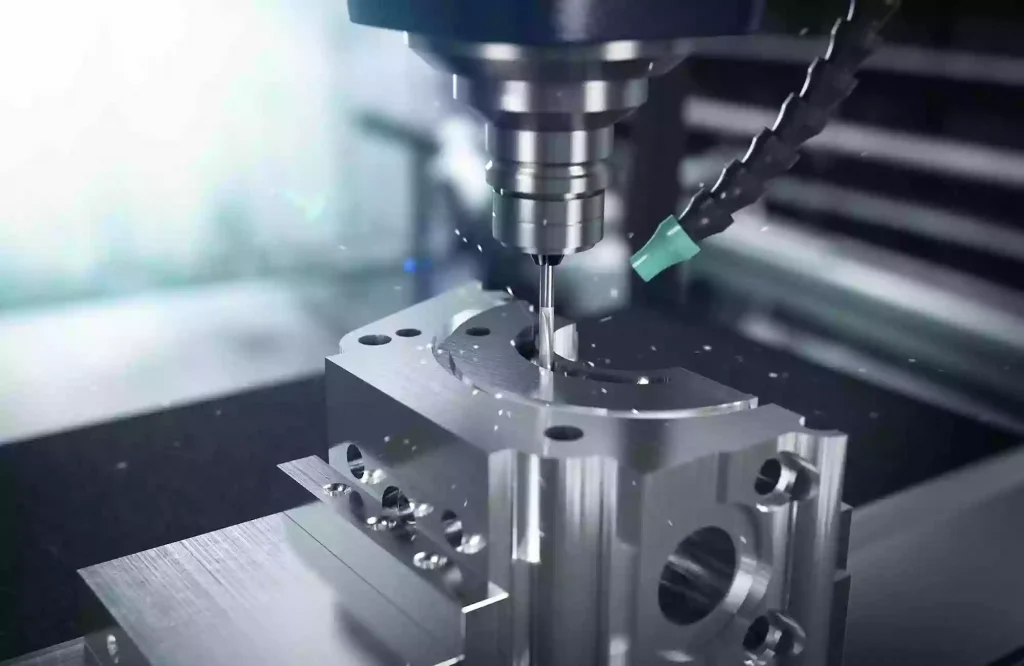
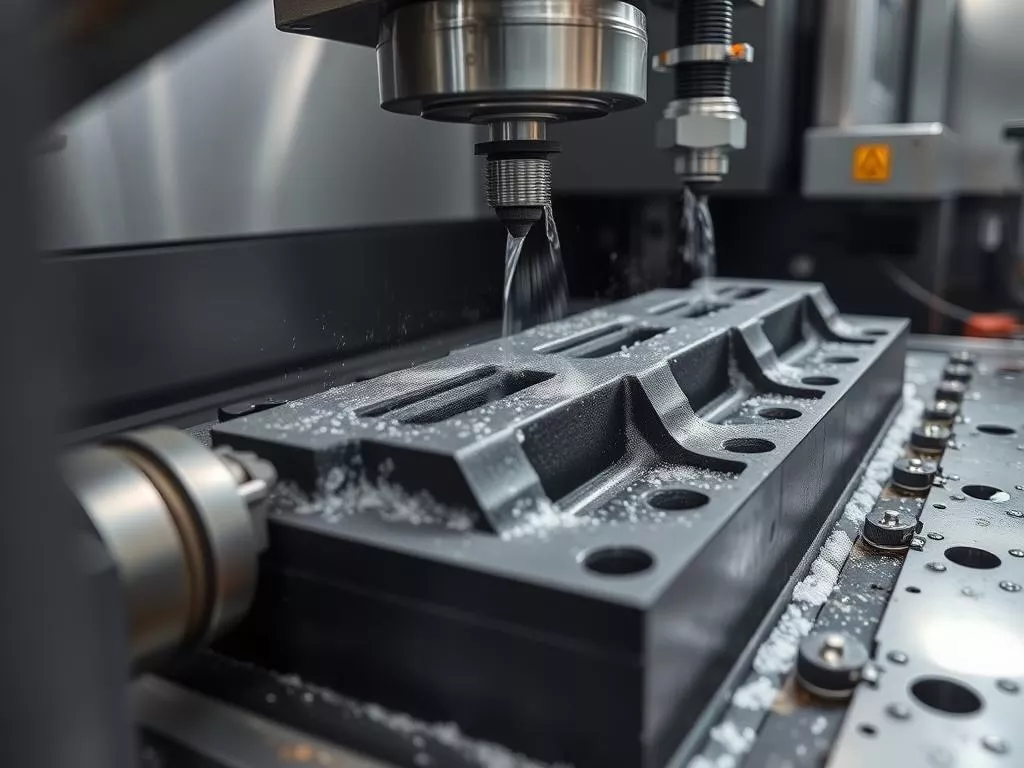
CNC milling uses a rotating cutting tool to remove material from a stationary workpiece. It is one of the most widely used processes for manufacturing metal parts featuring flat surfaces, cavities, slots, contours, holes, and complex 3D geometries. Typical milling operations include face milling, step milling, cavity milling, slotting, profiling, drilling, and 3D surface machining.
A typical part may first undergo roughing to remove the bulk of excess material. Subsequent operations then finish critical surfaces and features to achieve the required dimensions and surface finish. CNC milling is suitable for both relatively simple parts and those with complex geometric details. Factors such as the number of setups, tool accessibility, workholding methods, and machine configuration significantly impact production efficiency and dimensional consistency.
Tornitura CNC
CNC turning is primarily used to machine parts with cylindrical or rotational features. The workpiece rotates while a cutting tool removes material from its outer or inner diameter.
Turning can be used to manufacture:
- Alberi
- Spille
- Boccole
- Maniche
- Spacers/Stand-offs
- Flangie
- Rotational housings
Common turning operations include facing, OD (outer diameter) turning, boring, grooving, threading, and chamfering. For parts containing both rotational and milling features, turning can be combined with additional milling operations (turn-mill machining) to achieve the final geometry.
CNC Drilling and Hole Making
Holes are among the most common features in CNC-machined metal parts. Depending on the required diameter, depth, tolerance, and surface finish, various machining methods may be employed. Drilling is used to create the initial hole, while reaming can improve dimensional accuracy and surface quality. Boring is typically employed when precise control over the diameter or coaxiality/alignment of an existing hole is required.
Threaded holes can be produced via tapping or thread milling. The choice of method depends on thread size, material, geometry, production volume, and the required level of dimensional precision. For parts containing multiple precision holes, hole location and positional tolerances are often just as critical as the hole diameters themselves. Consequently, inspection procedures must verify not only the hole dimensions but also the spatial relationships between the holes and other part features.
4-Axis and 5-Axis CNC Machining
Compared to traditional 3-axis machining, 4-axis and 5-axis machining incorporate rotary motion capabilities.
4-axis machines can position the workpiece around an additional rotary axis, enabling the machining of multiple sides or radial features with fewer setups.
5-axis machining supports simultaneous multi-axis control, allowing the cutting tool to approach complex surfaces from various directions. This method is particularly well-suited for parts featuring curved surfaces, deep holes or slots, inclined planes, impeller blades, complex aerospace geometries, and other areas difficult to access with conventional tooling.
Reducing the number of setups helps maintain positional accuracy across multiple features. In precision manufacturing, this simplifies the production of complex geometries and minimizes workpiece handling between operations.
Post-Processing and Surface Finishing
While CNC machining typically defines the primary geometry of a part, subsequent operations ensure the component meets the requirements for assembly or its final application.
Common post-processing operations include:
- Sbavatura
- Lucidatura
- Retifica
- Shot peening
- Surface cleaning
- Anodizzazione
- Passivazione
- Galvanotecnica
- Trattamento termico
- Protective coating
The specific surface finishing process depends on the material, application, aesthetic requirements, corrosion resistance, dimensional tolerances, and technical specifications outlined in the engineering drawings. For instance, aluminum parts are frequently anodized, whereas stainless steel parts typically undergo passivation; high surface finish requirements may necessitate polishing or other precision finishing treatments.
CNC Equipment for Metal Lavorazione meccanica
Different part geometries require different machine tool configurations. Capable CNC manufacturing operations require equipment that can handle a wide range of processes—such as milling, turning, complex geometry machining, and inspection—rather than relying on a single type of machine tool.
CNC Milling Machining Centers
CNC milling machining centers are suitable for processing a wide variety of metal parts, including brackets, housings, plates, manifolds, fixtures, structural components, and precision industrial parts.
Machine tool selection depends on the following factors:
- Workpiece dimensions
- Number of axes
- Spindle performance
- Tool capacity
- Tolerance requirements
- Workholding method
- Production batch size
Horizontal or vertical machining centers can be selected based on part geometry and production requirements.
4-Axis and 5-Axis Machining Centers
Multi-axis machining centers offer greater flexibility in positioning and cutting for complex parts. They are particularly suitable for parts featuring multiple machined faces, inclined features, contoured surfaces, deep cavities, or geometries requiring specialized tool paths. Xtmade utilizes advanced machining equipment and inspection systems to support complex CNC manufacturing, ensuring strict control of dimensional accuracy throughout the production process.
Centri di tornitura CNC
Turning centers are used to machine parts of revolution; they can also be integrated with other machining processes when parts incorporate both turning and milling features. The appropriate machine configuration depends on factors such as diameter, length, internal features, threading, production batch size, and tolerance requirements.
CNC Inspection Equipment
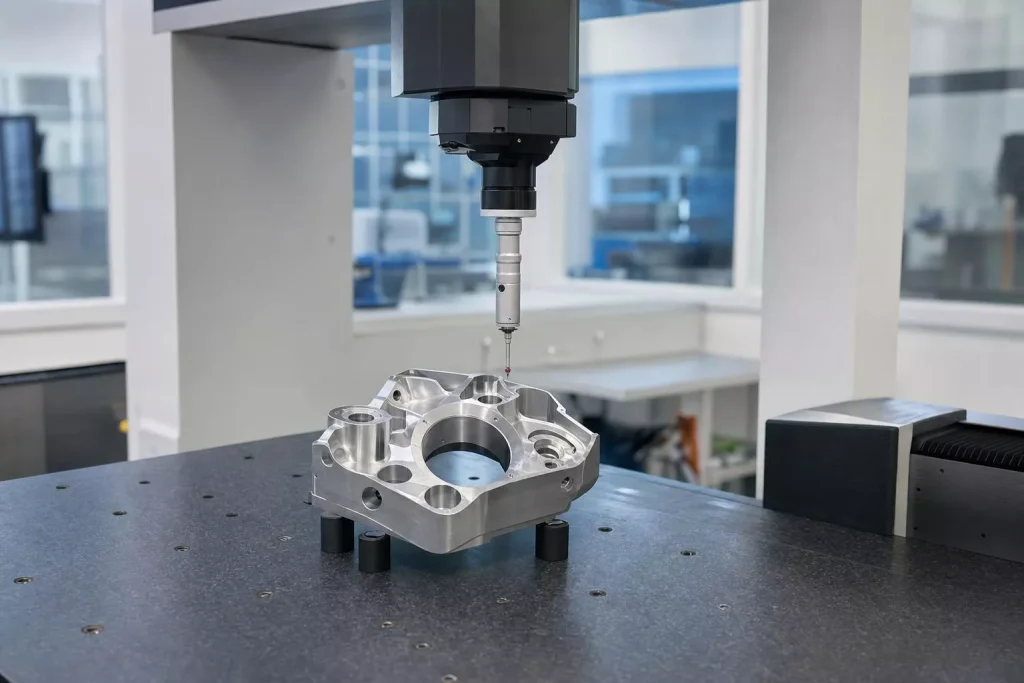
Machining capabilities must be supported by corresponding measurement capabilities. The dimensional tolerances involved in precision CNC manufacturing often exceed the limits of conventional manual measurement methods. Inspection equipment includes Coordinate Measuring Machines (CMMs), vision measurement systems, gauges, micrometers, calipers, and surface measurement equipment. CMM inspection is particularly effective for verifying complex spatial geometries and the positional relationships between multiple features.
CNC Metal Applications Across Industries
CNC metal machining supports a wide range of applications, spanning from single-unit prototyping to mass production of thousands of parts. Different industries have distinct requirements regarding material properties, dimensional control, surface finishes, and production consistency.
Settore aerospaziale
Aerospace components typically demand high strength-to-weight ratios, corrosion resistance, dimensional precision, and reliable material traceability. CNC-machined metal parts are widely used for structural components, brackets, housings, shafts, fittings, actuator assemblies, and parts featuring curved surfaces or complex profiles. Aluminum, titanium, stainless steel, and nickel-based alloys are common materials in the aerospace sector.
Settore automobilistico
The automotive industry utilizes CNC-machined metal parts for powertrain systems, suspension components, fixtures, housings, shafts, connectors, brackets, and vehicle prototypes. Aluminum and steel are the most widely used materials, though stainless steel, brass, copper, and specialty alloys may be selected based on specific component functions. Metal CNC machining also facilitates automotive prototyping, as design iterations do not require the high tooling costs associated with certain mass-production processes.
Medicina
Medical devices and instruments generally require materials with corrosion resistance, precise dimensions, controlled surface conditions, and documented inspection data. Stainless steel and titanium are frequently used for medical components, while aluminum and other materials are used for equipment housings, fixtures, and non-implantable assemblies. Metal CNC machining enables the production of both precision miniature parts and large equipment assemblies in accordance with technical drawings and specifications.
Electronics and Electrical
Applications in the electronics and electrical sectors often require materials with controlled electrical and thermal properties. Copper and copper alloys are commonly used for conductive components, connectors, terminals, and heat-dissipation structures; aluminum is widely used for housings, heat sinks, and structural parts. Metal machining allows these materials to be formed into the precise geometries required for electrical and thermal components.
Robotics and Automation
Robotic systems incorporate a vast array of machined parts, including robotic arms, joints, brackets, housings, shafts, linkages, sensor mounts, and end effectors. These components may require lightweight construction, high rigidity, wear resistance, precise interface fits, and repeatable dimensional accuracy. Materials such as aluminum, stainless steel, steel, titanium, brass, and engineering plastics can be selected based on the specific requirements of the components.
Energy and Industrial Equipment
Energy and industrial equipment typically operates under demanding mechanical, thermal, or chemical conditions. CNC-machined components include valve bodies, pipe fittings, shafts, manifolds, housings, mounting assemblies, and custom mechanical parts. Materials such as stainless steel, nickel-based alloys, titanium, copper alloys, and specialty metals can be utilized when conventional materials fail to meet the required operational performance standards.
CNC Metal Material Selection in Production
The material specification should be considered together with the complete manufacturing requirement.
A production drawing should identify the exact material grade when a specific alloy is required. For example, specifying 6061 aluminum is different from simply specifying aluminum, just as 316L stainless steel has different requirements from 303 stainless steel.
Other information that can affect production includes:
- Material condition or temper
- Component geometry
- Quantity
- Dimensional tolerances
- Finitura superficiale
- Trattamento termico
- Surface treatment
- Inspection requirements
- Material certification requirements
The drawing should also identify critical dimensions and features so the manufacturing and inspection processes can be planned accordingly.
Material selection should ultimately match the actual service conditions of the finished component rather than being based only on general material characteristics.
Quality Control in CNC Metal Machining
Quality control for materials and machining processes must be maintained throughout the entire production cycle, rather than relying solely on final inspection after the last operation.
Verifica dei materiali
Material certificates, Mill Test Reports (MTRs), Certificates of Conformance (CoC), and material traceability documentation can be provided in accordance with project requirements. Verifying the specified alloy grade and material condition ensures that raw materials comply with approved drawings or procurement specifications.
Controllo dimensionale
Dimensional inspection verifies critical dimensions, feature locations, diameters, depths, flatness, and other requirements specified in the drawings. Depending on the specific part, inspection may utilize Coordinate Measuring Machines (CMMs), vision measurement systems, gauges, micrometers, calipers, and other precision measuring equipment.
Surface Quality Inspection
Surface roughness is inspected when specific Ra requirements are stipulated in the drawings. As surface condition is influenced by machining strategies, tooling, finishing processes, and material properties, inspection ensures that critical surfaces meet the specified requirements.
First Article Inspection and In-Process Inspection
First Article Inspection (FAI) helps validate the manufacturing process prior to mass production. In-process inspection monitors critical dimensions during production, enabling the timely detection of issues before deviations affect a large batch of parts.
Final Inspection
Final inspection confirms that finished parts meet all agreed-upon requirements regarding drawings, dimensions, materials, surface quality, and documentation prior to shipment. Inspection records can be compiled based on project requirements, including dimensional reports, FAI documentation, and applicable MTRs and CoCs.
Xtmade CNC Metal Machining Services
Xtmade offers CNC metal machining services for a wide range of materials—including aluminum, steel, stainless steel, brass, copper, bronze, titanium, magnesium, nickel-based alloys, and specialty metals. With capabilities spanning milling, turning, and multi-axis machining, we cater to needs ranging from prototyping and small-batch orders to full-scale production. Customers can submit drawings, CAD files, samples, and technical specifications prior to production for engineering assessment and DFM (Design for Manufacturability) feedback. We also implement rigorous inspection and production controls to ensure consistent product quality. Please feel free to contact us at any time.