EN, ASTM, AISI, and ISO: What do these material standards actually mean for the buyer?
If you have ever reviewed engineering drawings or handled international purchase orders, you have undoubtedly encountered a bewildering array of material grade designations. Some drawings call for AISI 304, others specify ASTM A240, European drawings might list EN 1.4301, and quality clauses may cite ISO standards. On paper, these four designations appear to refer to the same type of stainless steel. However, procurement managers or design engineers who simply treat them as perfectly interchangeable labels often pay a price.
This confusion typically stems from the distinct evolutionary paths of these standards systems. Developed by different organizations in different regions, they were created to address vastly different needs. Understanding the differences and overlaps between them is crucial; failure to do so can lead to inspection failures, unexpected increases in processing costs, or even part cracking under load due to the misuse of “equivalent” materials.
ASTM vs AISI vs EN vs ISO: Quick Comparison
| Стандартный | Main role | Common application | Example |
| AISI / SAE | Steel grade and composition designation | Identifying common steel grades | AISI 304, SAE 4140 |
| ASTM | Material and product specifications, testing, and technical requirements | Material procurement and product requirements | ASTM A240, ASTM A276 |
| EN | European material and product standards | European engineering and manufacturing | EN 1.4301, EN 10088, 42CrMo4 |
| ISO | International standards for materials, products, testing, and processes | International standardization | ISO 4948 |
Four Organizations, Four Distinct Functions
A common misconception is that AISI, ASTM, EN, and ISO are merely different versions of the same thing—akin to four dialects of a single language. This is not the case. Each organization was established to address different issues; once the specific problem each solves is understood, the confusion surrounding them clears up.
AISI (American Iron and Steel Institute) is an industry association, not a testing or regulatory body. Decades ago, it developed a steel grade numbering system—the familiar 1xxx, 3xx, and 4xxx series (such as 1018, 304, and 4140). Although AISI ceased active maintenance of this system in 1995 and handed it over to SAE, the naming convention remains so deeply ingrained that “AISI 304” is still commonly specified on engineering drawings today. AISI designations essentially reflect chemical composition categories—that is, the alloy’s constituent elements.
ASTM International is entirely different. It is a standards-development organization responsible for drafting comprehensive technical specifications. These cover chemical composition ranges, mechanical property requirements, heat treatment conditions, testing methods, tolerances, and even procedures for material inspection and certification. Specifying “ASTM A240 Type 304” does more than just name an alloy; it invokes a complete set of rules dictating how that alloy must be produced, tested, and documented for a specific product form (in this case, stainless steel plate, sheet, and strip for pressure vessels).
This lies at the heart of the confusion between AISI and ASTM: AISI identifies what the material is, whereas ASTM prescribes the properties the material must possess and how those properties are to be verified. A mill test report might list “304 steel conforming to ASTM A240”; the two designations serve distinct purposes within that single document.
EN (European Standards) are structurally similar to ASTM standards; they, too, are comprehensive technical specifications rather than mere naming systems. However, they are managed by CEN (the European Committee for Standardization) and adopted as national standards within the member states of the European Union (EU) and the European Free Trade Association (EFTA). EN standards for steels and alloys employ a dual designation system, utilizing both material numbers (e.g., 1.4301) and chemical composition codes (e.g., X5CrNi18-10). Since the early 21st century, EN standards have largely superseded the legacy national standard systems (such as Germany’s DIN, the UK’s BS, Italy’s UNI, and France’s AFNOR); consequently, while EN standards are now the authoritative norms, DIN or BS designations may still occasionally be encountered in older technical drawings or supplier documentation.
ISO operates at a different level, serving as a global coordinating body. Rather than competing with ASTM or EN, ISO focuses on harmonizing various testing methods; in certain fields, it provides a globally accepted alternative or benchmark against which national and regional standards bodies can align their own standards. This is particularly significant in sectors such as plastics and polymer testing, where ASTM and ISO standards for the same property—such as tensile strength or impact resistance—may specify different specimen geometries, testing speeds, or pre-conditioning requirements. This means that even when measuring seemingly identical properties, the resulting data cannot be directly compared.
Why “Equivalent” Grades Are Not Truly Identical
Most grade cross-reference charts tend to mislead users; they typically list only direct equivalencies—such as AISI 304 = EN 1.4301 = UNS S30400—leading many to assume the materials are identical. In reality, however, they are not.
Consider a specific example: both ASTM A240 and EN 10088 cover Type 304 stainless steel plate, and their chemical composition ranges overlap significantly. Yet, the two standards do not necessarily align regarding mechanical property testing, dimensional tolerances, surface finish classifications, or certification requirements. A supplier’s product might fully comply with one standard while failing to meet specific requirements of the other regarding minor parameters. While such discrepancies may be inconsequential for non-critical components like brackets or housings, they can be vital for pressure vessels, aerospace supports, or parts subject to fatigue-life requirements. This is precisely the detail often overlooked when people assume—based solely on cross-reference charts—that the grades are “fully interchangeable.”
This issue is particularly pronounced in the realm of structural steel: despite seemingly similar names, the actual products differ significantly. ASTM A36 (US structural steel), EN S235/S275, and similar grades from other regions are often collectively referred to as “low-carbon structural steel”; however, they fall under distinct standards with differing specifications for yield strength, chemical composition, and impact testing conditions. Treating them as directly interchangeable without consulting the specific standards often leads to avoidable procurement errors.
Such differences are even more marked outside the metals sector. In plastics and polymer testing, ASTM and ISO methods frequently diverge—differences that affect not only documentation but also the resulting test values. For instance, while both ASTM D638 and ISO 527 measure tensile properties, they employ different specimen dimensions and testing speeds; consequently, results obtained via one method cannot be directly applied to data sheets based on the other. When comparing material data sheets from U.S. and European suppliers, it is essential to first verify the test methods used for each data point to ensure an apples-to-apples comparison.
Why This System Persists
While there is a universal desire for a single standard that could resolve issues once and for all, the fragmented landscape of standards systems is no accident; rather, it reflects the differing regulatory traditions, industrial histories, and priorities of various stakeholders. The U.S. standards system was heavily influenced by the “product- and performance-based” philosophy of ASTM (American Society for Testing and Materials), which specifies the required performance characteristics of a material while leaving the specific methods of achieving them to the manufacturer. In contrast, the European standards system emerged as CEN (European Committee for Standardization) harmonized dozens of pre-existing national systems; it is characterized by an emphasis on precise compositional control, closely linked to a standardized grade designation system. The ISO (International Organization for Standardization) was established to meet the global trade need for a mechanism to reach cross-border technical consensus—particularly as manufacturing supply chains expanded beyond the confines of single countries or regions.
For buyers sourcing on a global scale, this means that navigating and switching between different standards systems is an unavoidable reality. Consequently, the pragmatic goal is not to seek a “single, definitive standard,” but rather to learn how to accurately interpret and compare various standards, thereby preventing project failures caused by misunderstandings.
What does this mean for you as a buyer?
If you are sourcing components or raw materials, or working with overseas manufacturers, it is essential to adopt the following habits:
1. Never treat a grade designation (such as “304” or “6061”) as a complete technical specification. A grade is merely a starting point for communication, not a sufficient basis for procurement. Always ask for the specific product standards applicable to the part (e.g., ASTM A240 vs. EN 10088), as these standards define the mandatory technical requirements.
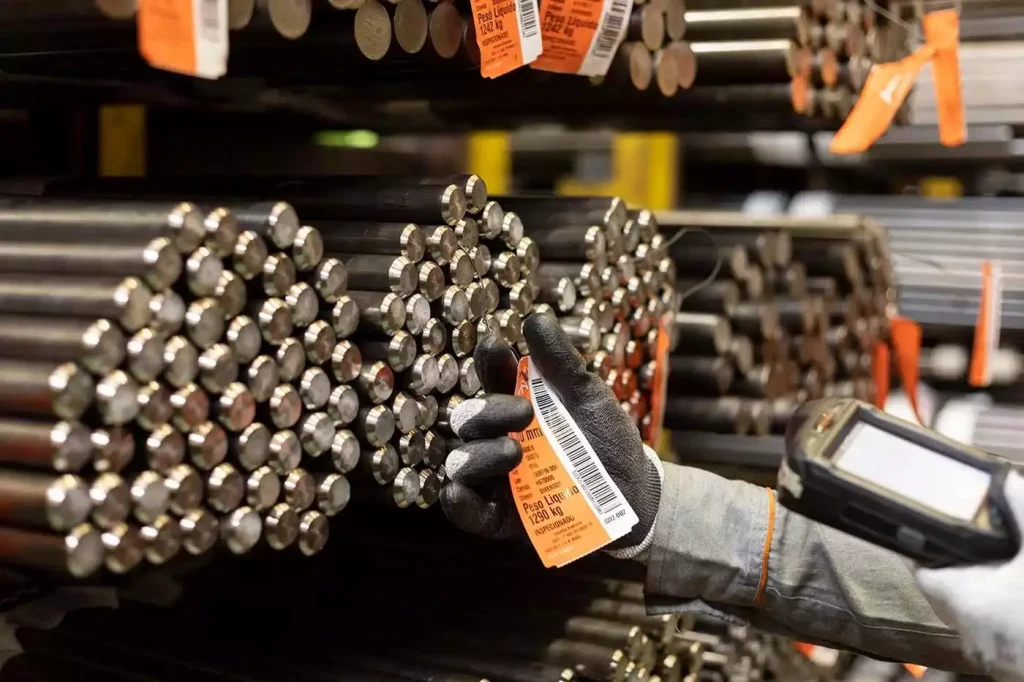
2. Request Mill Test Reports (MTRs) or material certificates and verify the standards against which they are certified, rather than simply looking at the grade designation. Two materials labeled “316” may have vastly different guaranteed performance metrics if one is certified to ASTM A276 and the other to EN 10272.
3. When a drawing specifies a standard that exceeds the supplier’s current certification capabilities, do not simply assume that a “closest equivalent material” is an acceptable substitute—especially for load-bearing parts, pressure-retaining components, medical device parts, or safety-critical components. Always obtain approval from your engineering department rather than accepting a supplier’s claim that the materials are “basically the same.”
This is particularly important for plastics and composites: before comparing materials, always verify whether the values in the data sheets are based on ASTM or ISO test methods. A polymer might appear to have superior performance on paper simply because the testing method used was less rigorous.
How can Xtmade help you?
There is often a discrepancy between the literal meaning of a material grade designation and the actual performance guaranteed by technical specifications. When sourcing custom parts from manufacturers on the other side of the globe, you may face language barriers and the need to review drawings that incorporate standards from various regions—challenges that can lead to costly complications.
As a custom manufacturer, Xtmade specializes in assisting engineering and procurement teams with orders for custom CNC machined parts, sheet metal components, and precision-manufactured products. When customer drawings specify grades based on standards such as ASTM, AISI, EN, or ISO, our team goes far beyond a simple name-to-name match. We verify specific control specifications and cross-reference them with the actual certification capabilities of our manufacturing partners. If we identify a gap between drawing requirements and achievable capabilities, we flag the issue and communicate proactively, preventing mismatches that might otherwise only be discovered after production has begun. Every order is accompanied by material traceability data and relevant documentation that strictly aligns with the standards cited in the drawings, rather than relying on merely “roughly equivalent” grade substitutions.
If your project involves material specifications that differ from your usual suppliers’ standard materials, or if you are unsure whether a quoted “equivalent grade” is truly suitable for your application, please contact our team of expert engineers. We excel at thoroughly discussing and confirming these critical details before manufacturing begins.
Заключение
AISI, ASTM, EN, and ISO are not competitors but rather distinct tools designed to address different needs—such as nomenclature, the formulation of technical specifications, regional standardization, and international harmonization. Confusion often arises when buyers conflate these four systems, mistakenly assuming they are merely different names for the same thing. True professional competence lies in clearly identifying which standard applies to your specific part and knowing the right questions to ask when a supplier proposes using an alternative standard instead of the one specified in the drawing. By adopting this approach, grade cross-referencing ceases to be a guessing game and becomes a routine, professional step in an efficient procurement process.