How Does Material Strength Affect CNC Machining?
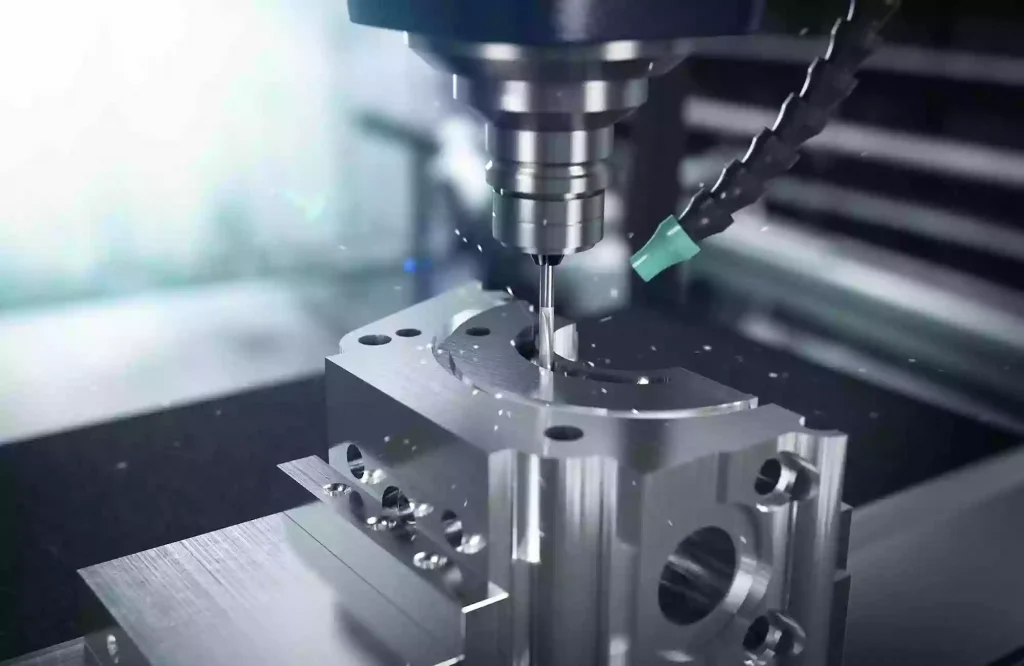
When a CNC machine cuts metal, the cutting tool must penetrate the material and remove it in the form of chips. The more easily a material deforms and separates, the less mechanical resistance the tool encounters. This is precisely why material strength is a critical factor.
Compared to lower-strength materials, high-strength materials resist deformation more effectively. When the cutting edge attempts to penetrate a high-strength material, greater force is typically required to deform the material and form chips. This additional force impacts the cutting tool, spindle, work-holding system, machine stability, and even the dimensional accuracy of the finished part.
However, there is an important point that is easily overlooked:
A material with higher strength is not necessarily more difficult to machine. Strength is merely one of the factors influencing machining characteristics. Properties such as hardness, ductility, thermal conductivity, and work-hardening tendencies—along with material composition, tool geometry, cutting conditions, and part geometry—all influence the actual cutting process at the cutting edge. Understanding this distinction helps explain why two materials with similar strength levels can exhibit vastly different characteristics during CNC machining.
What Is Material Strength?
Having a proper understanding of material strength is very helpful. Imagine applying the same pushing force to two different materials: one deforms easily, while the other resists the external force and retains its original shape. The latter material possesses greater resistance to deformation—in other words, it has higher material strength. In engineering, this characteristic is described using various strength metrics.
- Yield strength refers to the critical point at which a material begins to undergo permanent deformation. Below this limit, the material typically returns to its original state after the load is removed; once the yield point is exceeded, permanent deformation occurs.
- Tensile strength refers to the maximum stress a material can withstand before failing completely when subjected to tension.
CNC machining is not a simple tensile test, so these values cannot be directly converted into cutting parameters. However, they do help characterize a key property of the material: its ability to resist deformation under mechanical load—precisely the kind of deformation that occurs when a cutting tool removes material.
What Happens When a CNC Tool Cuts Strong Material?
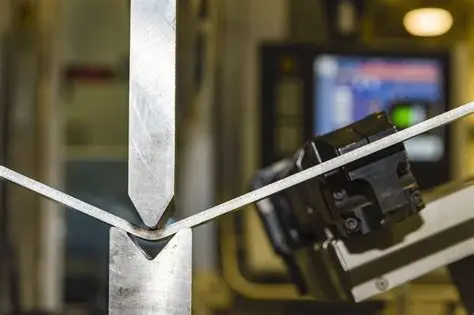
Setting aside the machine tool itself for a moment, let us examine the cutting edge of the tool. As the tool moves through the workpiece, the cutting edge does not simply “slice” through the material—much like a kitchen knife cutting soft food—but instead creates a zone of intense deformation immediately ahead of the edge. As the chip forms, the material undergoes compression and shearing while being forced upward.
The simplified process is as follows:
Cutting tool → Material deformation → Chip formation → Material removal
If the material is highly resistant to deformation, the tool must exert greater force to induce that deformation. This is one of the primary ways in which material strength influences the machining process.
A real-world example can help beginners grasp this concept. Consider cutting a piece of soft plastic with a knife; it requires very little force. Now, imagine cutting a much tougher material with that same knife—you would naturally apply more pushing force.
CNC machine tools operate on a similar principle, although the actual cutting process is far more complex and involves much higher speeds and forces. The critical difference lies in the fact that, as these forces act upon the entire machining system, the CNC machine must maintain the stability of the tool’s position. Consequently, an increase in cutting forces can become a significant challenge during the manufacturing process.
Why Does Higher Strength Increase Cutting Force?
The higher the material strength, the greater its resistance to deformation. Greater resistance to deformation implies that the cutting edge typically requires more force to induce the deformation necessary to form chips. Increased cutting force means a corresponding rise in the mechanical load borne by the cutting tool and the machine tool.
This does not mean that the increase in cutting force is uniform across all high-strength materials. Actual cutting forces depend on a variety of factors, including material condition, tool geometry, cutting engagement, feed rate, depth of cut, and the specific machining operation. Nevertheless, this fundamental relationship remains a valuable guideline:
Higher resistance to deformation → potentially higher cutting forces → greater mechanical load on the machining system.
This is why material strength is crucial—and it is important even before the workpiece is loaded onto the machine tool.
Where Does That Extra Force Go?
Once generated, the cutting force does not simply vanish into thin air; it propagates through the machining system. The cutting edge bears the force first. Subsequently, the force is transmitted through the cutting tool, tool holder, spindle, machine tool structure, and workholding fixture, ultimately acting upon the workpiece. The machining system can be visualized as a chain. If every link in the chain possesses sufficient rigidity, the cutting process remains stable. However, if a component within the system lacks rigidity—meaning it is too flexible—that extra force can trigger displacement or vibration. Machining high-strength materials involves more than just finding a “stronger tool”; the cutting tool is merely one link in the entire system.
How Cutting Force Can Affect the Cutting Tool
As cutting forces increase, the mechanical load on the cutting edge rises accordingly. The tool must remain stable and maintain its intended cutting geometry. If the tool lacks sufficient rigidity for the specific machining operation, it may undergo slight deformation—or deflection—under the load. Although this deformation is minimal, such minute changes are critical in CNC machining processes that require high-precision tolerances.
Consider the milling of material from the side of a workpiece: if the tool bends slightly away from the workpiece during heavy cutting, the actual amount of material removed may be less than intended. In this scenario, the machine tool itself is operating exactly according to the programmed tool path, yet the tool has undergone a slight displacement due to the cutting forces.
A machine tool’s positioning accuracy is not identical to its actual cutting accuracy. While CNC systems can achieve extremely precise spindle positioning, the cutting process itself remains inevitably subject to the influence of physical forces.
Why Part Geometry Matters as Much as Material Strength
Consider, for instance, two parts made from the same high-strength material. The first is a solid block, while the second incorporates a thin-walled structure with a thickness representing only a fraction of the original block’s thickness. Although the material is identical, the machining challenges differ significantly. The solid block offers robust support against cutting forces, whereas the thin-walled structure is more flexible and less rigid. During machining, the cutting tool exerts force on both parts; the solid block resists this force with negligible displacement, while the thin-walled structure is prone to deformation (deflection).
Even with the material unchanged, such deformation can lead to dimensional errors. Engineers must not consider material strength in isolation from part geometry. It can be understood this way:
Material strength influences the magnitude of the cutting force, whereas part rigidity determines how the workpiece responds to that force. While related, the two are distinct concepts.
Material Strength Is Not the Same as Hardness
This is one of the most common points of confusion. People often use the terms “strong” and “hard” interchangeably, but in materials engineering, they describe distinct properties.
Strength primarily refers to a material’s ability to resist deformation or failure when subjected to external forces (loads). Hardness, on the other hand, describes a material’s resistance to localized deformation, such as indentation or scratching. While related, these two properties characterize different physical behaviors.
This distinction is crucial in CNC machining: hardness significantly affects cutting resistance and tool wear, whereas strength primarily relates to the mechanical force required to deform the material during the cutting process.
Consider a material that possesses high strength but only moderate hardness: it may generate substantial cutting forces during machining, yet its behavior at the cutting edge does not necessarily mirror that of an extremely hard material. Conversely, high-hardness materials can cause severe tool wear—issues that cannot be explained by strength alone. It is overly simplistic to conclude that “this material is difficult to machine simply because it is strong.” A more appropriate question would be:
What specific combination of material properties determines how this particular material performs under a given cutting process?
Why Material Strength Alone Cannot Predict Machinability
Machinability is not a single material property; rather, it is a comprehensive description of how difficult or easy it is to machine a material under specific conditions. Material strength is merely one factor. Hardness is another. Ductility influences chip formation and the material’s deformation characteristics, while thermal conductivity affects heat dissipation from the cutting zone. Furthermore, some materials are prone to work hardening, meaning the material near the machined surface becomes increasingly difficult to cut further.
The machining process itself introduces additional variables. The same material may behave differently depending on whether it is being milled, turned, drilled, or tapped. Roughing operations, which involve removing large amounts of material, entail vastly different mechanical conditions compared to finishing operations, which remove only small amounts.
Therefore, there is no universal rule stating:
Higher strength = poorer machinability.
A more accurate relationship is:
Material properties + Cutting tool + Machining conditions + Machine tool rigidity + Part geometry → Actual machining performance
This represents a more practical approach to evaluating materials for CNC machining.
How Material Strength Affects CNC Milling
Milling serves as a prime example, as cutting forces fluctuate while the tool rotates and individual cutting teeth engage and disengage from the material. Machining high-strength materials can subject the tool to immense mechanical loads, particularly when significant material removal is required. The challenge is further compounded if the depth of cut (or engagement) is substantial or if the workpiece itself lacks rigidity.
For instance, roughing out a large cavity in a high-strength alloy typically generates far greater mechanical loads than the light cuts used for finishing.
When evaluating the process, engineers must look beyond material strength and consider a range of factors: the amount of material removed per pass, the method of tool support, workpiece rigidity, and the dynamic changes in cutting forces as the tool traverses the workpiece.
How Material Strength Affects CNC Turning
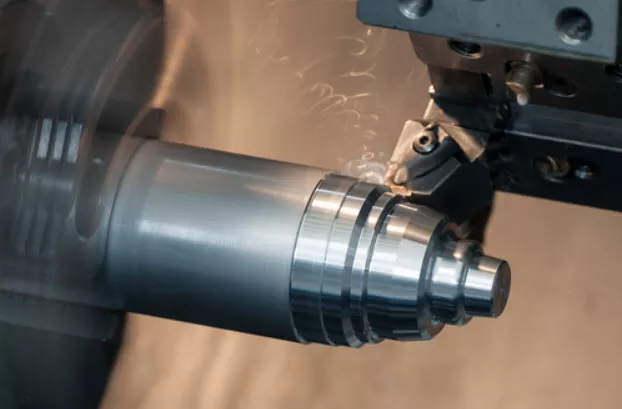
The turning process creates a unique cutting environment in which the cutting tool removes material from the surface of a rotating workpiece. The strength of the workpiece influences the cutting forces required, particularly during heavy cuts. Workpiece workholding is critical, as these forces are ultimately transferred to the chuck, fixture, or other clamping system. If a significant length of the workpiece extends from the chuck, it may behave like a flexible beam; when the cutting tool applies force to the overhanging end, the workpiece may deform (deflect).
The same material might be very easy to machine for one type of part yet extremely challenging for another. The root of the issue does not necessarily lie with the material itself.Key factors may include the part’s diameter, length, wall thickness, support conditions, or the machining sequence.
What Does Material Strength Mean for Cutting Parameters?
While material strength certainly influences cutting conditions, it should not serve as a justification for indiscriminately lowering machining parameters. Cutting speed, feed rate, depth of cut, and tool engagement all impact the cutting forces generated during the machining process.
For instance, increasing the amount of material removed in a single pass typically alters the mechanical load on the tool, while raising the feed rate changes the volume of material removed by the cutting edge per unit of time. There is no universal rule stating, for example, that the feed rate must be reduced by a fixed percentage for every incremental increase in material strength.
Determining the correct machining conditions requires a comprehensive assessment of the specific material, cutting tool, machine tool, workpiece geometry, and machining operations. This is particularly important because overly conservative cutting conditions can themselves lead to problems; the process may become unnecessarily slow without actually gaining stability. In practical CNC manufacturing, parameter selection is an engineering trade-off rather than a simple calculation based solely on tensile strength.
The Role of Tool Geometry
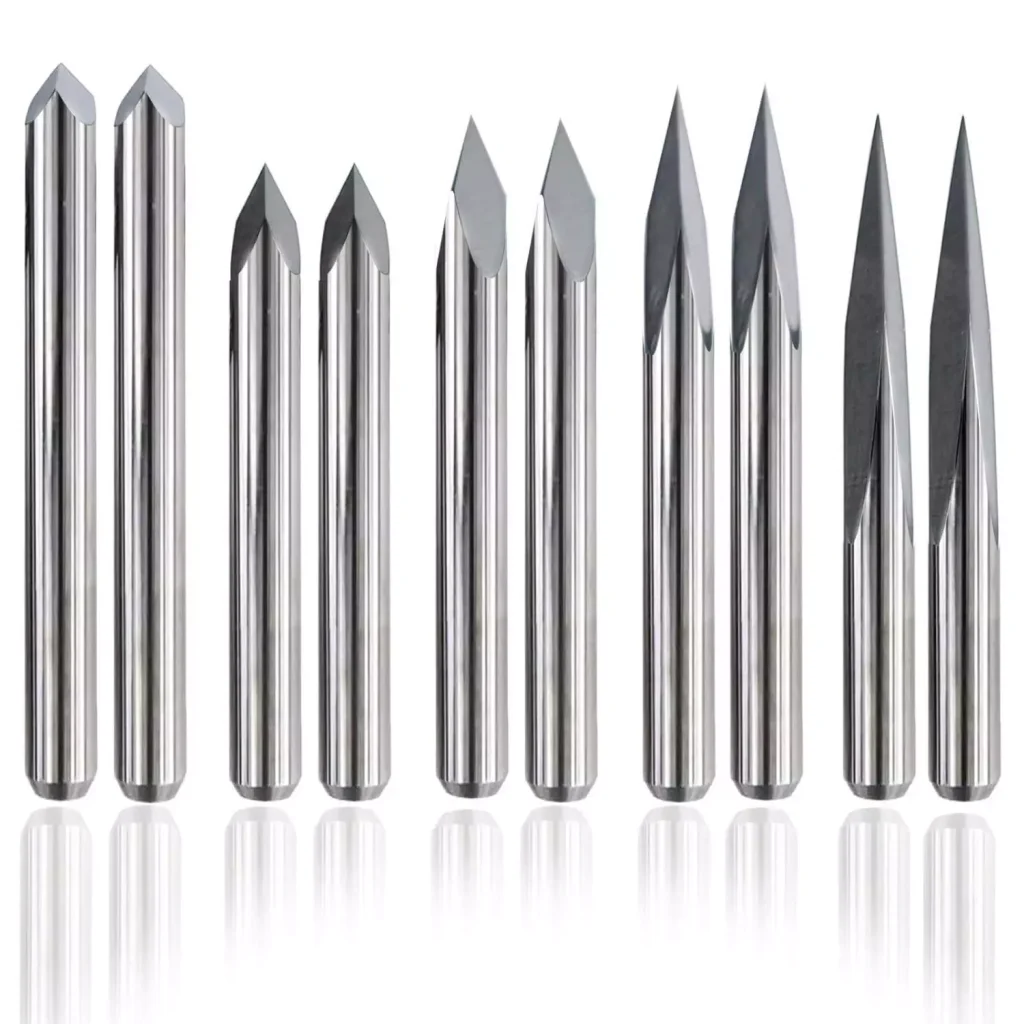
When machining high-strength materials, cutting tools must effectively withstand mechanical loads. Tool geometry determines how the cutting edge engages with the material, as well as the processes of chip formation and evacuation.
Factors such as rake angle, clearance angle, edge preparation, chip flute shape, tool diameter, and tool material all influence cutting performance. Crucially, there is no single “optimal” tool geometry that suits all high-strength materials.
Tool selection must be matched to the specific material and machining operation. The design requirements for roughing tools—intended for bulk material removal—differ significantly from those for finishing tools designed to produce high-precision surfaces.
This principle applies equally to drilling and turning operations. Tool selection should be based on material properties and the specific machining task, rather than relying on generalizations such as “high-strength materials require carbide tools.”
Does High Material Strength Always Cause Tool Wear?
While high strength does increase mechanical load, tool wear is influenced by a variety of other mechanisms.
Factors such as hardness, abrasive constituents, temperature, chemical interactions between the tool and workpiece, cutting speed, lubrication conditions, tool geometry, and chip morphology all affect tool life.
Although cutting force and tool wear are related, they are distinct issues. A tool may be subjected to high mechanical loads, yet the dominant wear mechanism may not remain constant throughout the machining process. Strength alone cannot fully explain the difficulty of machining a material; a material might still cause severe tool wear due to its hardness or thermal properties. Decisions regarding tool life should be based on actual machining performance rather than relying solely on a single material property indicator.
Which High-Strength Materials Can Be Challenging to Machine?
High-strength steels, alloy steels, stainless steels, titanium alloys, and nickel-based alloys can all present formidable machining challenges, though the underlying reasons vary. For certain steels, mechanical loads and hardness are key considerations. Titanium alloys combine high strength with other machining hurdles, such as thermal management issues and complex interactions between the material and the cutting tool. Nickel-based superalloys possess a combination of high strength, high-temperature resistance, and other material properties that place extreme demands on tool performance and machining stability.
Simply listing “difficult-to-machine materials” offers little practical value for making manufacturing decisions.
The more meaningful question is:
What specific properties make a material difficult to process in a given machining operation? Once this is identified, determining the appropriate tooling and machining strategies becomes much easier.
How Engineers Account for Material Strength Before Machining
When a client provides drawings or CAD models for CNC-machined parts, material specifications are just one aspect of the manufacturing considerations. The machining team must also understand the material’s intended application and the specific requirements of the finished part. While machining high-strength materials is generally manageable when paired with robust, rigid geometries, the use of the same materials in designs featuring thin walls, deep cavities, long overhangs, or tight tolerances necessitates more meticulous process planning.
This is where a “Design for Manufacturability” (DFM) review comes into play. The goal is not to redesign the client’s part, but to evaluate how the existing design will perform during manufacturing. This allows for a comprehensive assessment of various factors—including material properties, geometry, tolerances, surface finish requirements, tool accessibility, workholding, machining sequences, and inspection criteria. This approach is far more reliable than determining machining parameters based solely on material strength.
A Simple Way to Think About Material Strength in CNC Machining
If you are new to CNC machining, you can remember the relationships involved through a simple chain of logic:
Material strength → Resistance to deformation → Cutting forces → Response of the machine, tool, and workpiece → Part quality
Material strength determines the magnitude of the resistance encountered by the cutting tool. This resistance constitutes a portion of the cutting forces. These forces act upon the tool, machine tool, workholding fixtures, and the workpiece. Provided the machining system has sufficient rigidity and the cutting strategy is appropriate, the machining process remains stable. However, if cutting forces exceed the system’s effective capacity, issues such as tool or workpiece deformation, vibration, or dimensional deviations may arise.
It is important to add, however, that:
Material strength is merely one of many variables. Hardness, ductility, thermal properties, work hardening, tool selection, machine performance, part geometry, and machining conditions all combine to determine the final machining outcome.
Conclusione
In CNC machining, material strength is critical as it reflects a material’s resistance to deformation. During the cutting process, the material ahead of the cutting edge must deform and separate to allow for material removal. Consequently, higher-strength materials often require greater cutting forces, thereby increasing the mechanical load demands on the cutting tool, machine tool, work-holding system, and the workpiece itself.
However, strength alone does not provide a complete picture of machinability.
High-strength materials are not necessarily difficult to machine, nor are low-strength materials necessarily easy to machine. Factors such as hardness, ductility, thermal properties, work-hardening tendencies, tool selection, cutting conditions, machine rigidity, and part geometry all influence the actual machining process.
For engineers and manufacturing procurement professionals, the most effective approach is to consider all relevant factors holistically:
Material + Part Geometry + Cutting Tool + Machine Capability + Machining Strategy + Quality Requirements
Xtmade is a professional custom manufacturing supplier with an engineering team dedicated to providing expert DFM (Design for Manufacturability) and material analysis. We can select the appropriate materials for your specific application to produce precision custom parts. We offer a wide range of materials and machining processes; please feel free to contact us at any time.